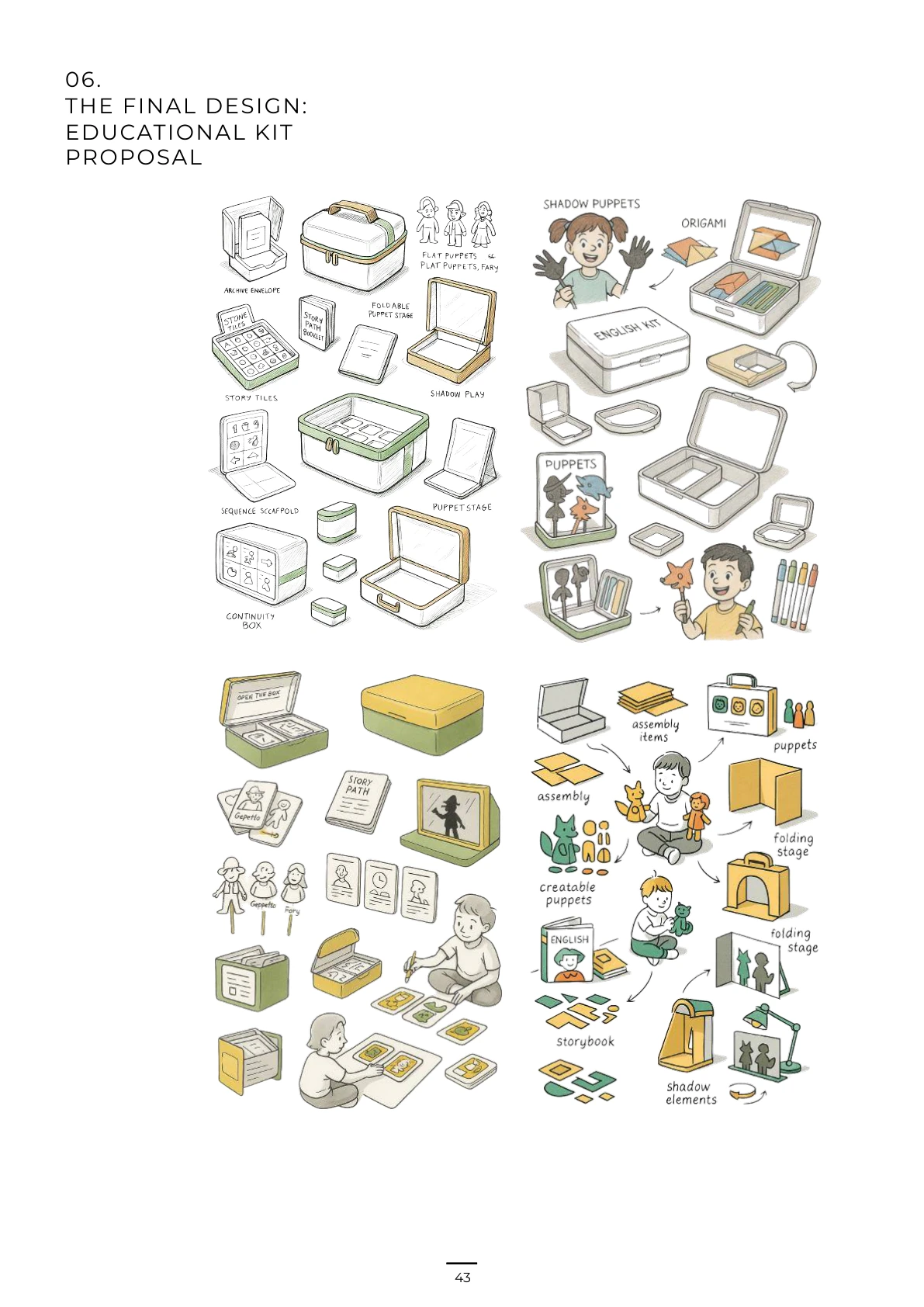
MSc thesis · PDF page 122
Original component studies
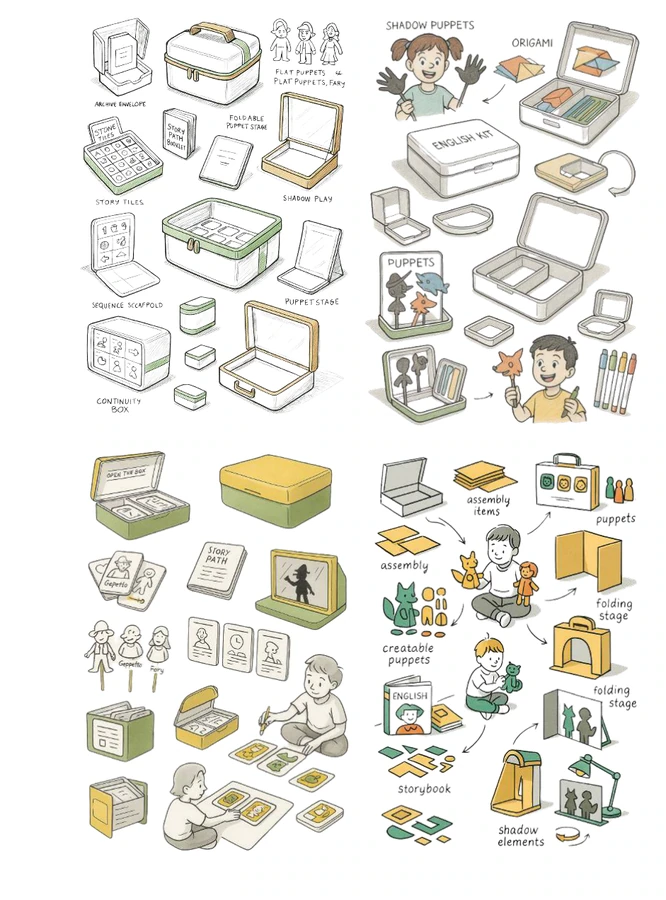
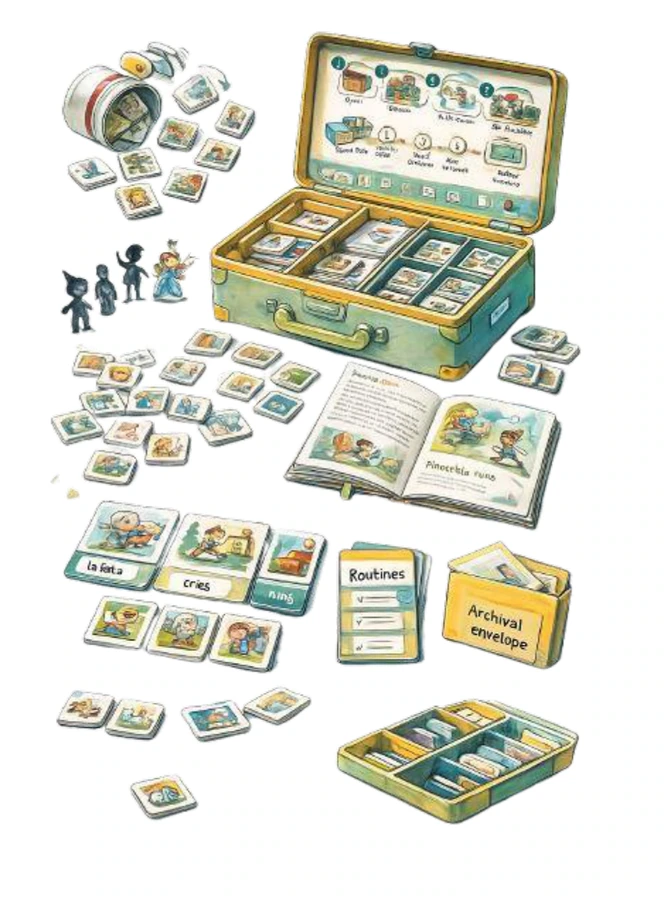
Kit structure, detachable elements, and learning materials; original MSc design booklet, PDF p. 122.
An inspectable layer of the interactive CV. Follow a claim from professional experience to a project decision, then to the exact image, document excerpt or build photograph that supports it. This index is designed to remain reusable across applications.
Source-first evidence: selected figures and pages are drawn from the MSc thesis, BA thesis, historical BA portfolio, independent museum service maps and the Chevrolet project report. Authentic workshop photographs show the realised conversion. Editorial captions distinguish built work, concept visualisations and proposals.
A multi-actor product–service proposition for children aged 6–8 learning English: one story world experienced through material play, teacher-led learning, family participation and a return to class.
School and home use different activities, artefacts, adult roles and emotional cues. The design question was how to make learning recognisable and reusable across that divide.
Jump to RESEARCH TARGET ↗Contextual observations in classroom and home settings, conversations with teachers and parents, literature and benchmarking of more than 90 learning tools and services informed the account.
Cognitive, emotional, material, mediational and narrative patterns structured the problem.
Portable, replicable, embodied, emotionally considerate and low-screen materials, with manageable adult support.
Narrative tiles + interactive extensions + bilingual mediation, coordinated through short episodes.
ORIGINAL WORK / Click a source image to inspect the complete page at high resolution. Previews are faithful crops from the original uploaded PDFs; page numbers are preserved.
Kit structure, detachable elements, and learning materials; original MSc design booklet, PDF p. 122.
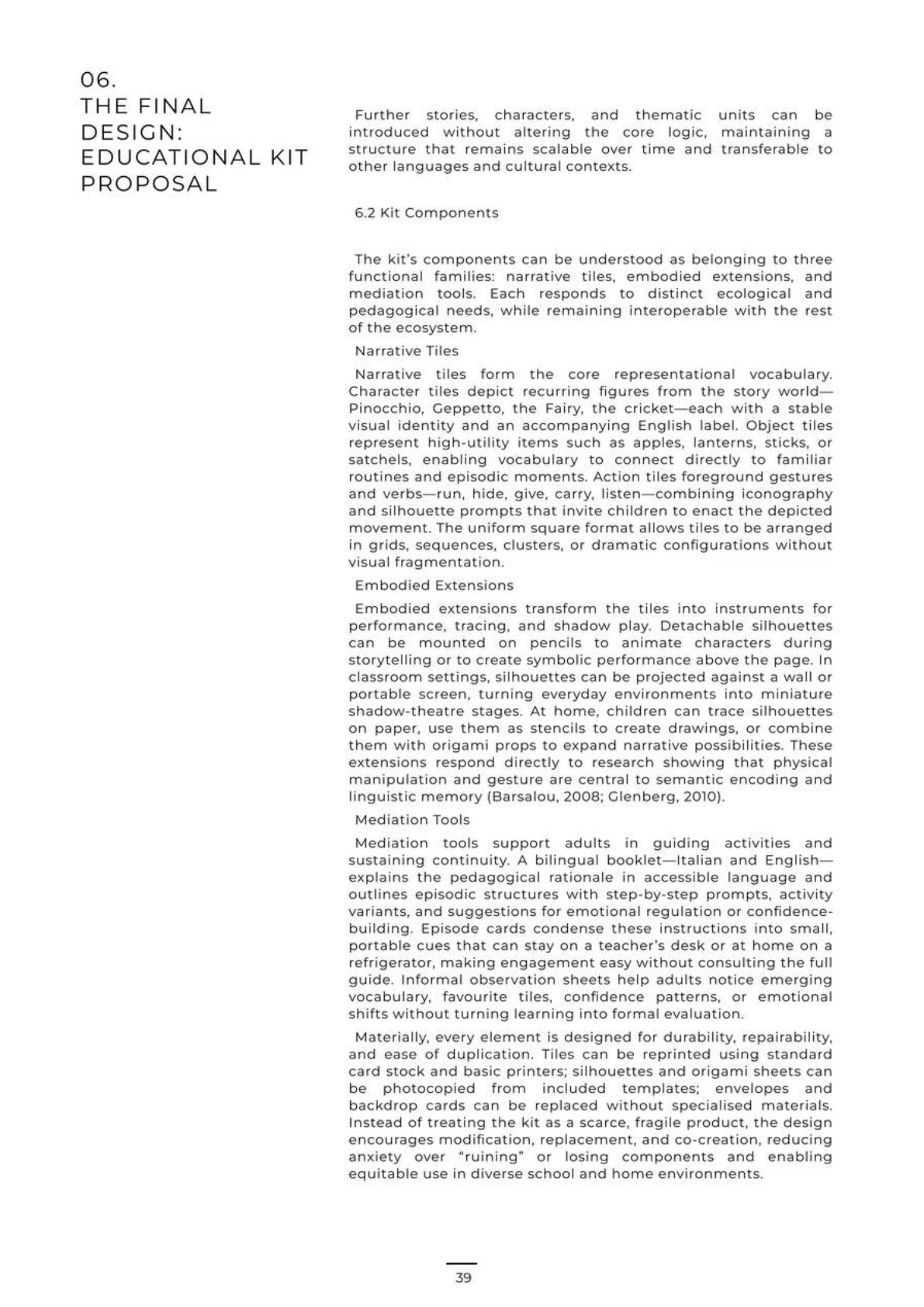
Narrative tiles, embodied extensions and adult mediation tools, MSc design booklet, PDF p. 118.
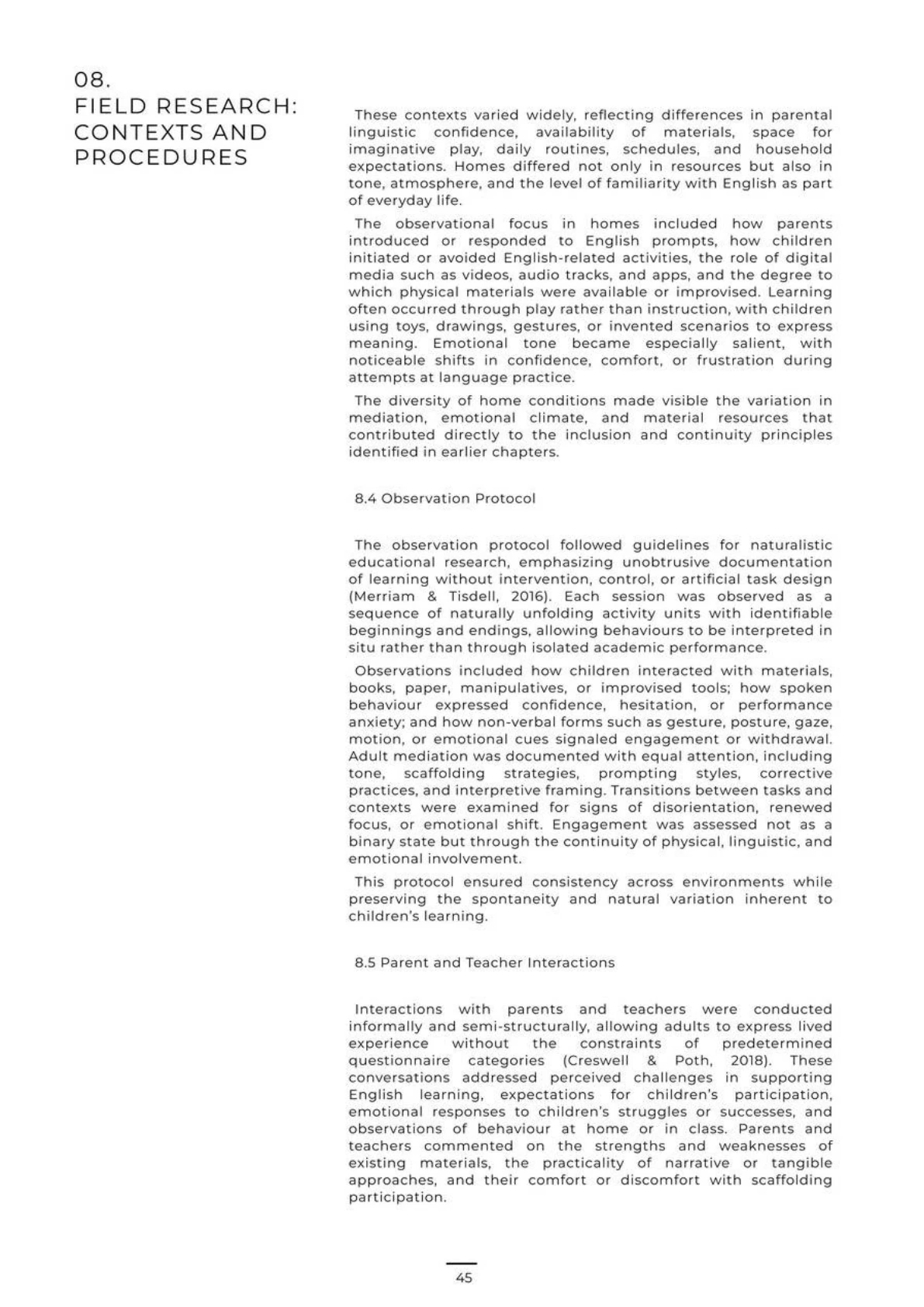
Naturalistic classroom/home observation, attention to activity patterns, materials, adult mediation and emotional responses; original MSc research booklet PDF p. 46.
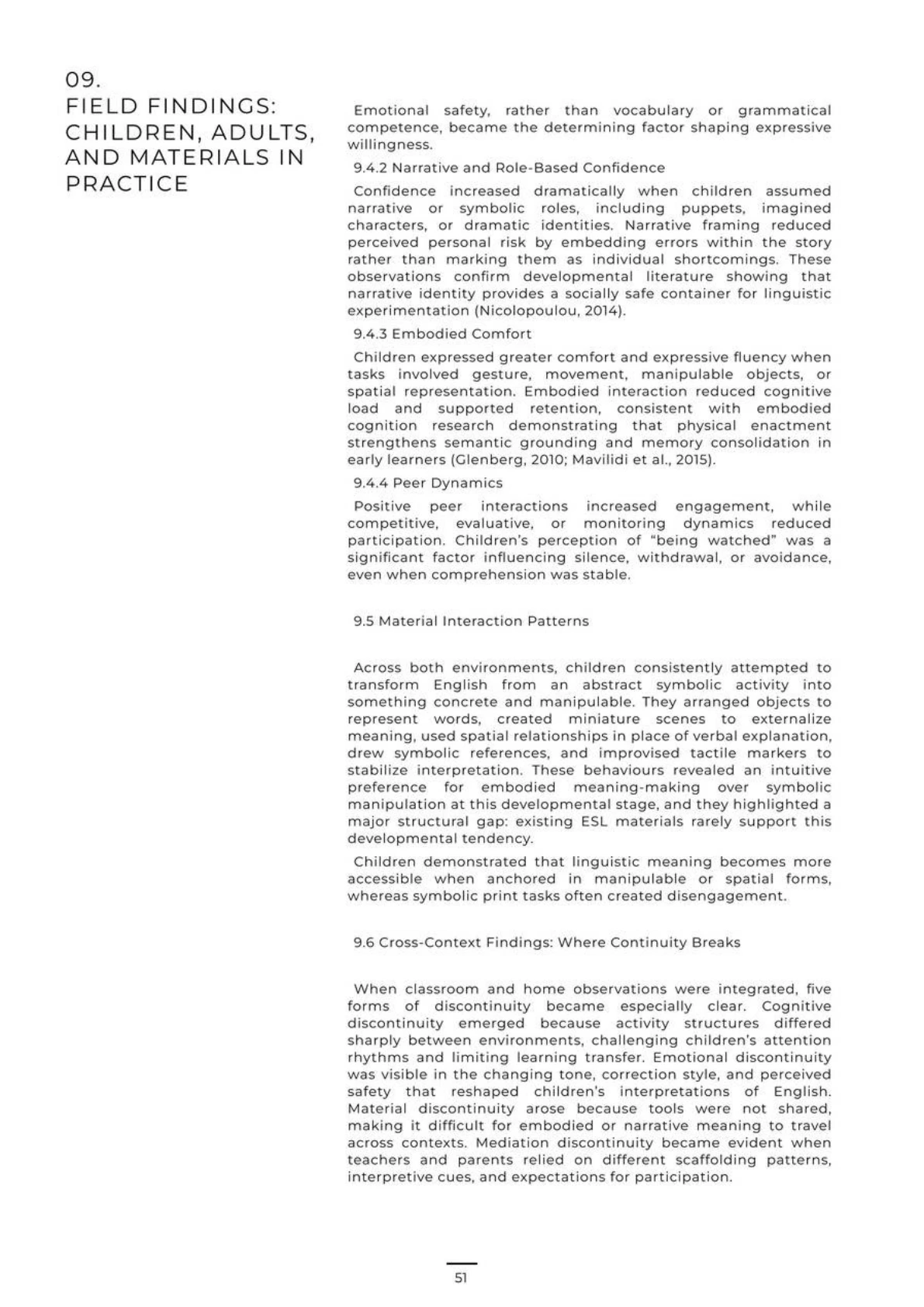
Findings on embodied interaction and five discontinuities; original MSc research booklet PDF p. 52.
Development of modular, narrative, embodied and continuity-led design requirements; MSc research PDF p. 69.
Design requirements for caregivers and teachers, equitable use and low-tech support; MSc research PDF p. 71.
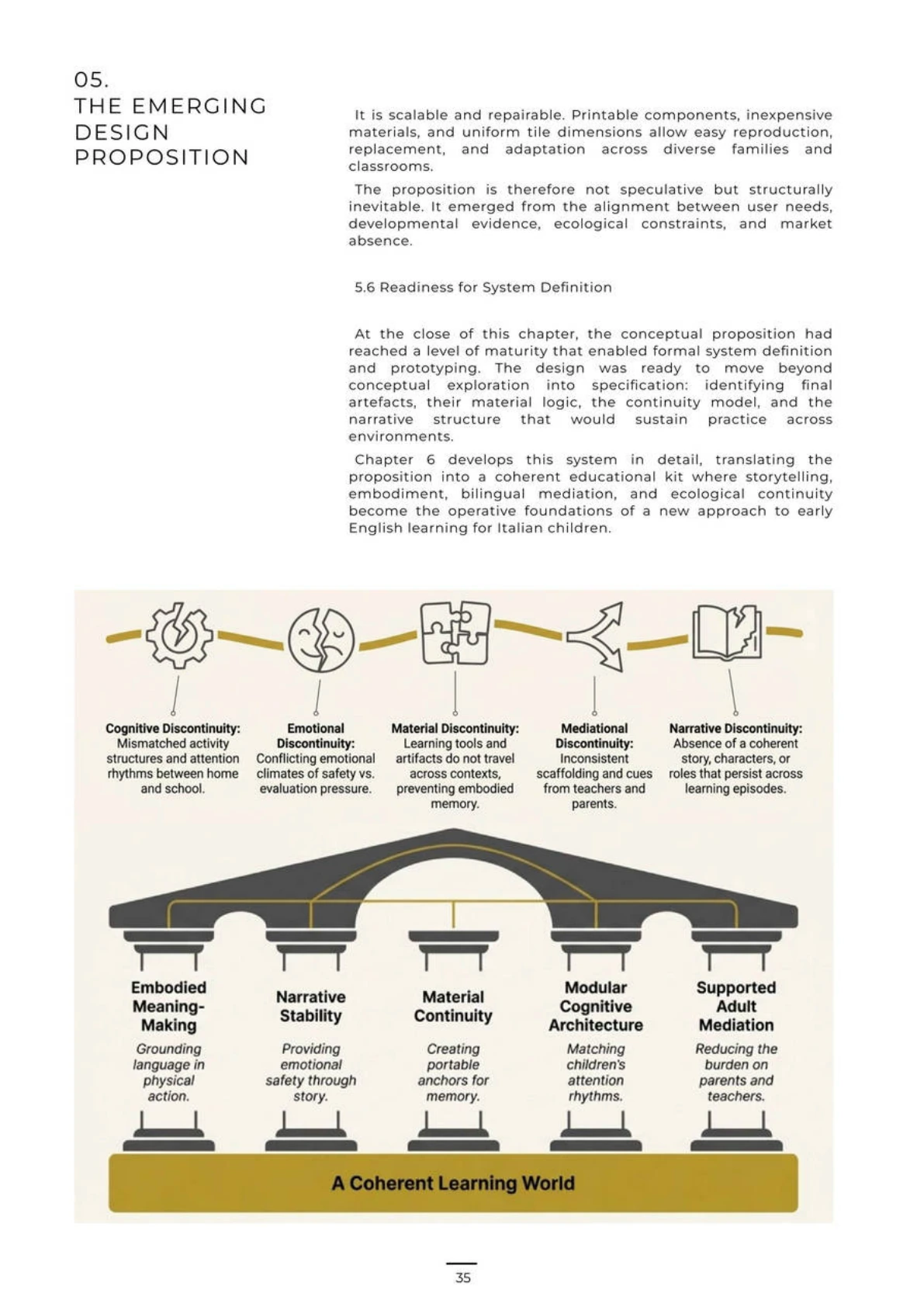
Continuity structure and design logic developed in the MSc booklet; original document, PDF p. 114.
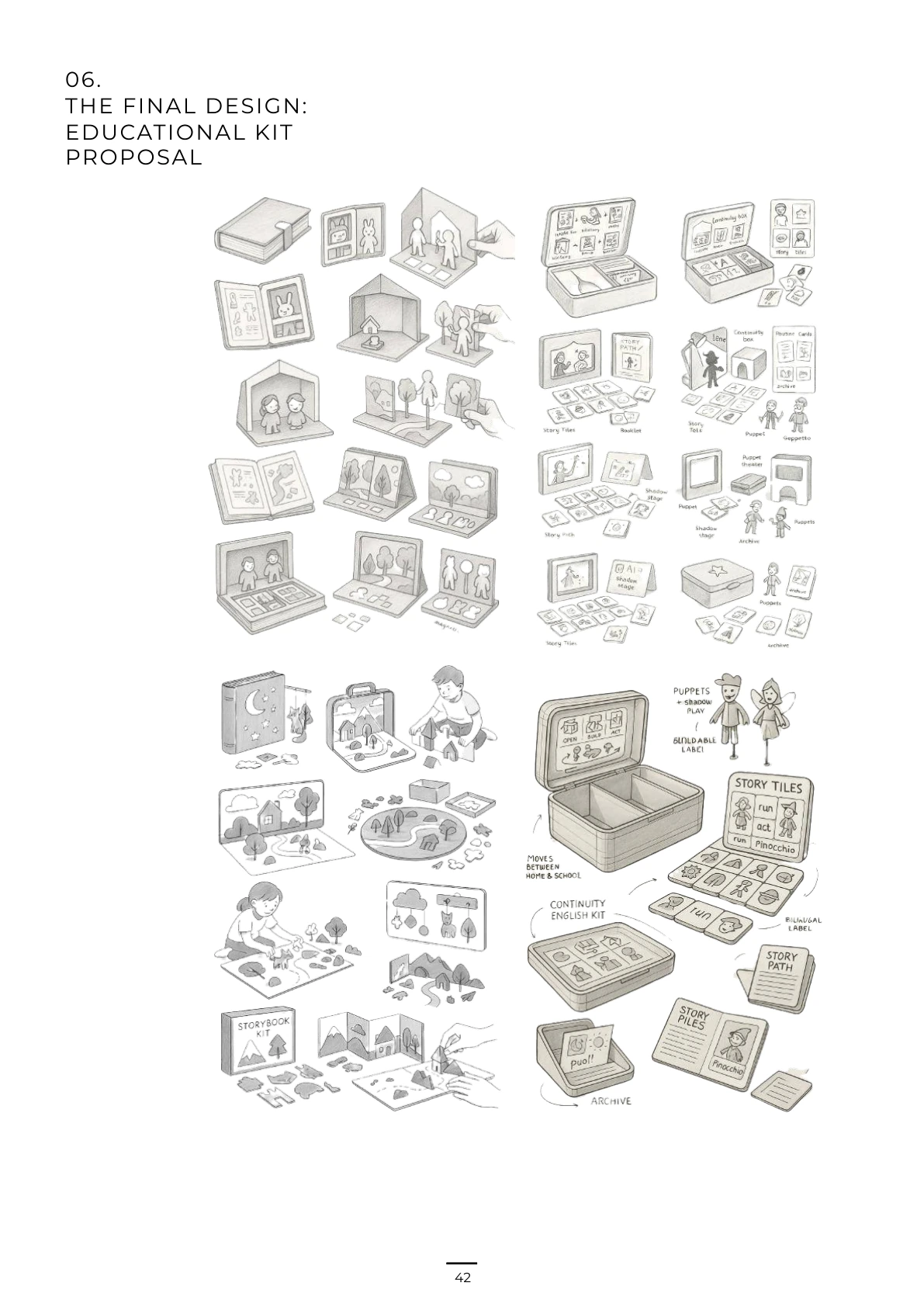
Monochrome modular-kit explorations and component alternatives, MSc design booklet, PDF p. 121.
A school–home–return journey makes the service legible: it coordinates what the child encounters, what adults do, which artefacts travel, and how a contribution can re-enter the shared narrative.
Teacher introduces characters, gestures and the language target.
A reproducible tile, drawing or silhouette and a brief bilingual cue travel home.
Child demonstrates, plays, traces or invents a variation with a caregiver.
Object, drawing, gesture or story account becomes material for the next scene.
Child-facing interactions, teacher facilitation, caregiver support, handoff resources and preparation are mapped together. The original thesis contains journey diagrams on PDF pages 136–137.
The design booklet describes portable tiles and multiple modes of participation, including adult guidance and embodied activity. Inspect the original scenario diagram and storyboard below.
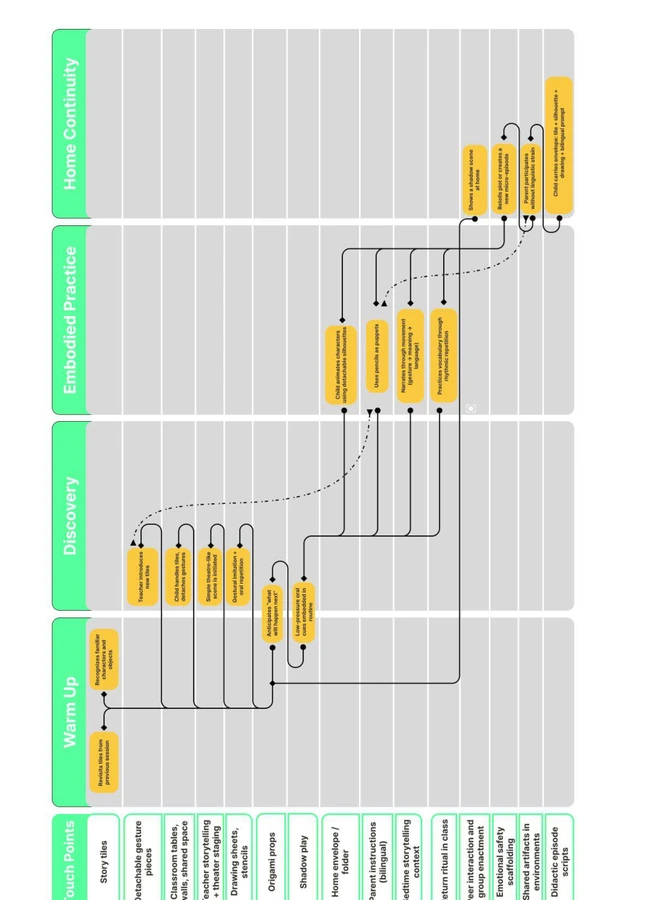
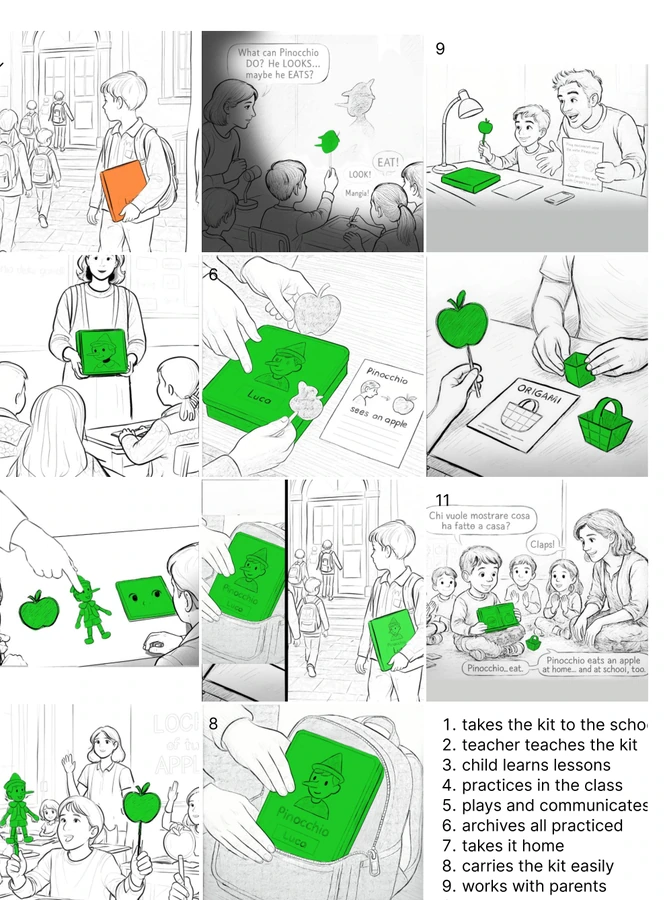
ORIGINAL WORK / Click a source image to inspect the complete page at high resolution. Previews are faithful crops from the original uploaded PDFs; page numbers are preserved.
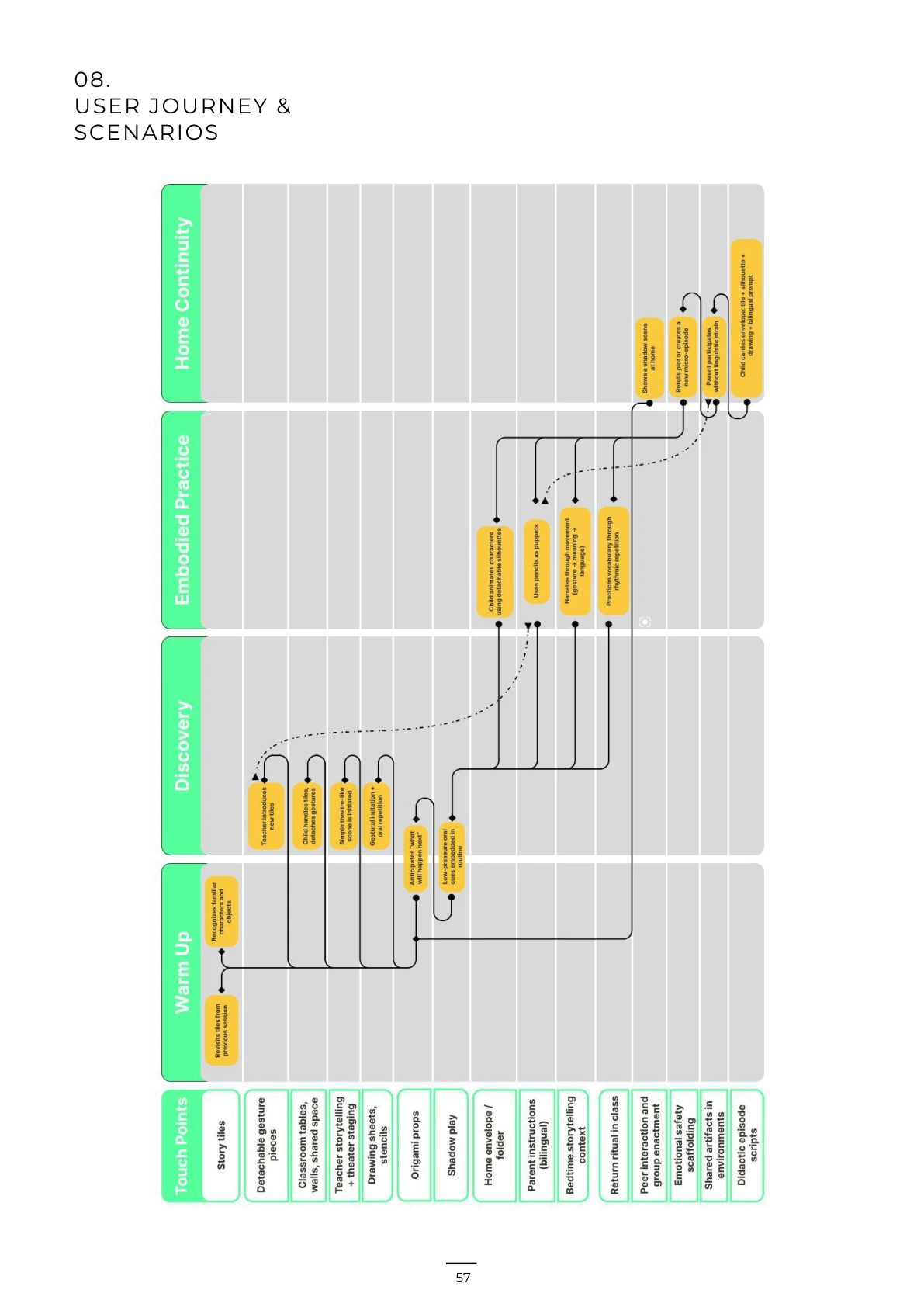
User Journey & Scenarios: actor/phase handoffs and service sequence, MSc design booklet, PDF p. 136.
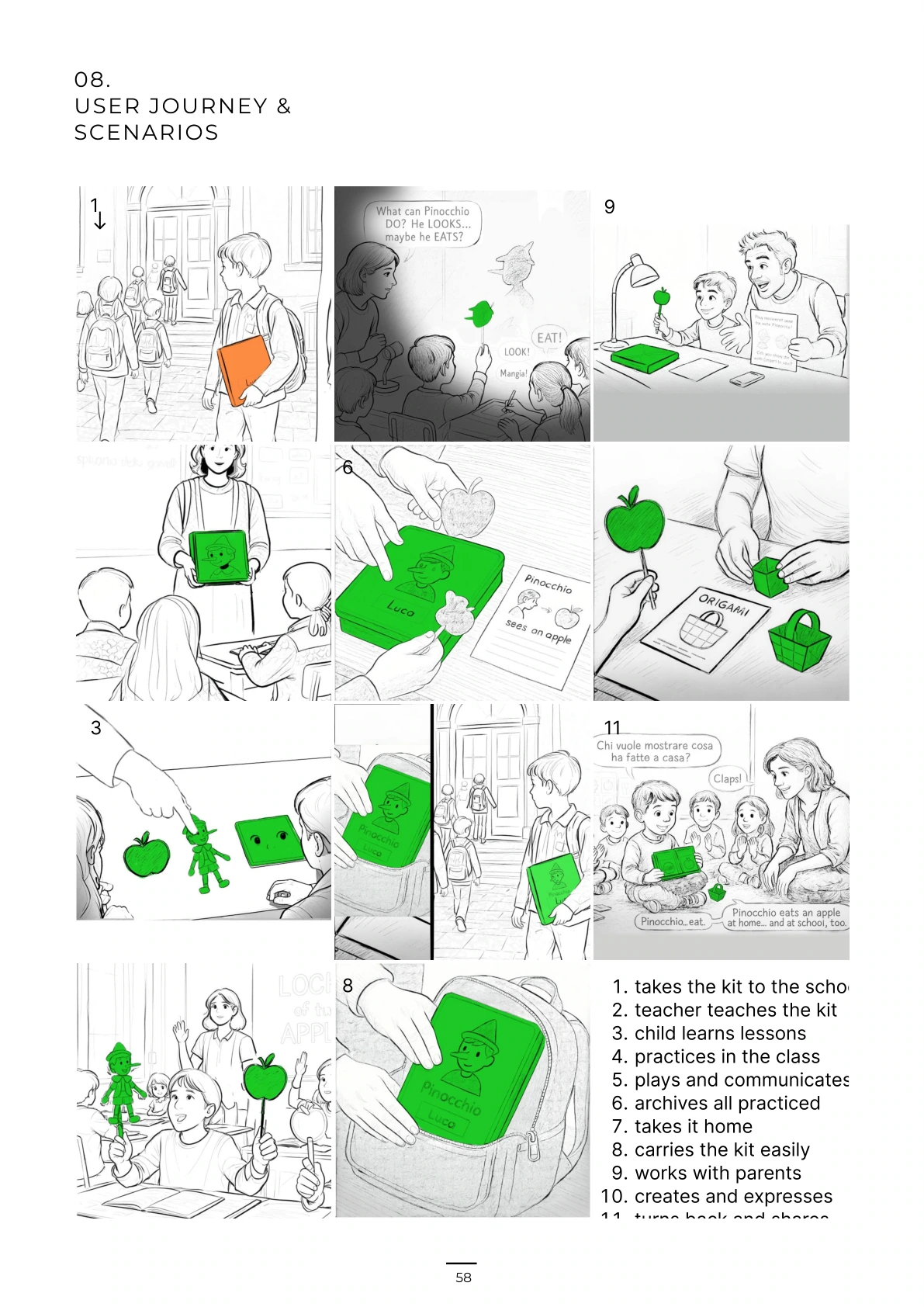
Eleven-step scenario from school to home and back, MSc design booklet, PDF p. 137.
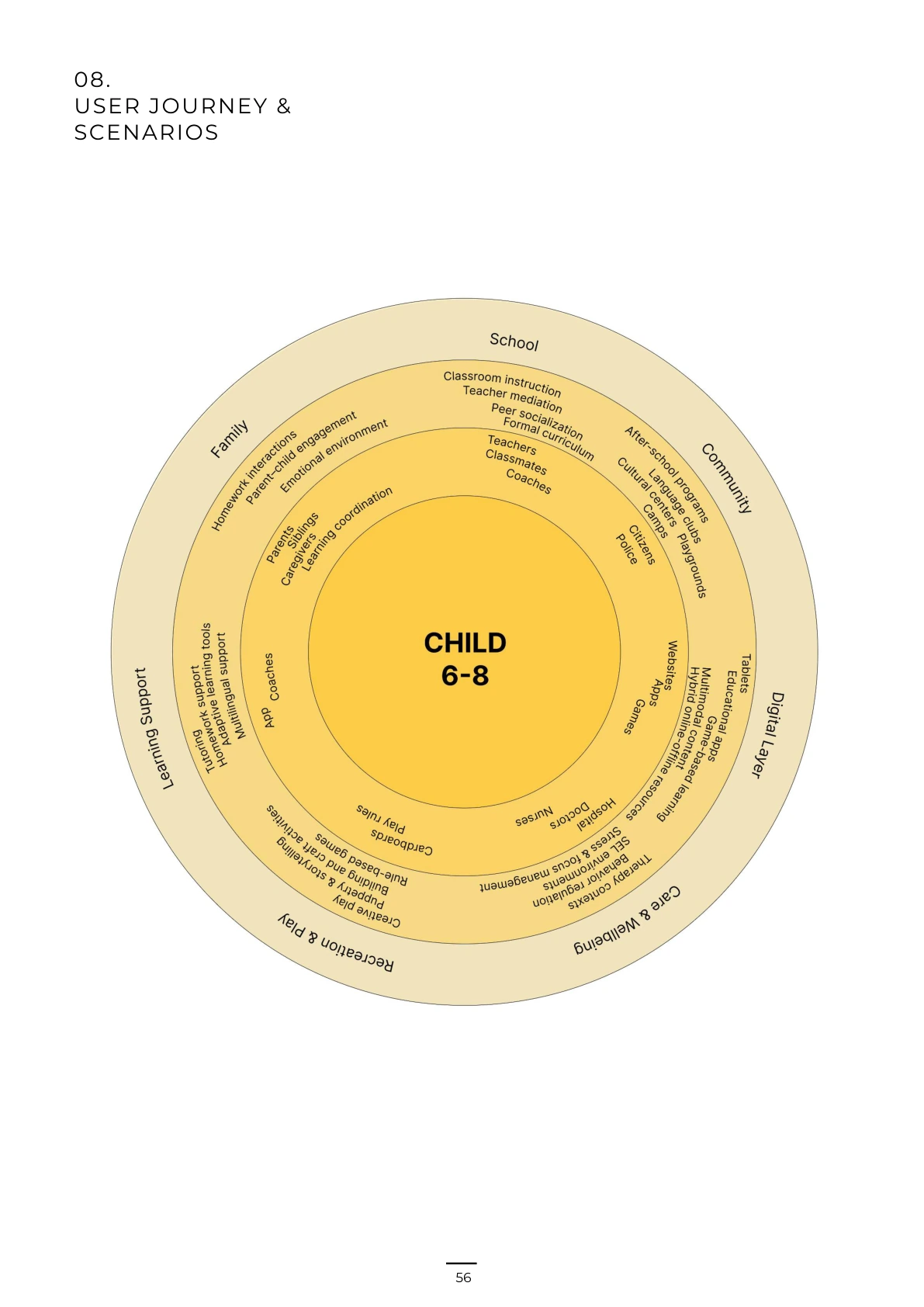
System actors and their relationships, as represented in the thesis before the detailed journey map, PDF p. 135.
Evaluation is part of the design proposition: formative comparison and walkthroughs informed development, while the thesis defines a later, more complete classroom–home pilot and criteria for meaningful validation.
Iterative comparison of early proposals, walkthroughs, prototype exercises and reflective evaluation against field insights.
Legibility, handling, detachable interfaces, pencil mounting, stencil use, safety and tolerances for group activities.
Track if meanings travel between class and home, how families respond and which elements require revision.
ORIGINAL WORK / Click a source image to inspect the complete page at high resolution. Previews are faithful crops from the original uploaded PDFs; page numbers are preserved.
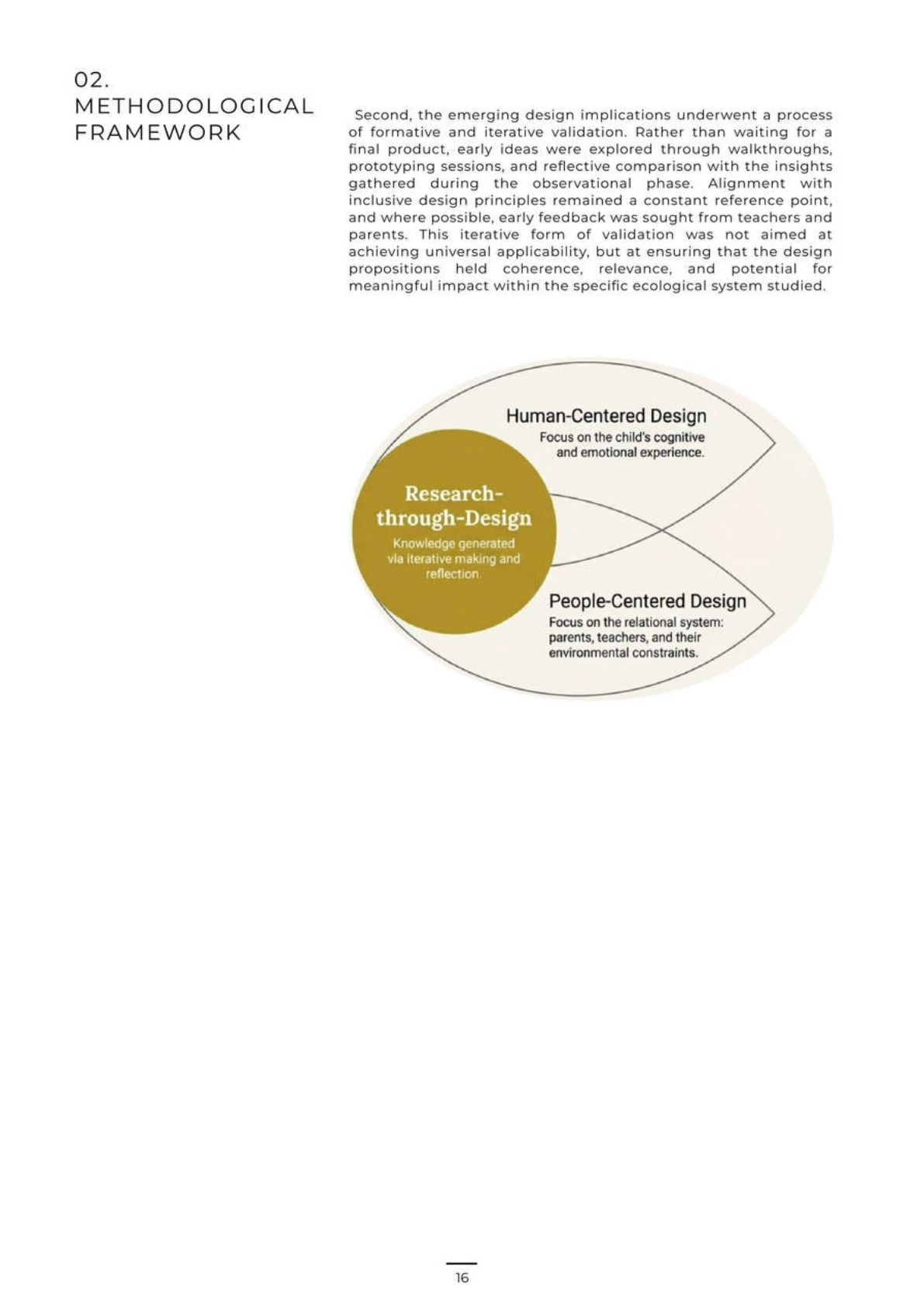
Research-through-Design, concept walkthroughs and formative iteration, MSc research booklet, PDF p. 17.
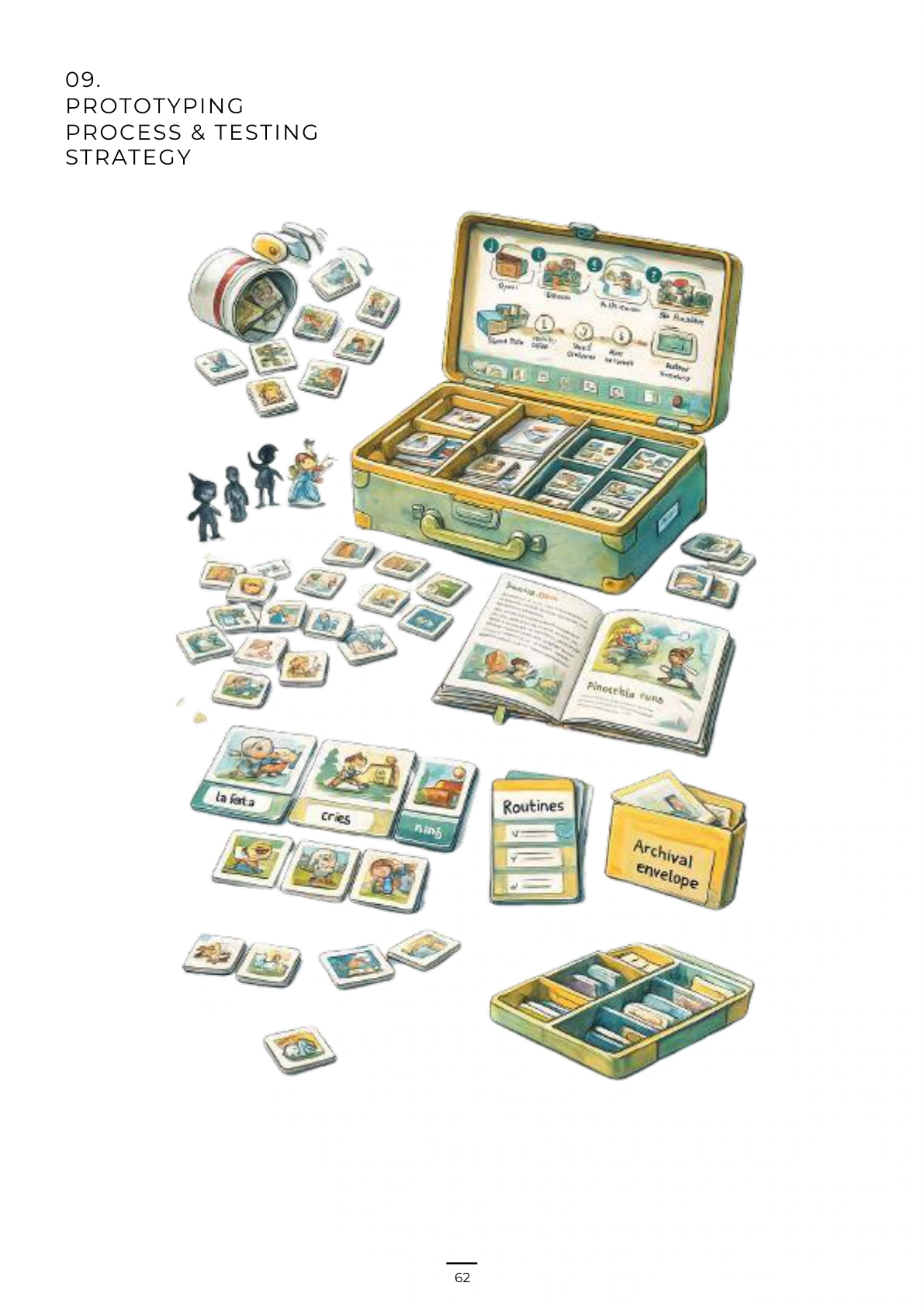
Illustrative configuration of proposed components reproduced from the original thesis PDF p. 145.
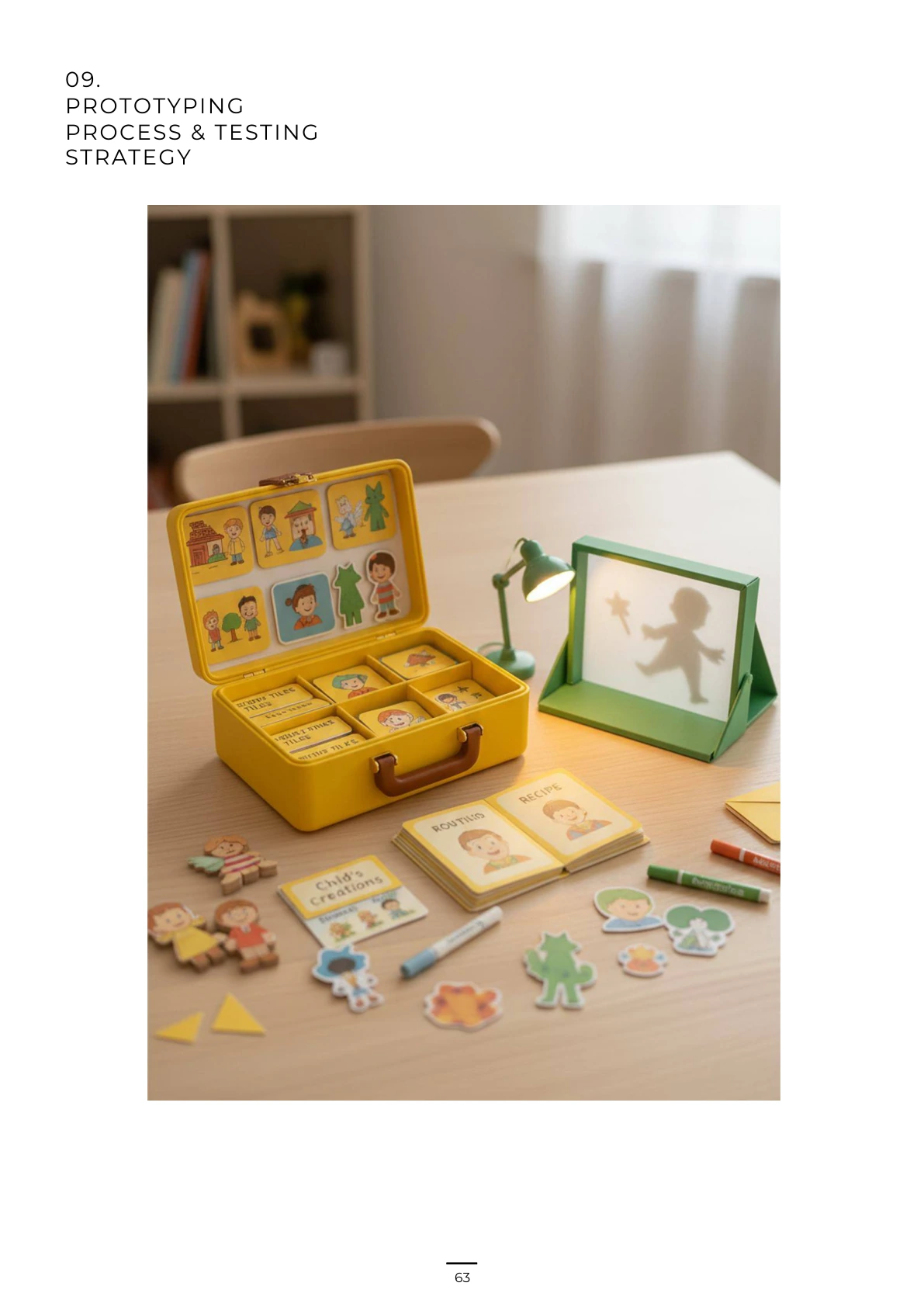
Visualisation of intended kit-in-context from the original MSc thesis PDF p. 146.
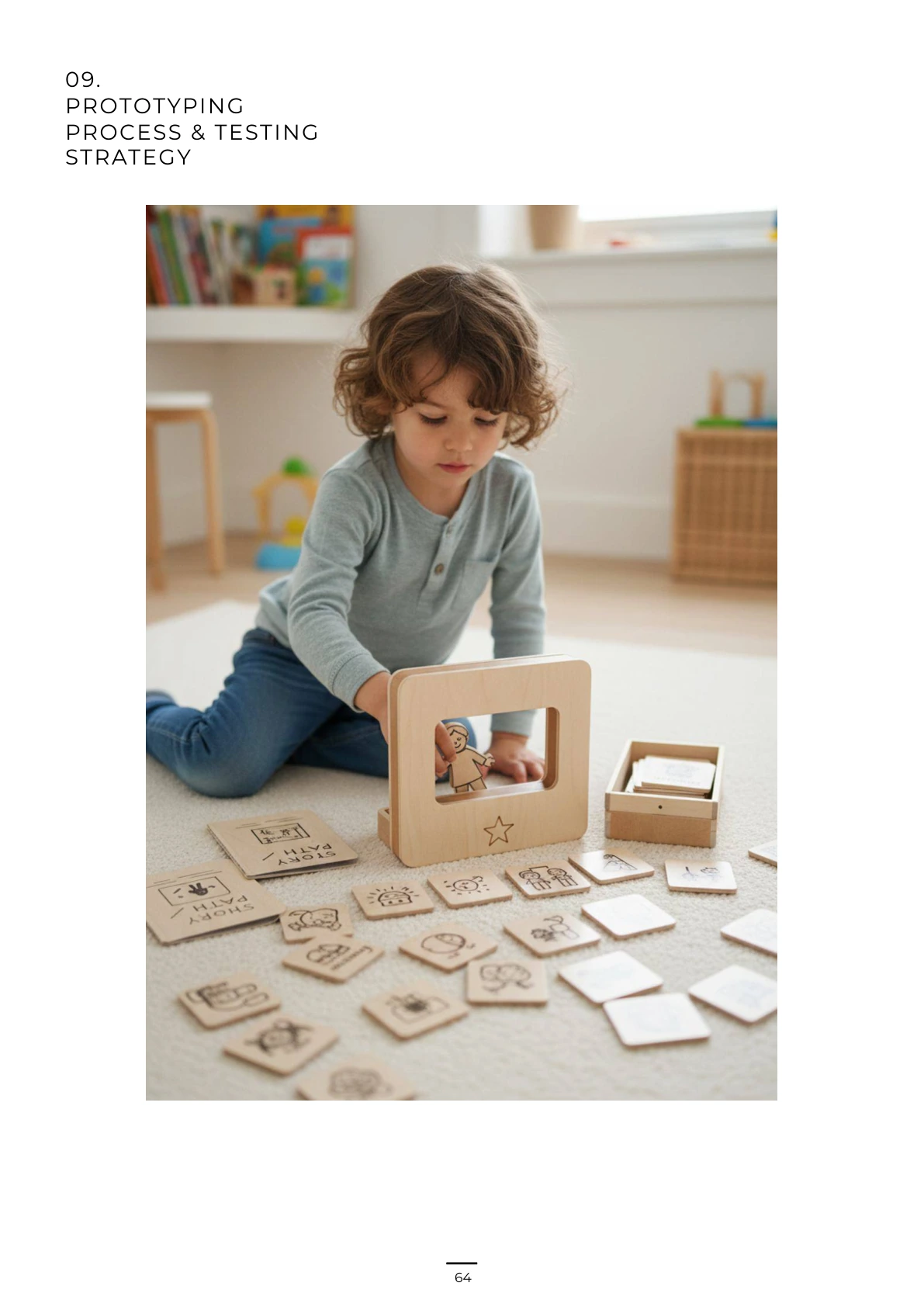
Illustrated intended use scenario from the original MSc thesis PDF p. 147.
Independent research and design proposal for an AR-assisted museum visit, intended first for Tehran Museum of Contemporary Art and adaptable to other Iranian museums. The visitor journey and service blueprint map a proposed, not deployed, service across digital, physical, frontstage and backstage touchpoints.
The concept coordinates before-visit discovery, mobile orientation, AR-supported wayfinding, exhibit information, accessible support from museum staff, and post-visit feedback through one journey.
The concept was presented and developed through recurring working meetings at the museum. According to my experience, it was supported and approved internally; it subsequently fell out of the implementation process. No written approval was given to me, and the exact organisational reason for its discontinuation is unknown.
Before arrival, at the museum, in the gallery, after departure.
Staff assistance, content and device interfaces, service recovery.
Designed for different museum configurations and visitor needs.
Original service-design artefacts
Original project maps—not reconstructed visuals. The visitor persona belongs to the design scenario and is not presented as a participant in a deployed service.
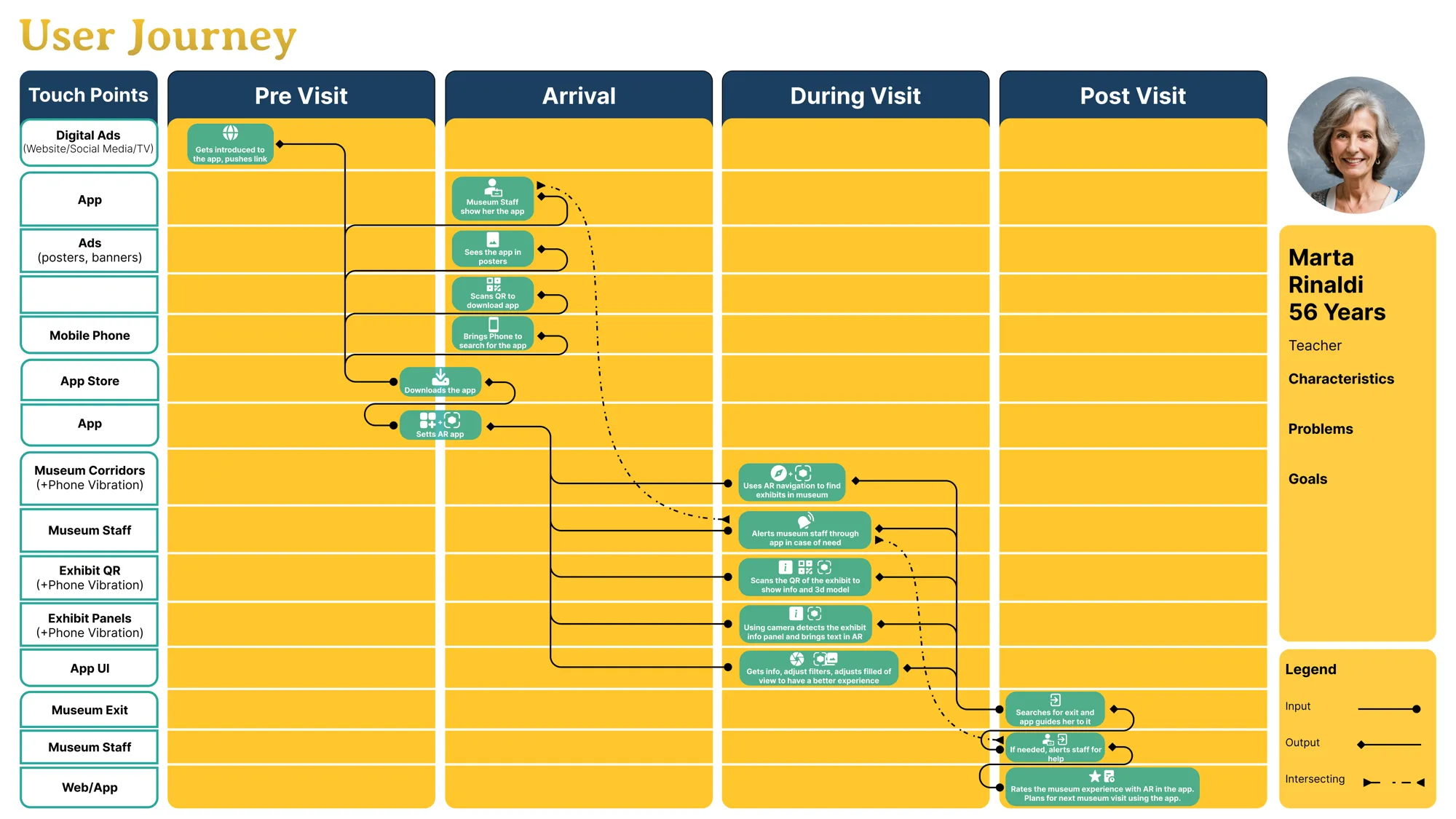
Pre-visit, arrival, gallery navigation, staff support and post-visit phases mapped against physical and digital touchpoints.
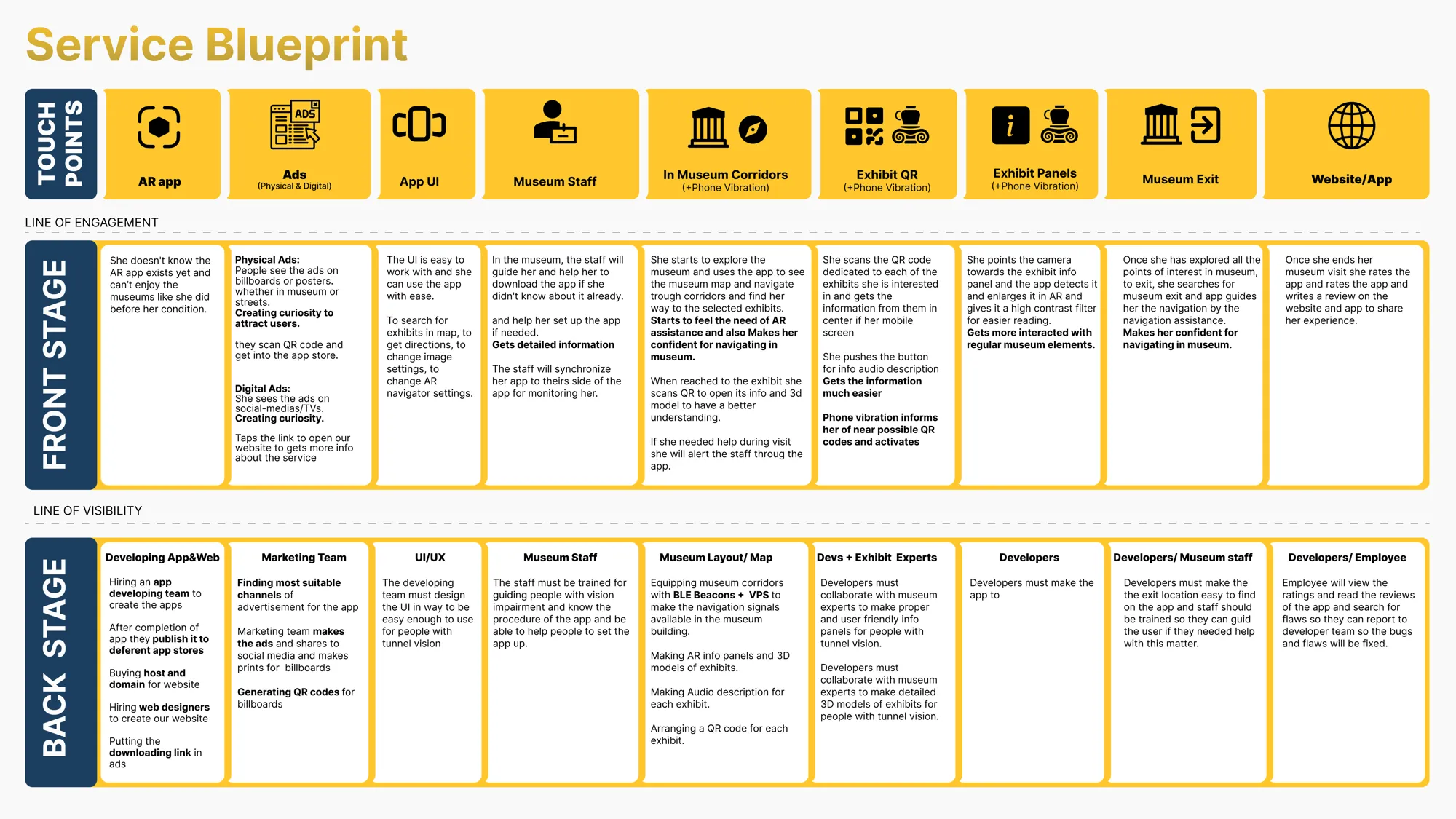
Service blueprint for interactions and support processes connecting visitors, museum staff, digital guidance and backstage operations.
Service blueprint: visitor-facing steps, staff support and backstage tasks are mapped against the stages of the museum visit.
Led the design work of a five-person team for a real Chevrolet Suburban camper conversion. I coordinated research, task allocation, vehicle measurement, 3D modelling, ergonomic analysis and decisions with the workshop. The client and the workshop were consulted directly; fabrication was carried out by the workshop rather than by the design team.
Interviews with the workshop alone did not fully explain the desired experience. I initiated an additional direct interview with the vehicle owner and uncovered a decisive use case: as the only person equipped for extended outdoor stops, the owner frequently hosted a larger circle of friends travelling in separate cars. Seating, shared facilities, cooking and access priorities were reassessed around this discovery.
Jump to Direct link ↗I led the criteria review, dimensional and ergonomic decisions, and evaluation of mechanisms with the five-person team. For example, our team developed the front-seat rotation solution and I selected the preferred direction; table, bed, water, electricity and gas systems were assessed with the workshop. The project report contains alternatives and a weighted decision matrix; the images of the finished conversion document the workshop’s build.
Inspect evaluation page ↗Workshop documentation / actual fabrication
Original photographs from the 2019–2020 construction process alongside original report pages. These photographs document manufacturing and functional modules, not a digital rendering.
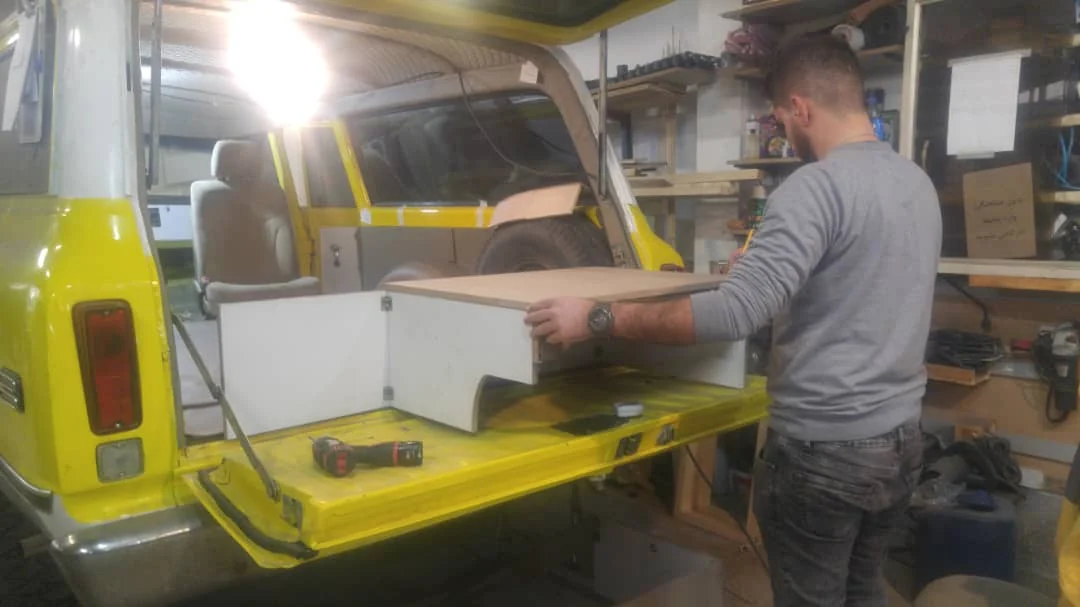
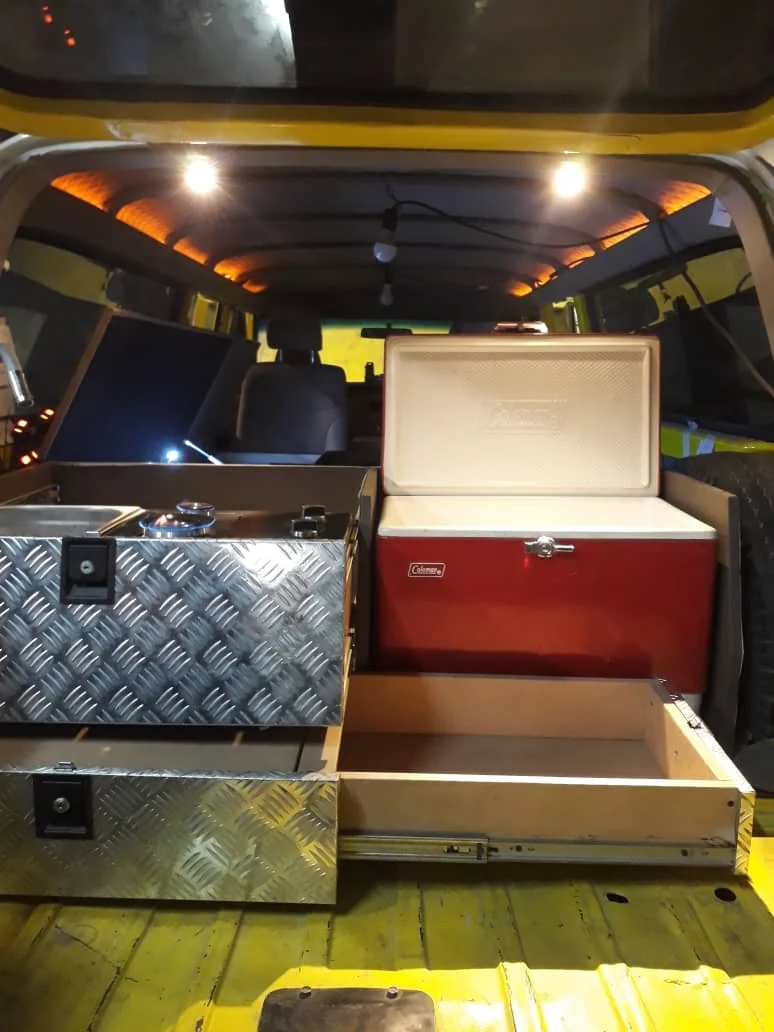
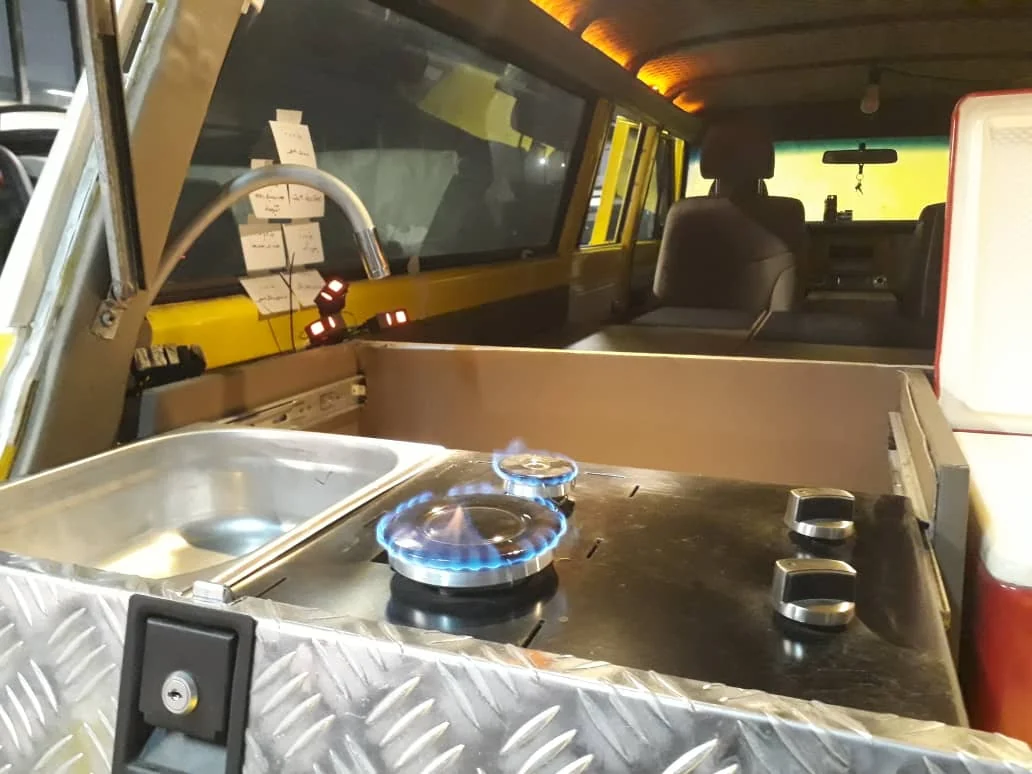
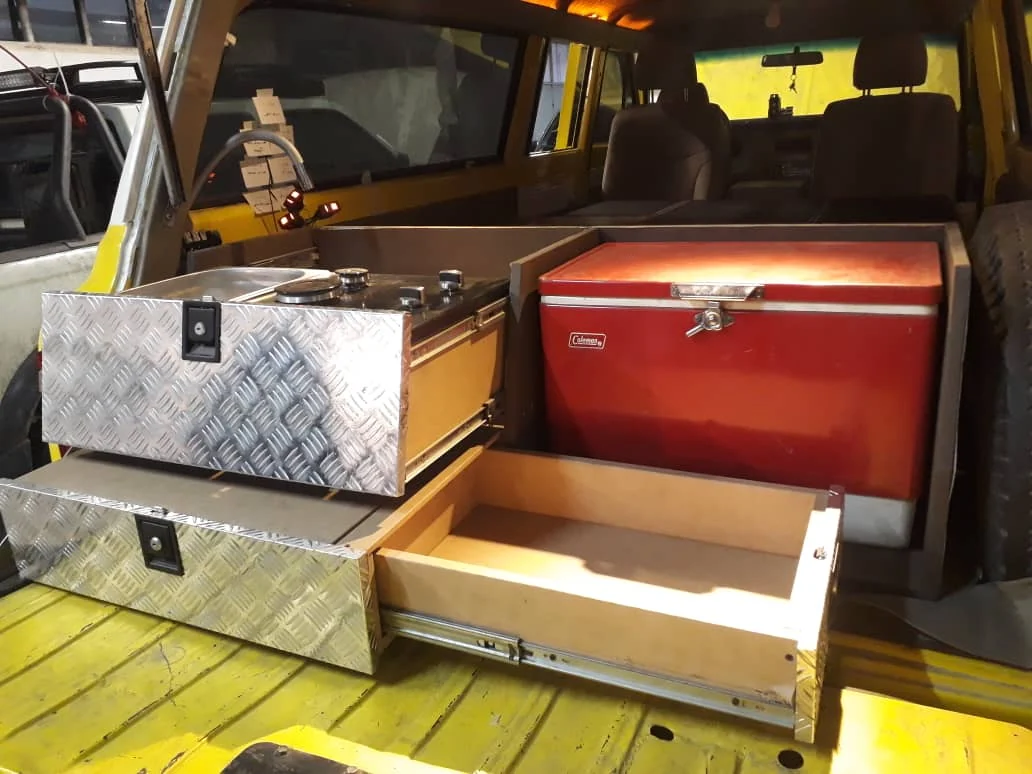
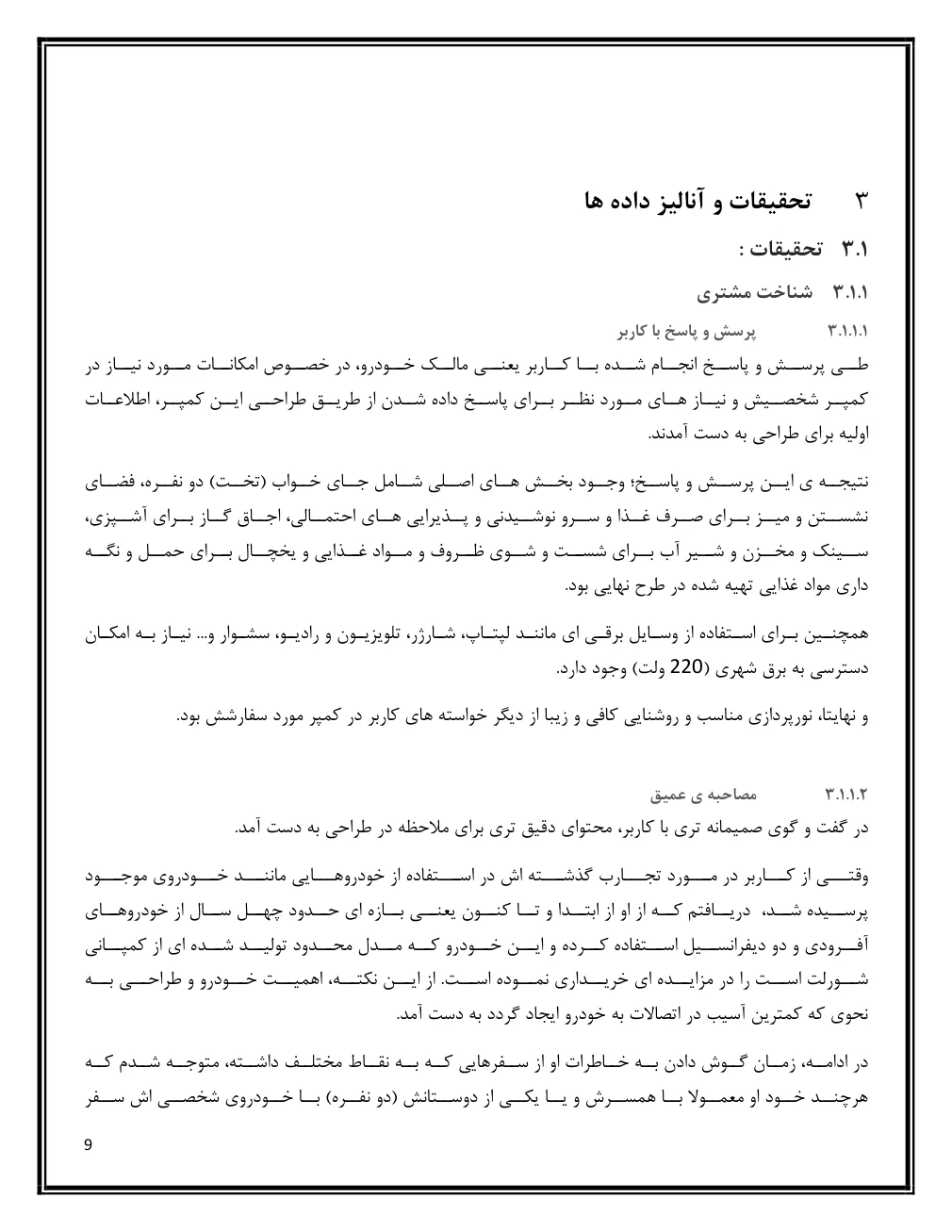
Original report records customer questions and design context.
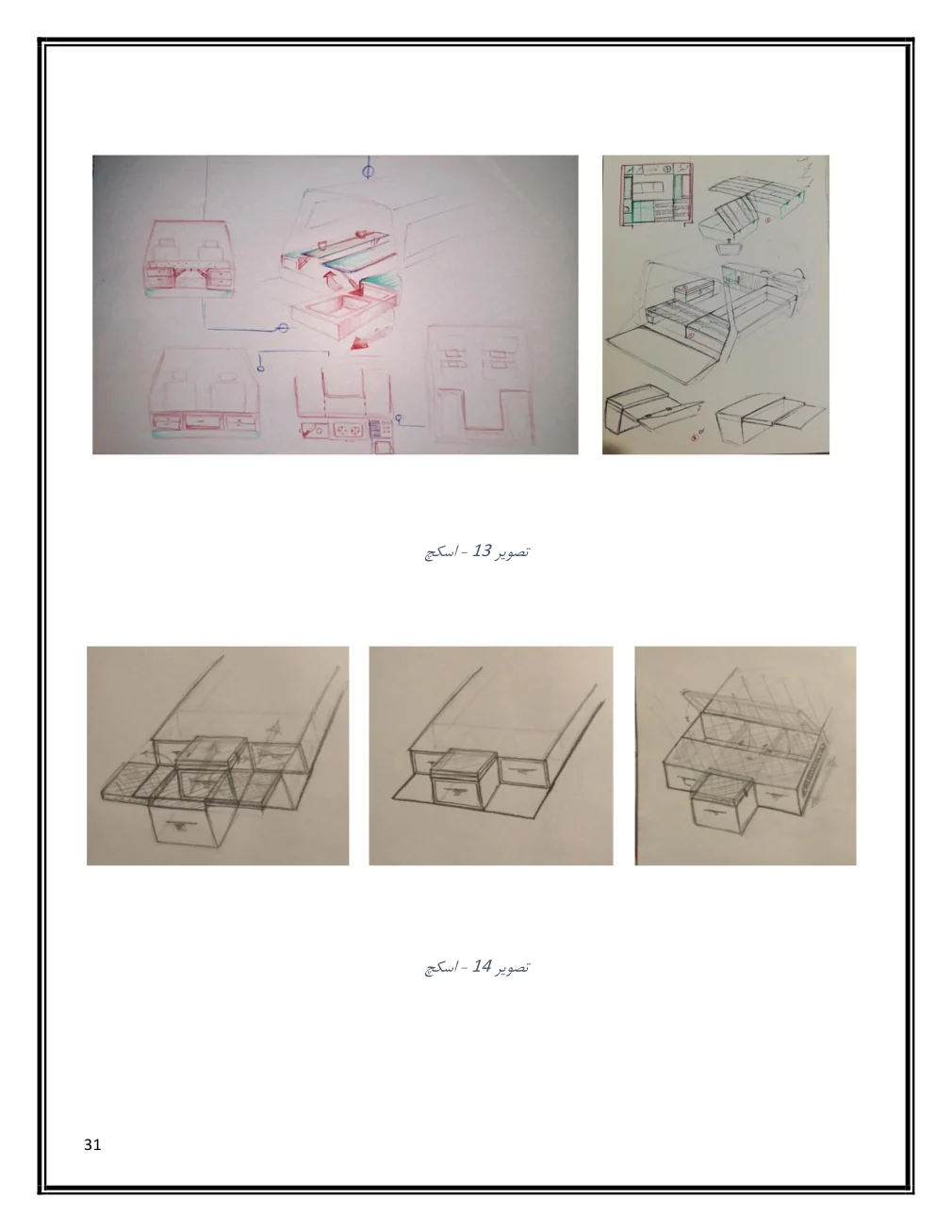
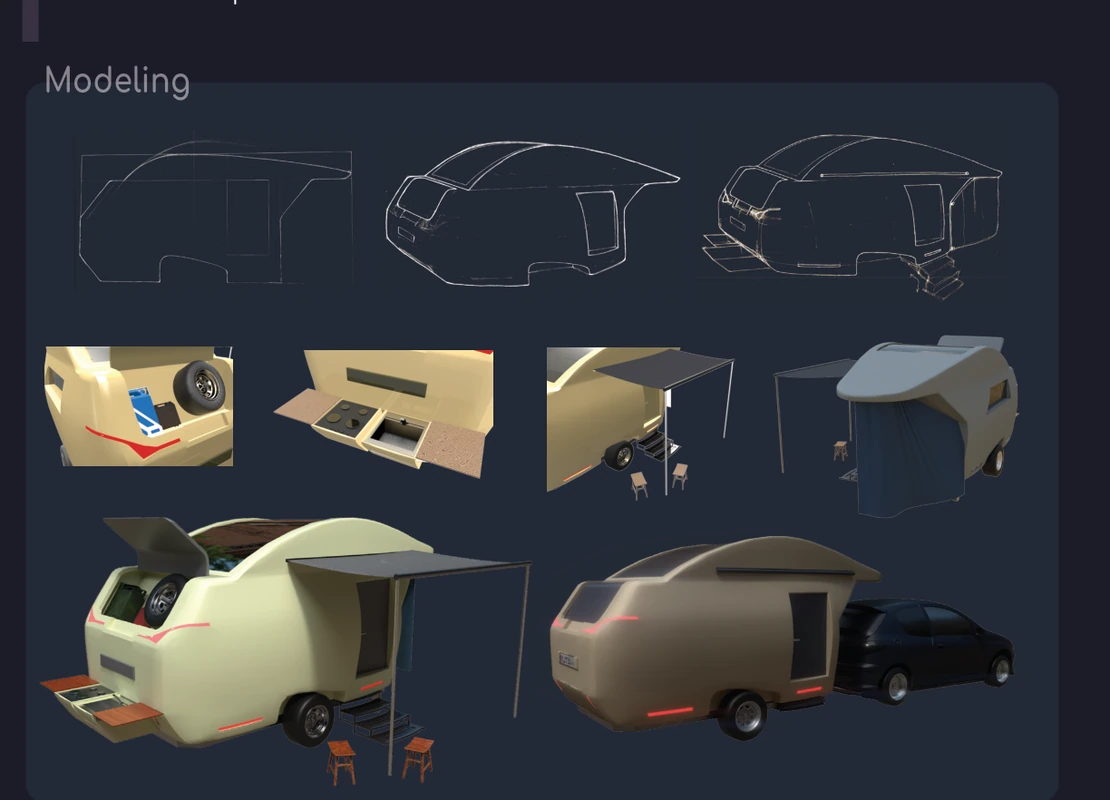
Original concept sketches showing alternatives for the vehicle interior.
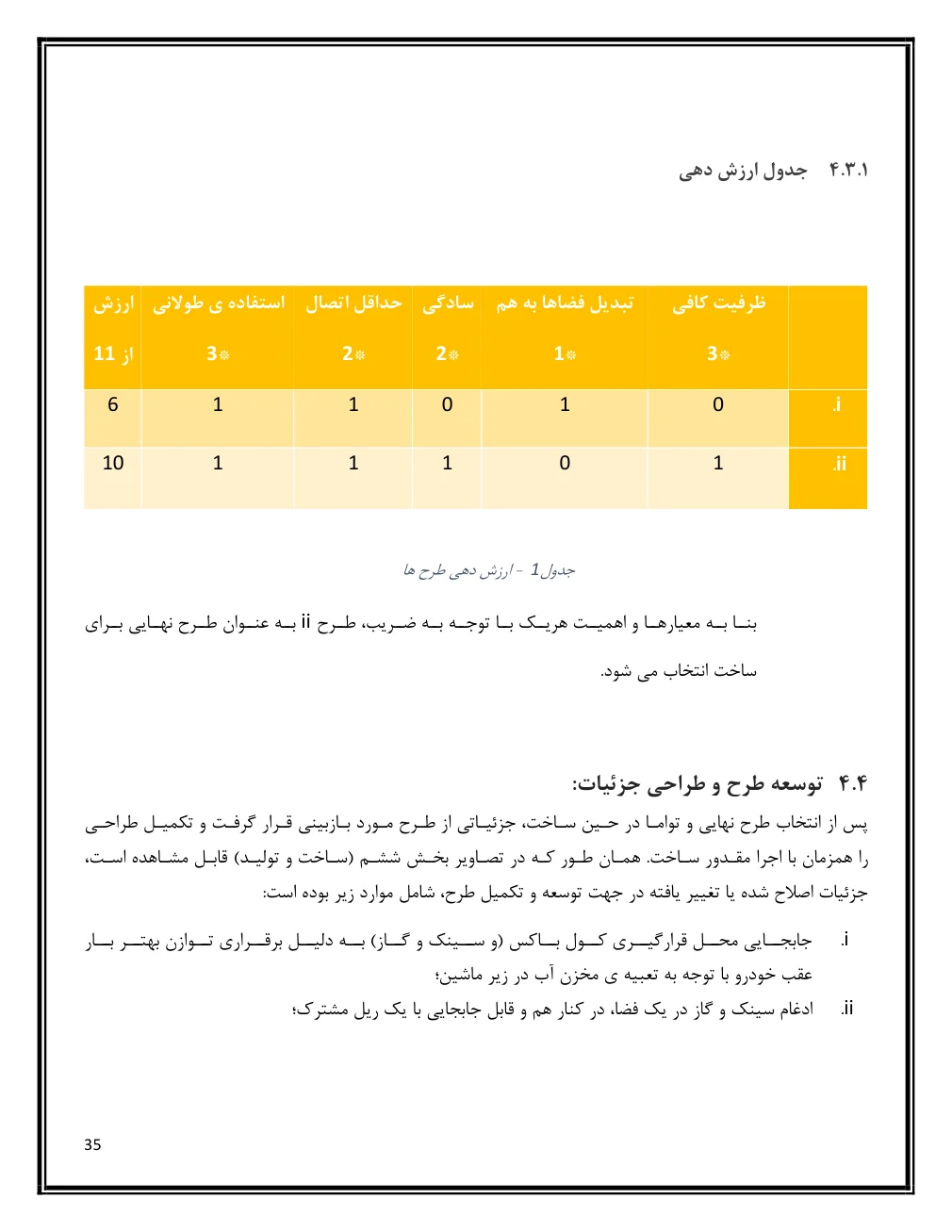
Original weighted evaluation of two design directions before build.
Weighted options make the selection rationale inspectable before the fabricated interior is shown.
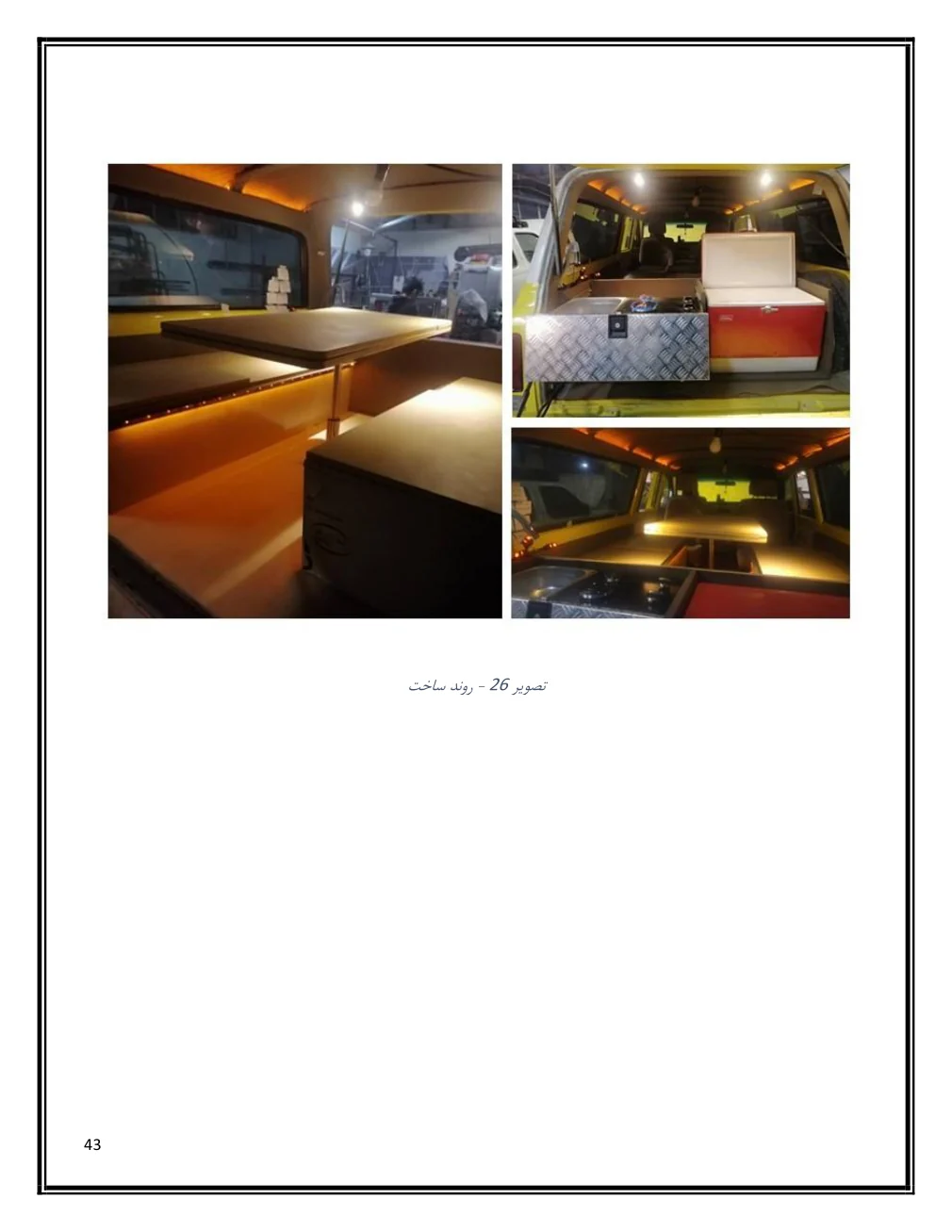
Original project report source page documenting fabrication.
Language note: historical BA research pages are in Persian. English project narratives and captions explain the design decisions; the original pages are retained as source evidence. These English explanations are editorial interpretations, not certified document translations.
The 2020 BA thesis is the first documented research, study and design effort in the camper field in Iran and in Persian, according to its author’s contemporaneous survey. The 92-page work connects interviews, travel habits, local constraints, human dimensions, criteria and product development. The Sarr camper concept emerged from this same work; I later encountered references to its research and findings in subsequent theses, industry studies and videos, though direct citations are not currently available for linking.
This BA research is the foundation of the same Sarr design project. Continue to Sarr product development ↗
The thesis brings together a historical and competitive review, Iranian anthropometric sources, local travel and environmental conditions, user interviews and first-hand field observations. These findings frame explicit criteria for a light, adaptive and usable caravan.
Read fieldwork excerpt ↗Design decisions include bed clearance and dimensions, rearrangement of storage and cooking access, water-tank placement, refrigerator/table conflict, shower location, shade length and body proportions. The project documents the reason for each change.
Inspect revision record ↗Landscape, users, interviews, actual travel environments.
Human dimensions, needs, alternative forms and modular uses.
Iterative adjustment of equipment, access, placement and form.
Thesis evidence / original excerpts
Original scanned/design pages and text from the 2020 thesis (PDF page numbers). The selected visuals are direct page renders; nothing was re-illustrated with AI.
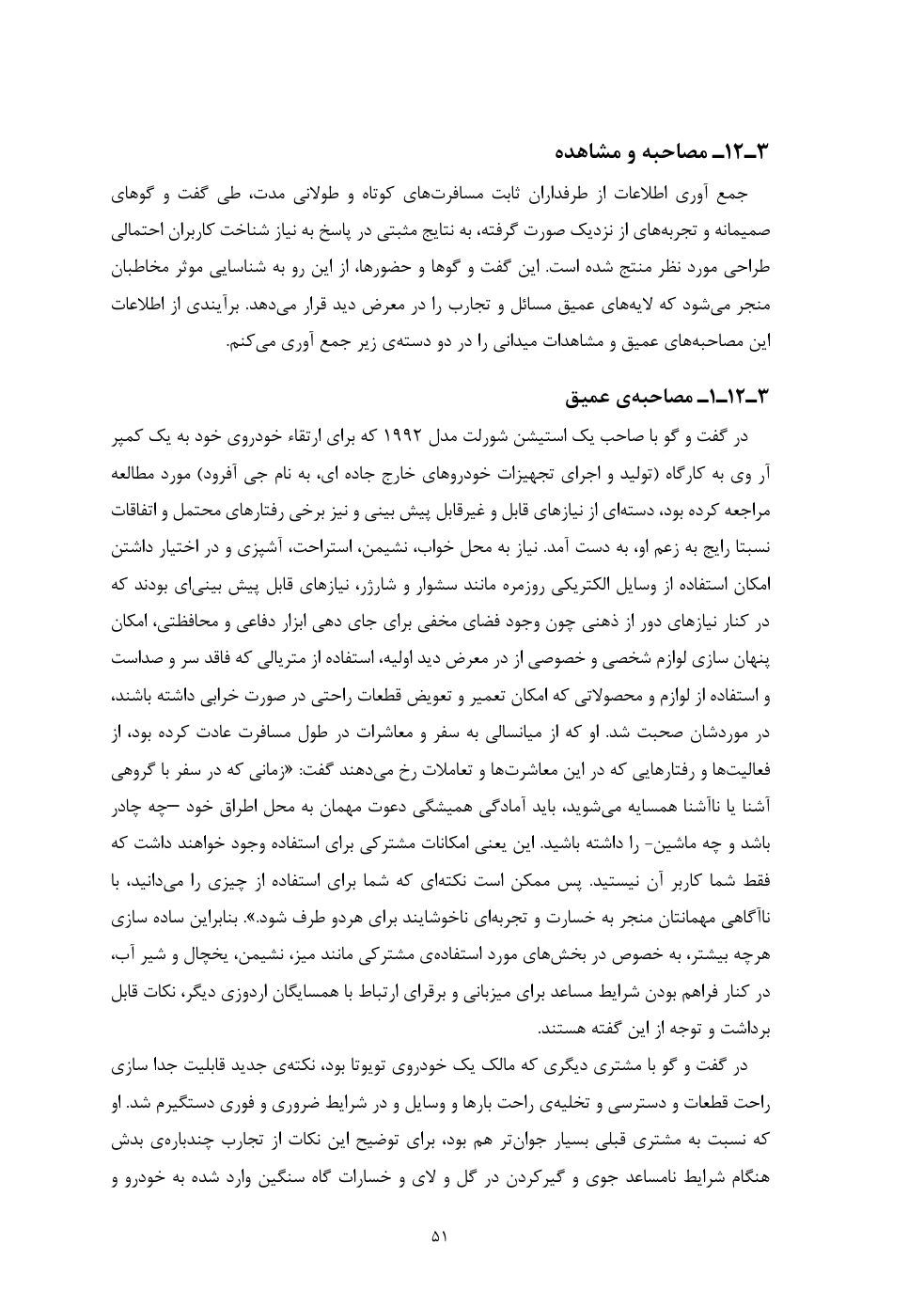
Original thesis records conversations and user needs for camper activities.
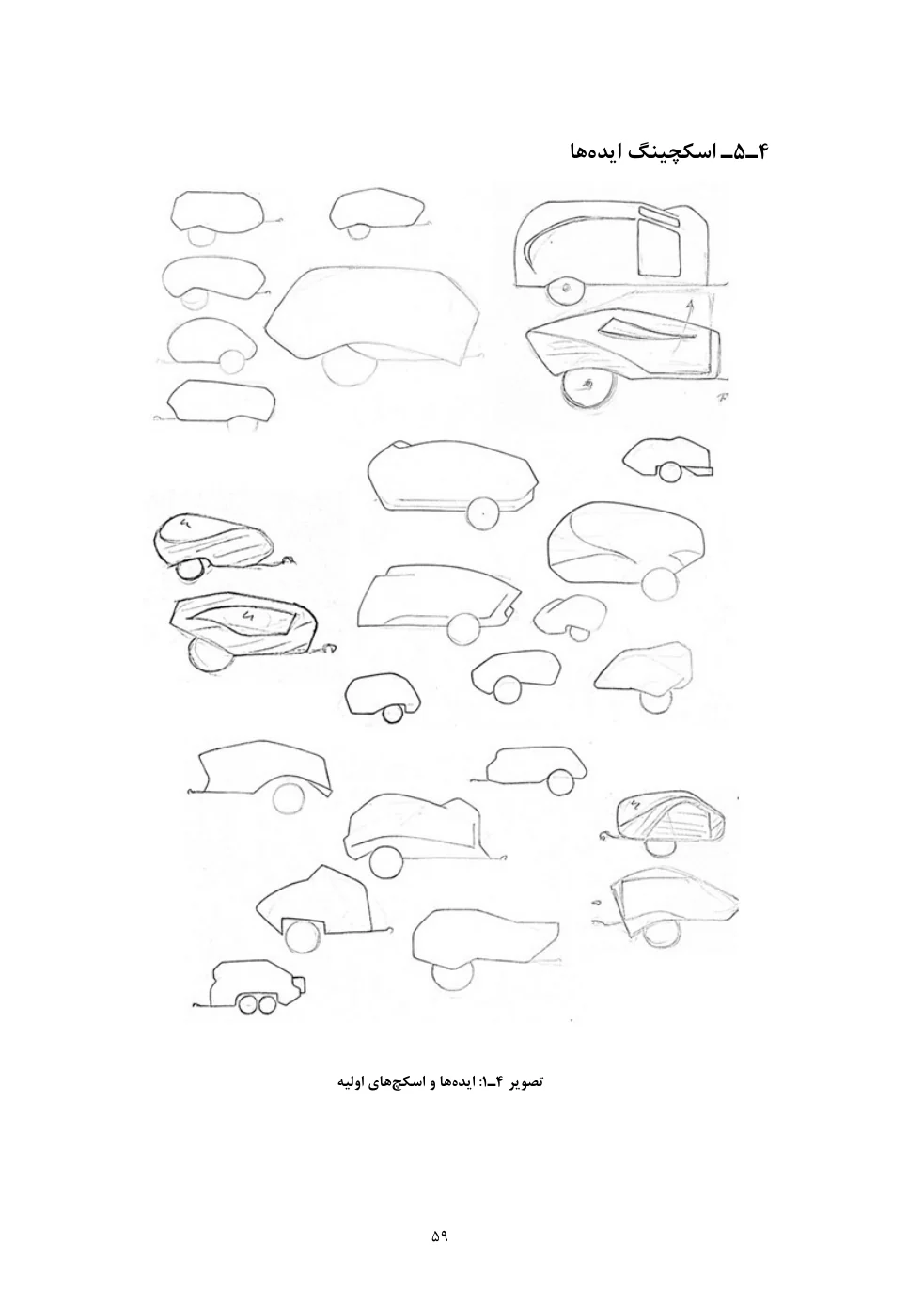
Multiple initial camper design directions after the research and design brief.
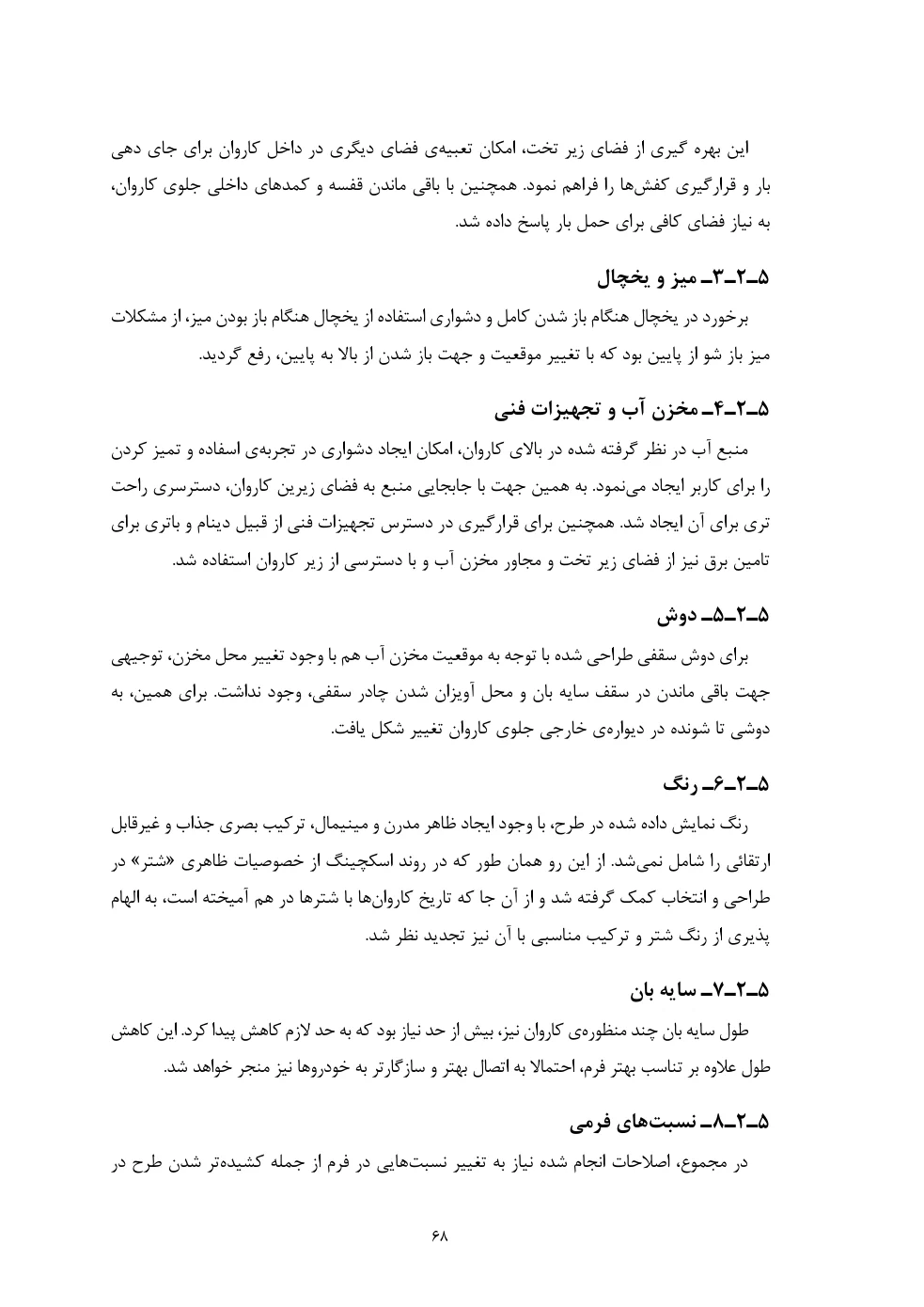
Detailed evaluation: bed clearance, equipment access, shower and spatial corrections.
The thesis documents concrete ergonomic and spatial problems that led to revision.
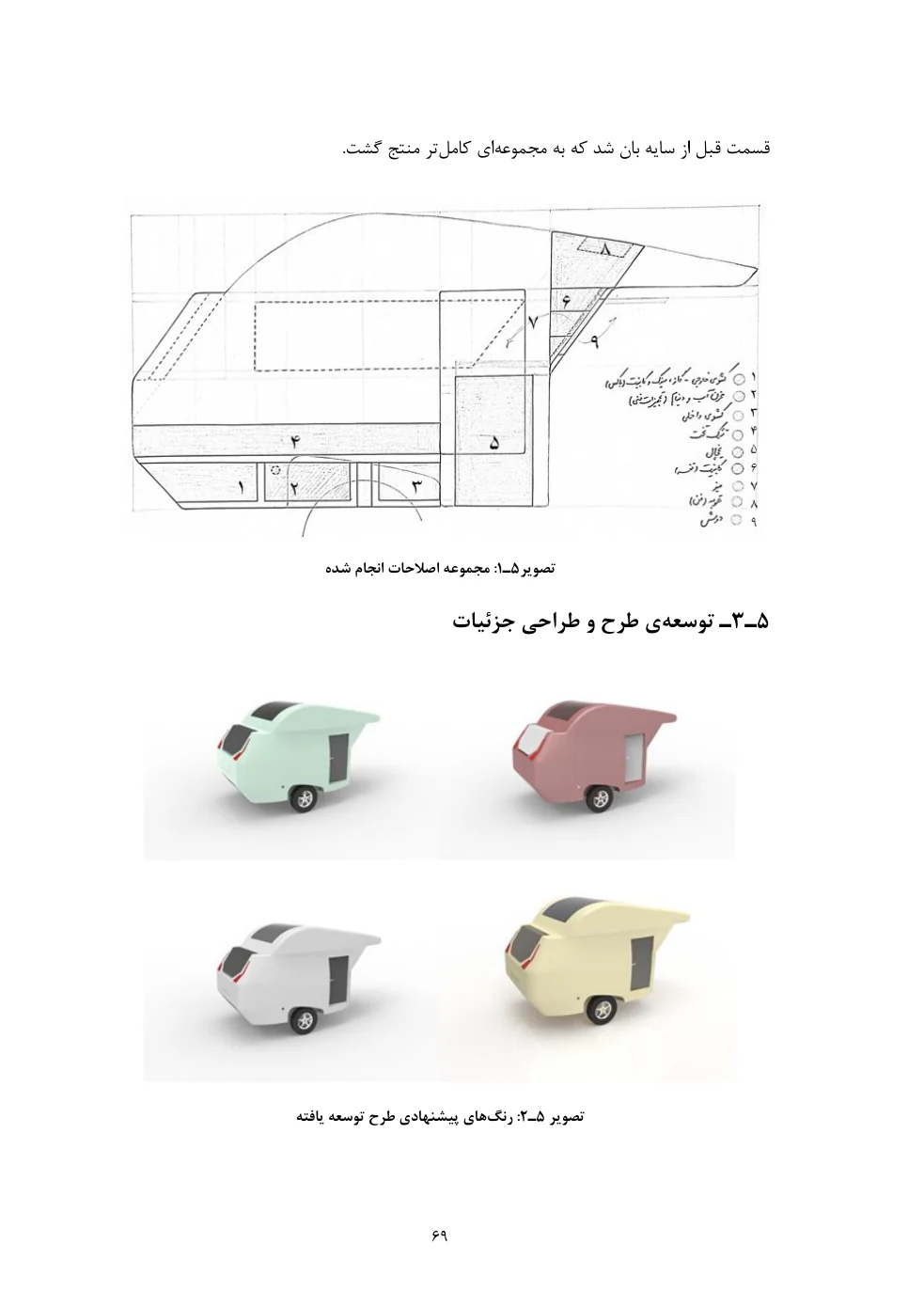
Original revised scheme and alternative colour/material ideas.
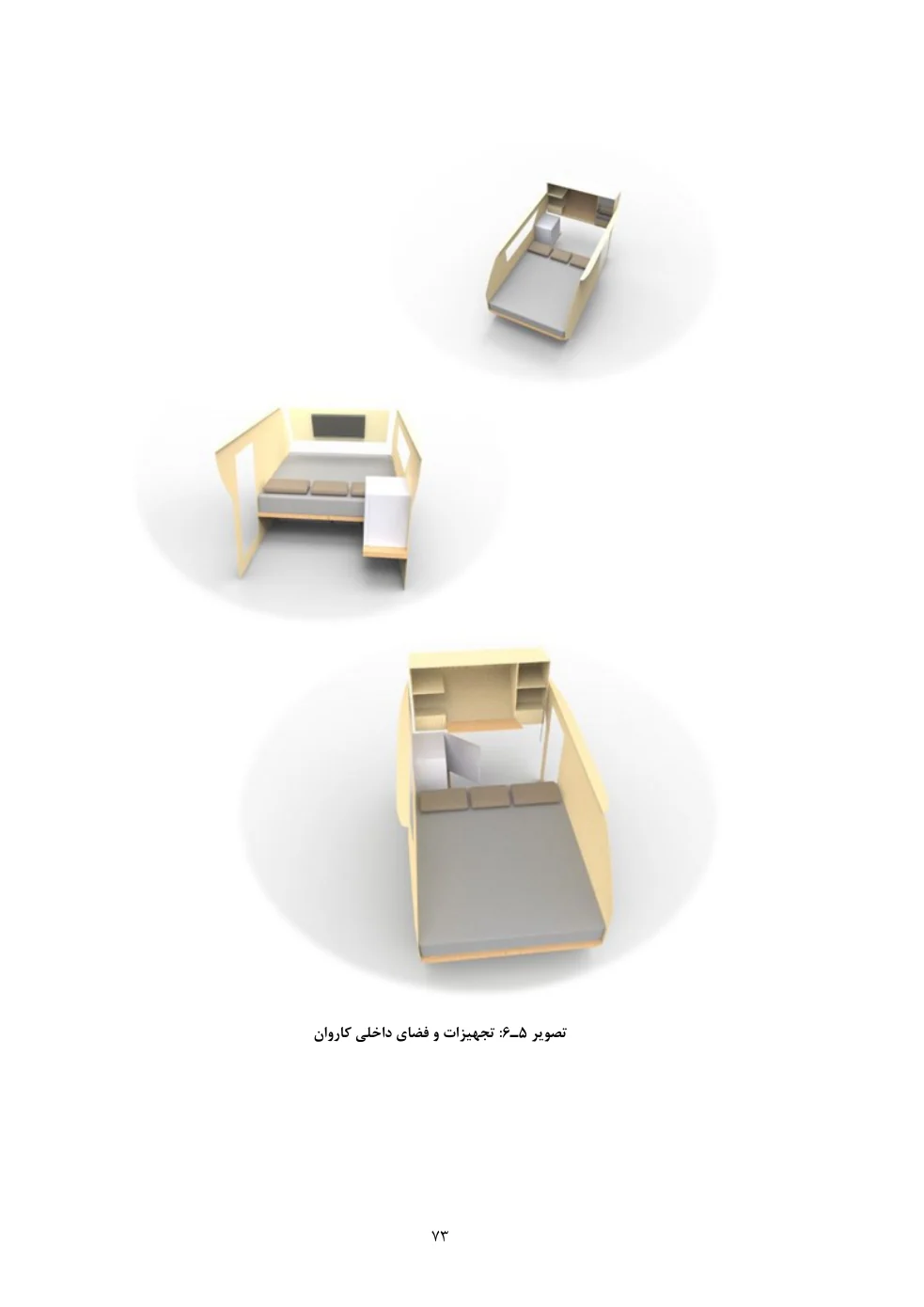
Interior furniture, convertible bed and placement of product systems.
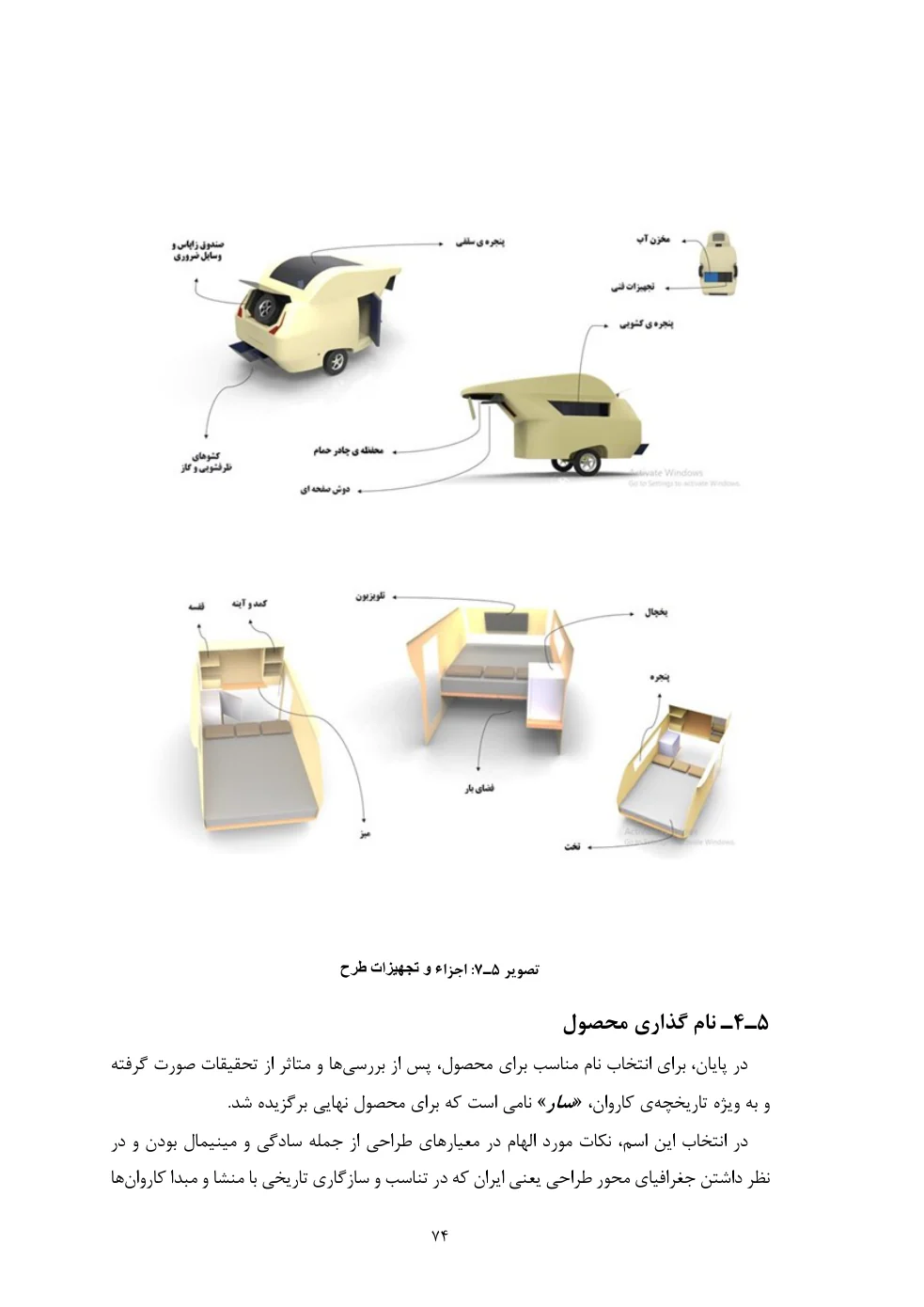
Equipment and final selected configuration annotated in the thesis.
Sarr is the product-design development of the same pioneering BA research, not a separate research project. The original 27-page portfolio presents form and 3D development, while the 92-page thesis traces local users, spatial needs, comparative research and documented corrections.
One project: research, criteria, development and revisions. Inspect the original research and revisions ↗
Follow the full study: 92-page BA research and development evidence ↗ · Design corrections ↗ · Prior built Chevrolet project ↗
Original working files / independent images
Selected design assets supplied separately from the printed BA portfolio. Browse the original sketches and product views without the page layout surrounding them.
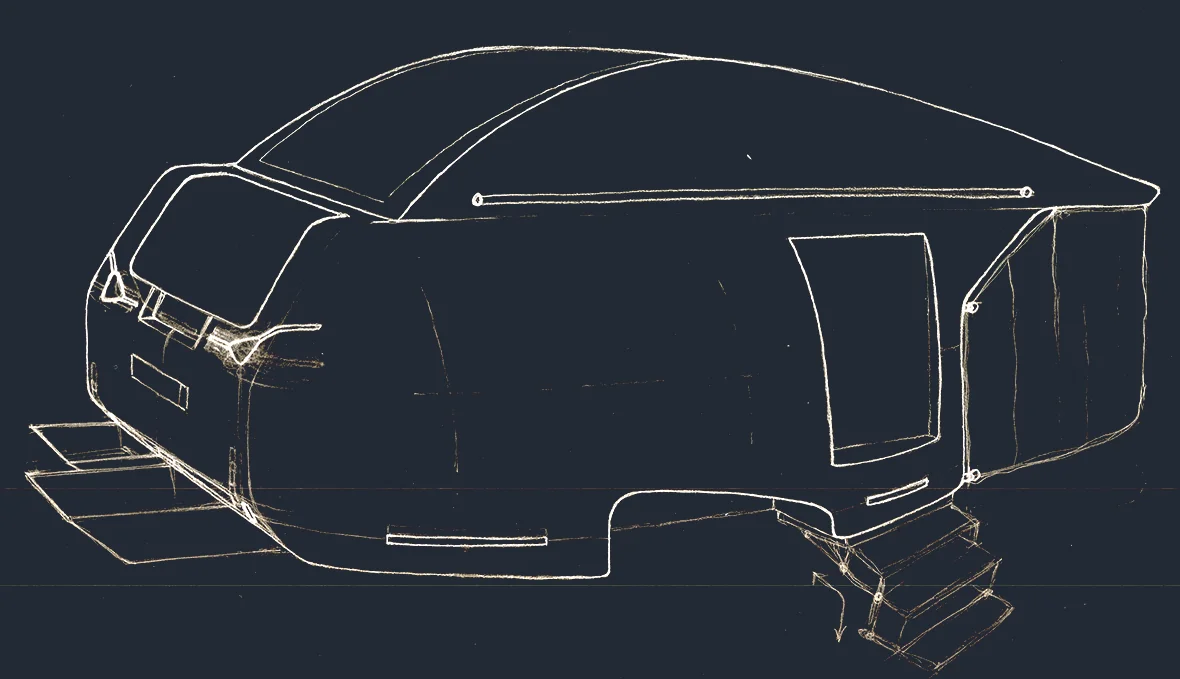
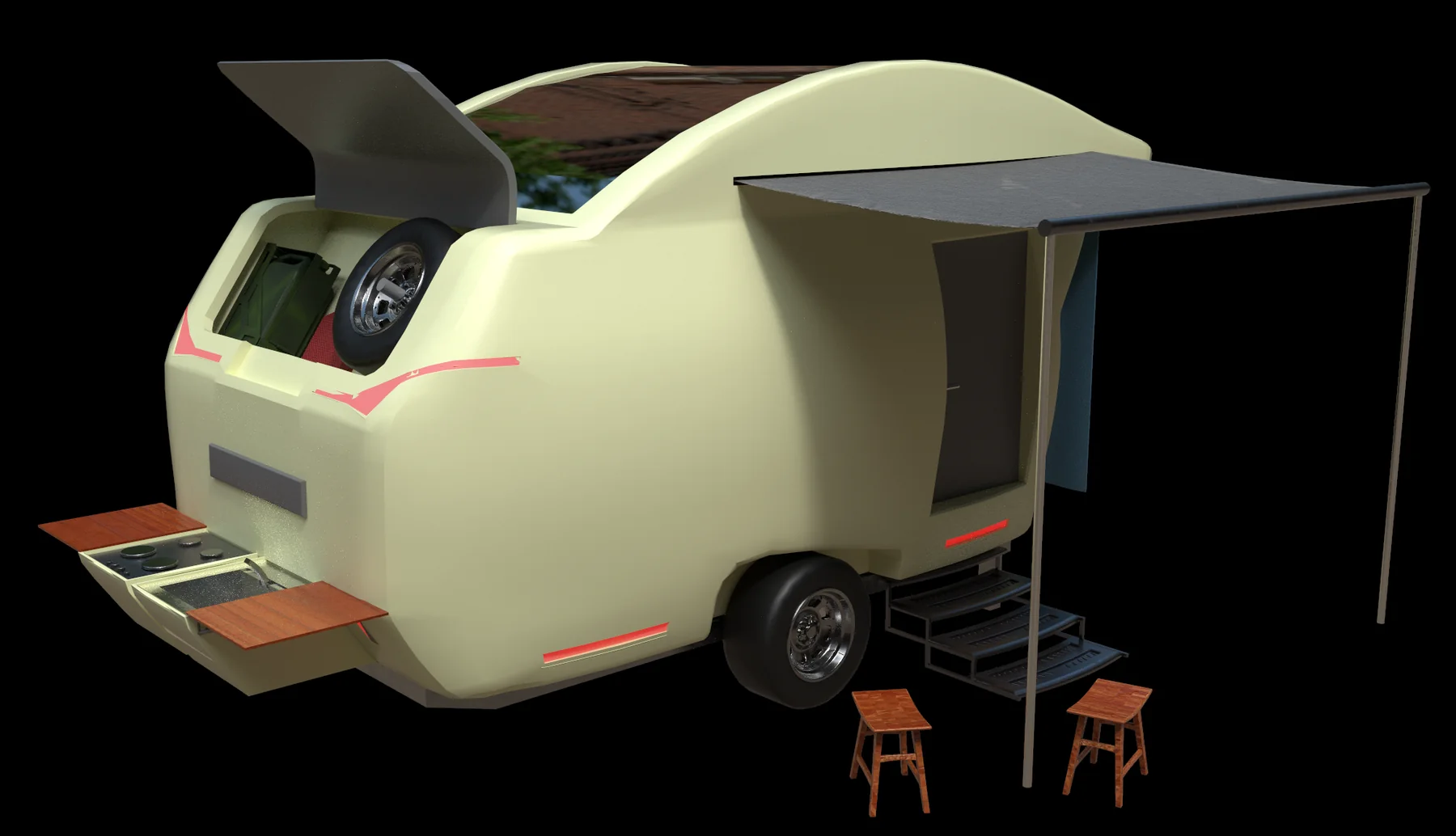
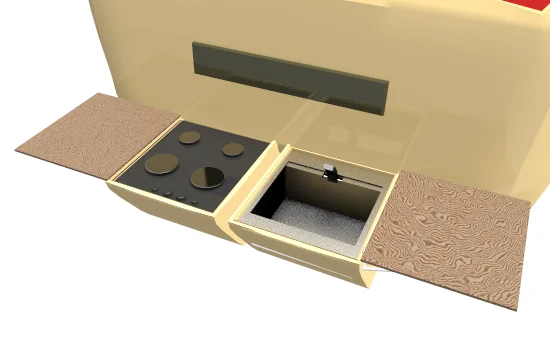
ORIGINAL WORK / Click a source image to inspect the complete page at high resolution. Previews are faithful crops from the original uploaded PDFs; page numbers are preserved.
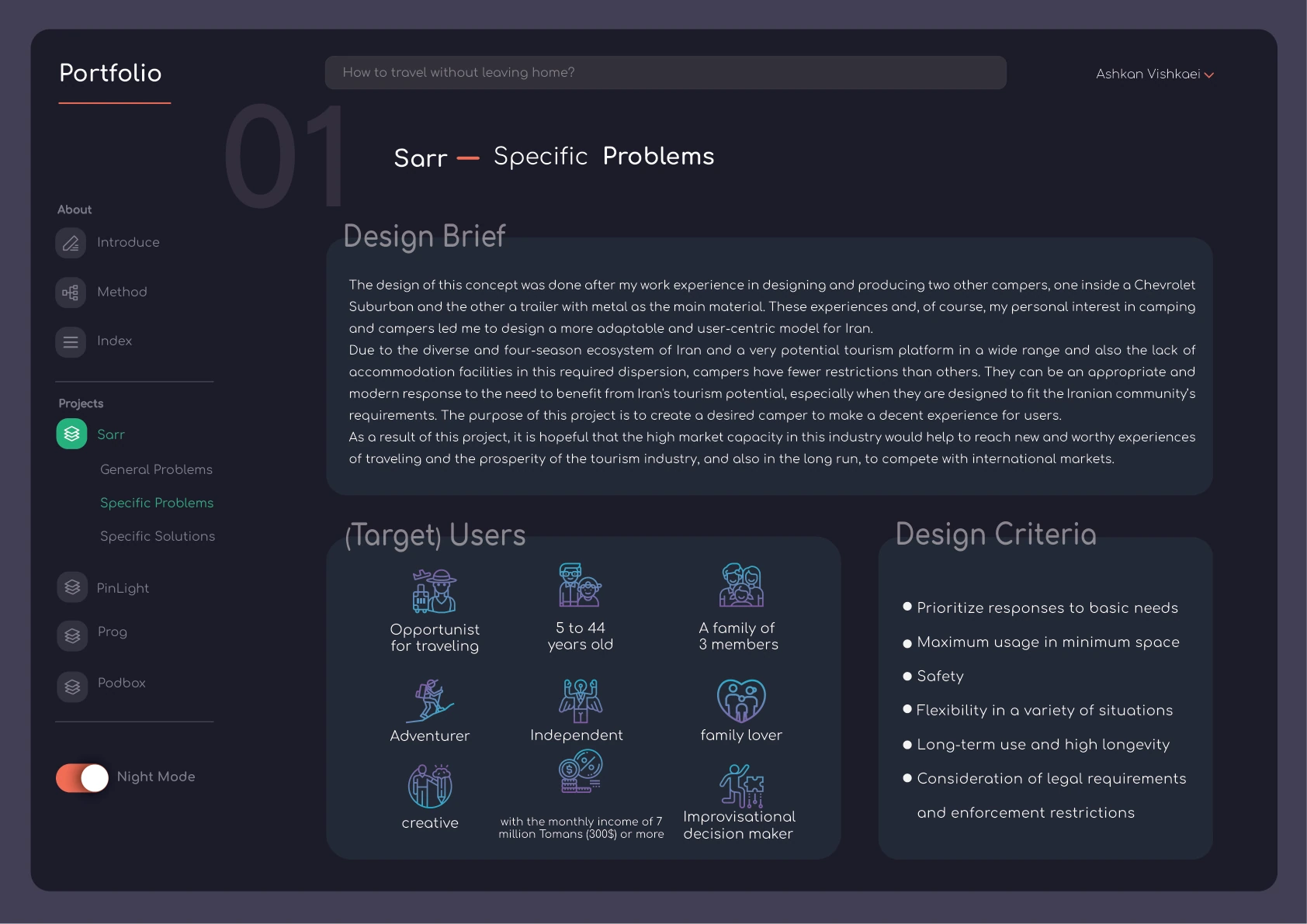
Framing the Iran-specific camper problem; target users and design criteria, BA portfolio p. 7.
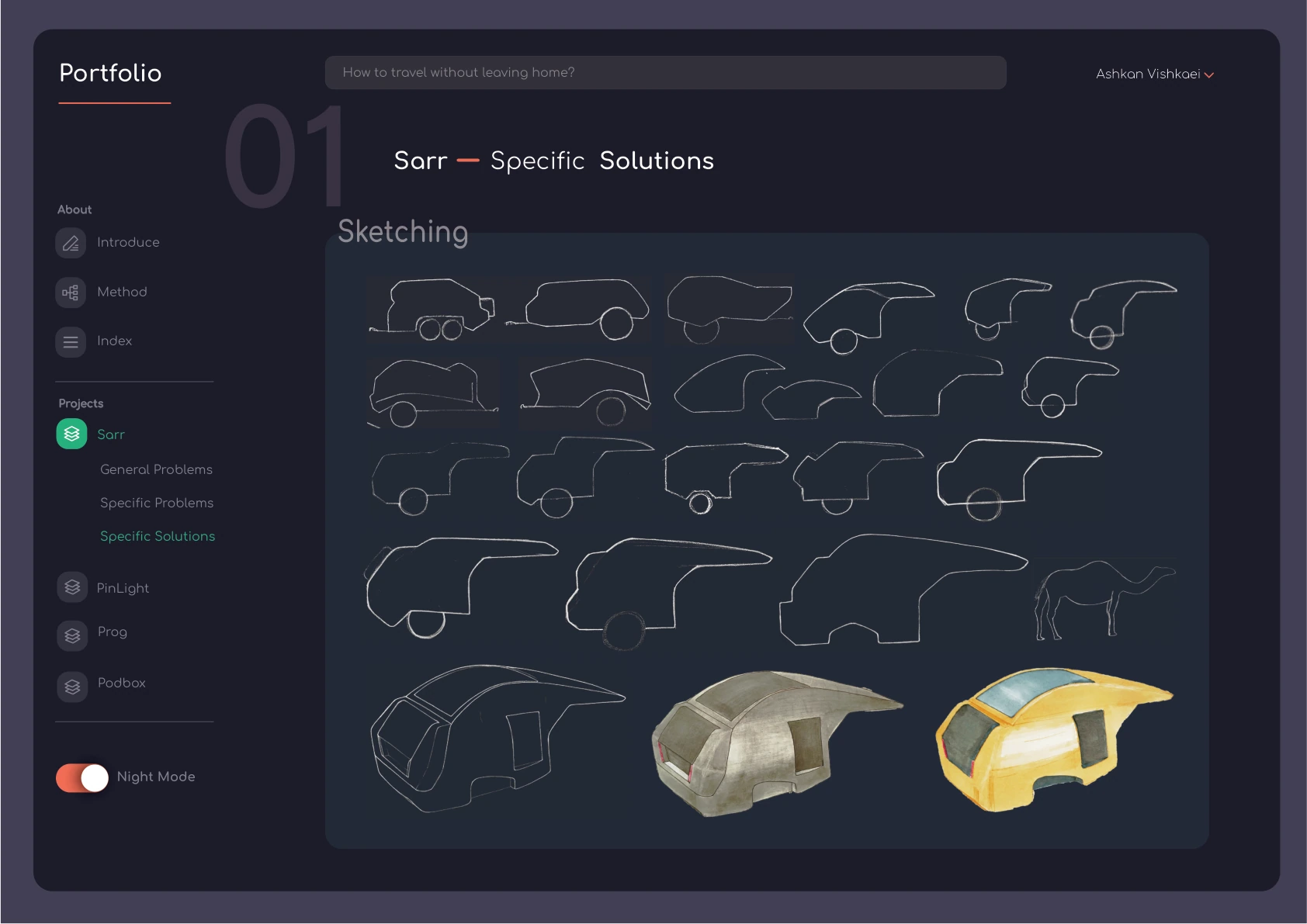
Sarr ideation sketches and developed shell concepts, BA portfolio p. 9.
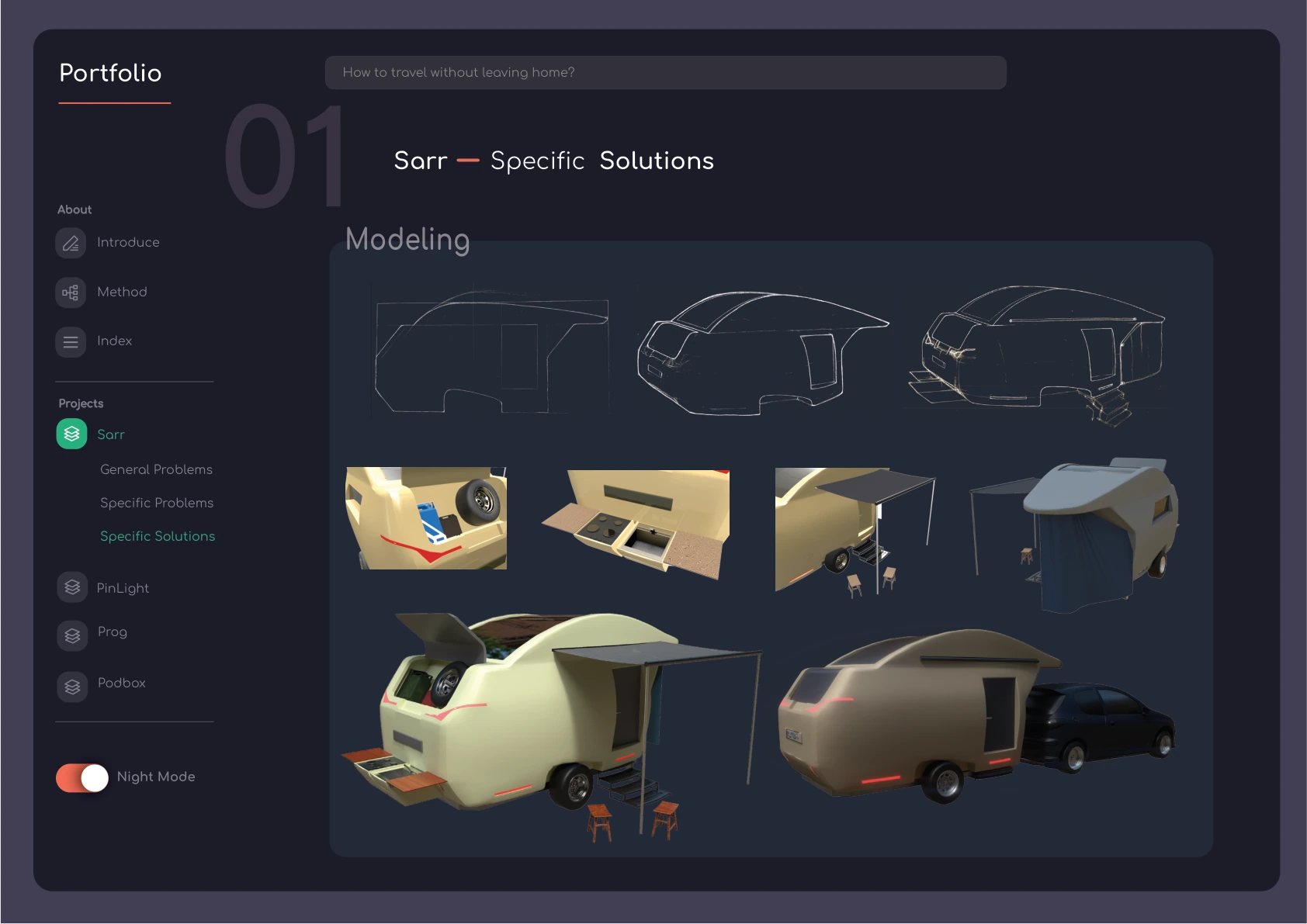
Vehicle integration, three-dimensional modeling and component proposals, BA portfolio p. 10.
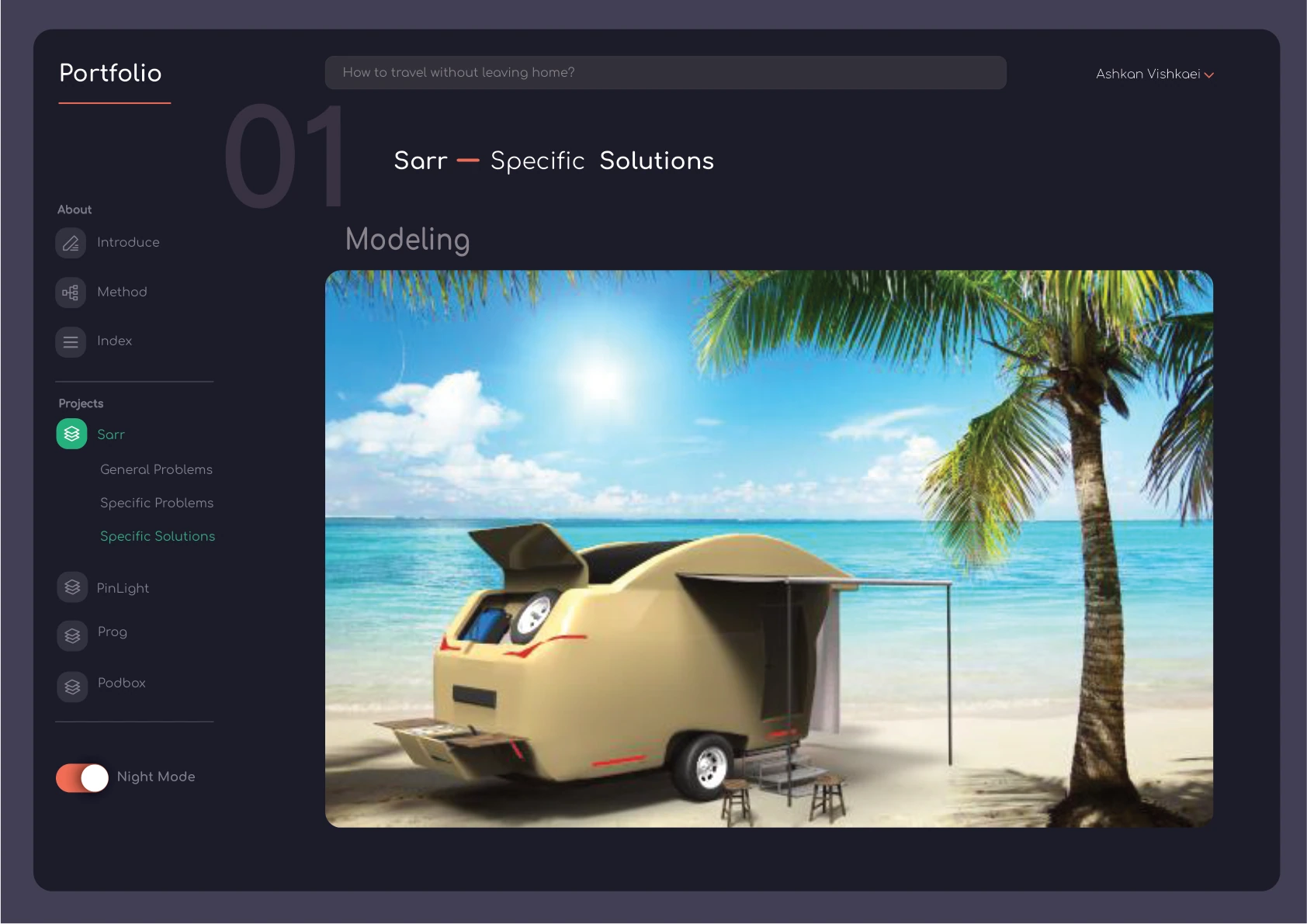
Sarr rendering in a use context, BA portfolio p. 11.
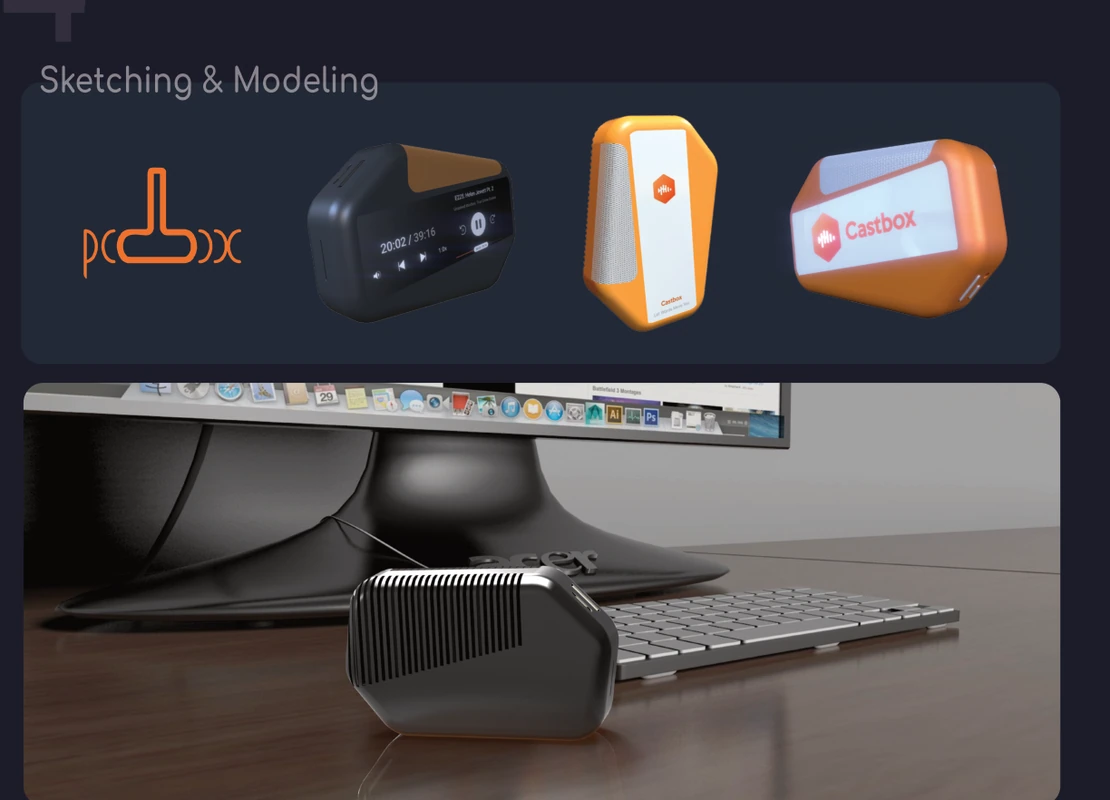
A portable podcast-production device imagined in the context of Castbox, linking the needs of emerging audio creators to a product concept and a possible platform business rationale.
New creators can face equipment cost, limited technical know-how, recording location constraints and the complexity of getting started.
Explore device interaction and portable recording alongside user segments, channels, key activities and potential value to a content platform.
Jump to BUSINESS MODEL ↗Original working files / independent images
Selected design assets supplied separately from the printed BA portfolio. Browse the original sketches and product views without the page layout surrounding them.
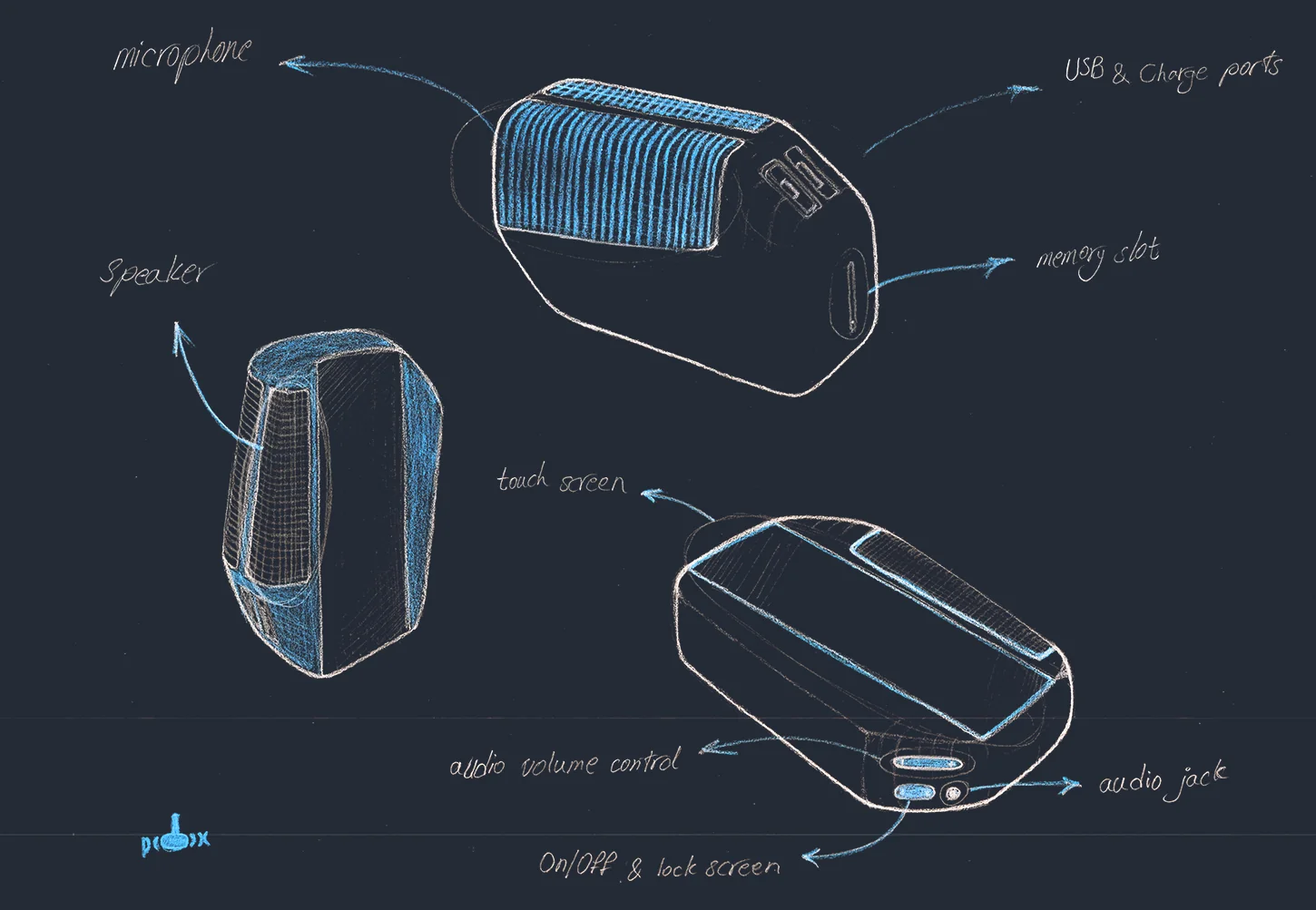
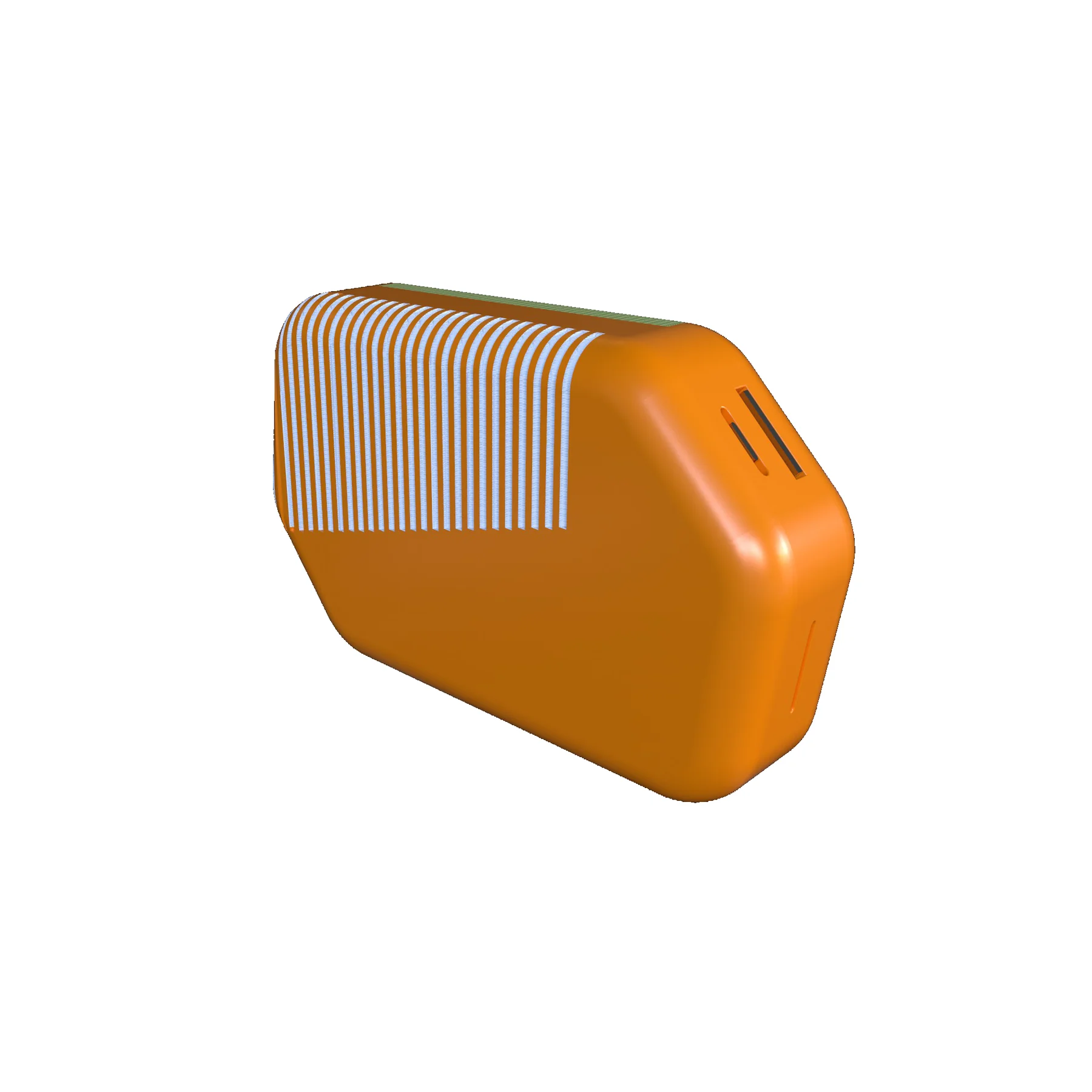
ORIGINAL WORK / Click a source image to inspect the complete page at high resolution. Previews are faithful crops from the original uploaded PDFs; page numbers are preserved.
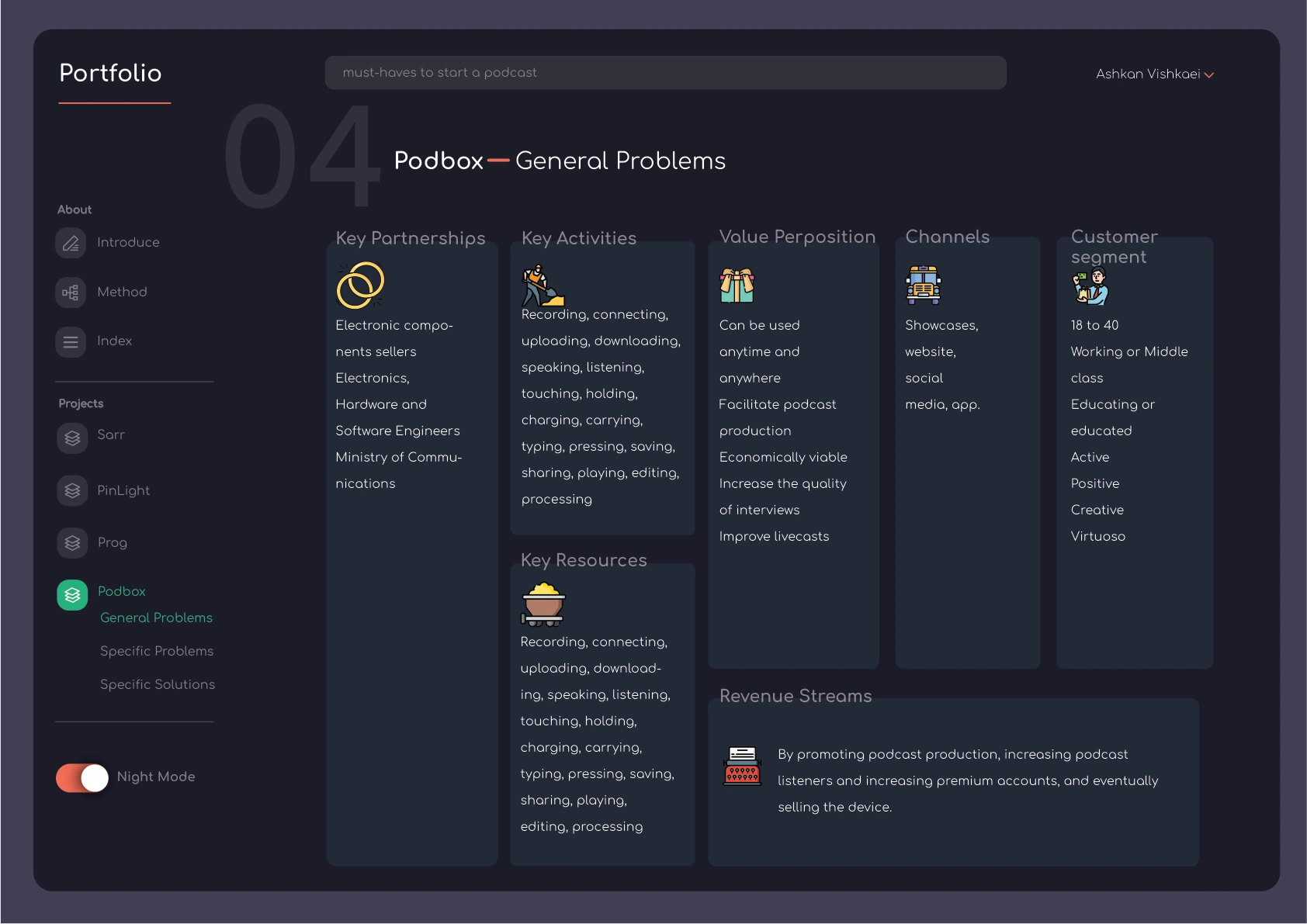
Key activities, partners, customer segment, channels, value proposition, BA portfolio p. 23.
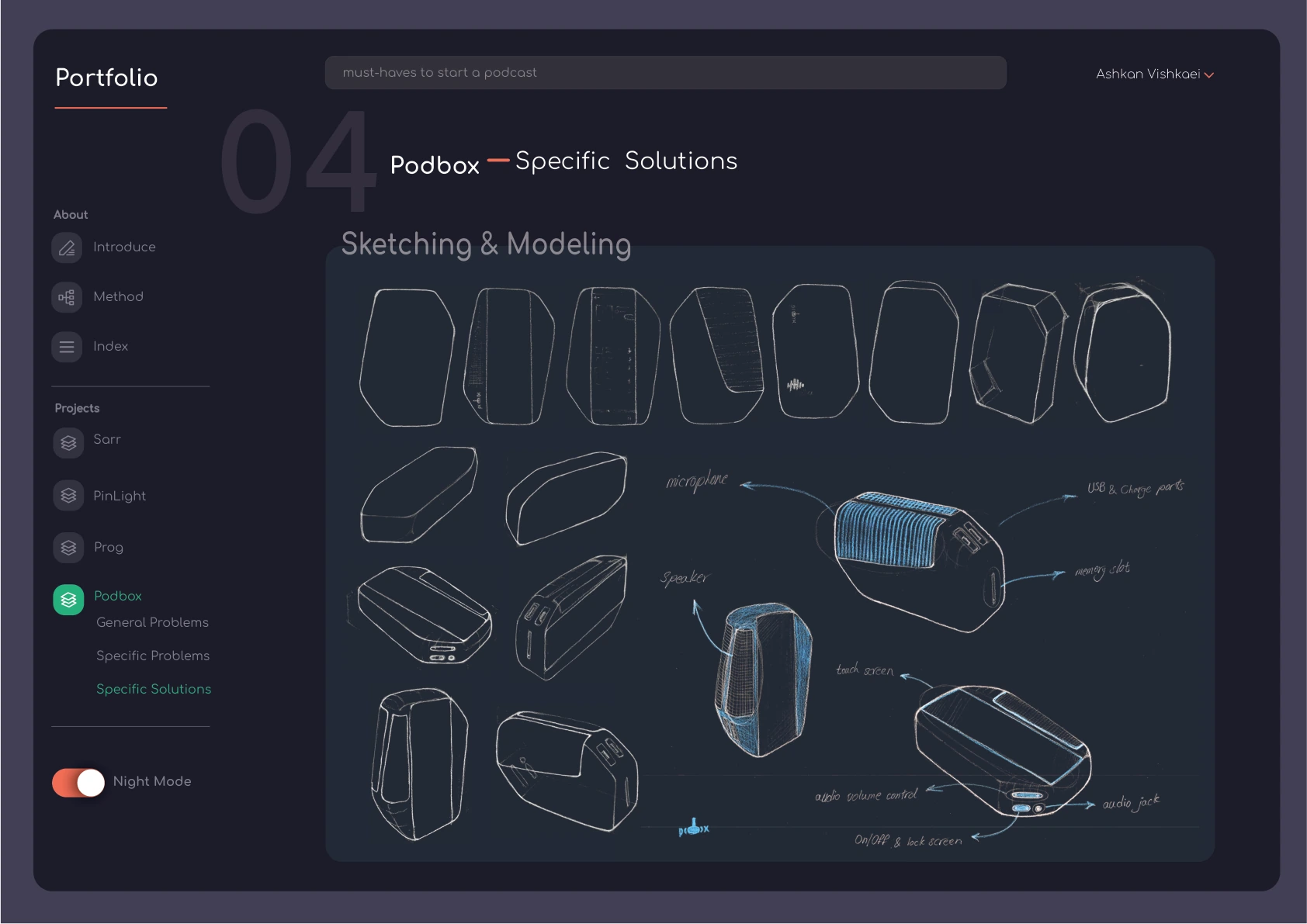
Podbox product concept ideation and modeling, BA portfolio p. 25.
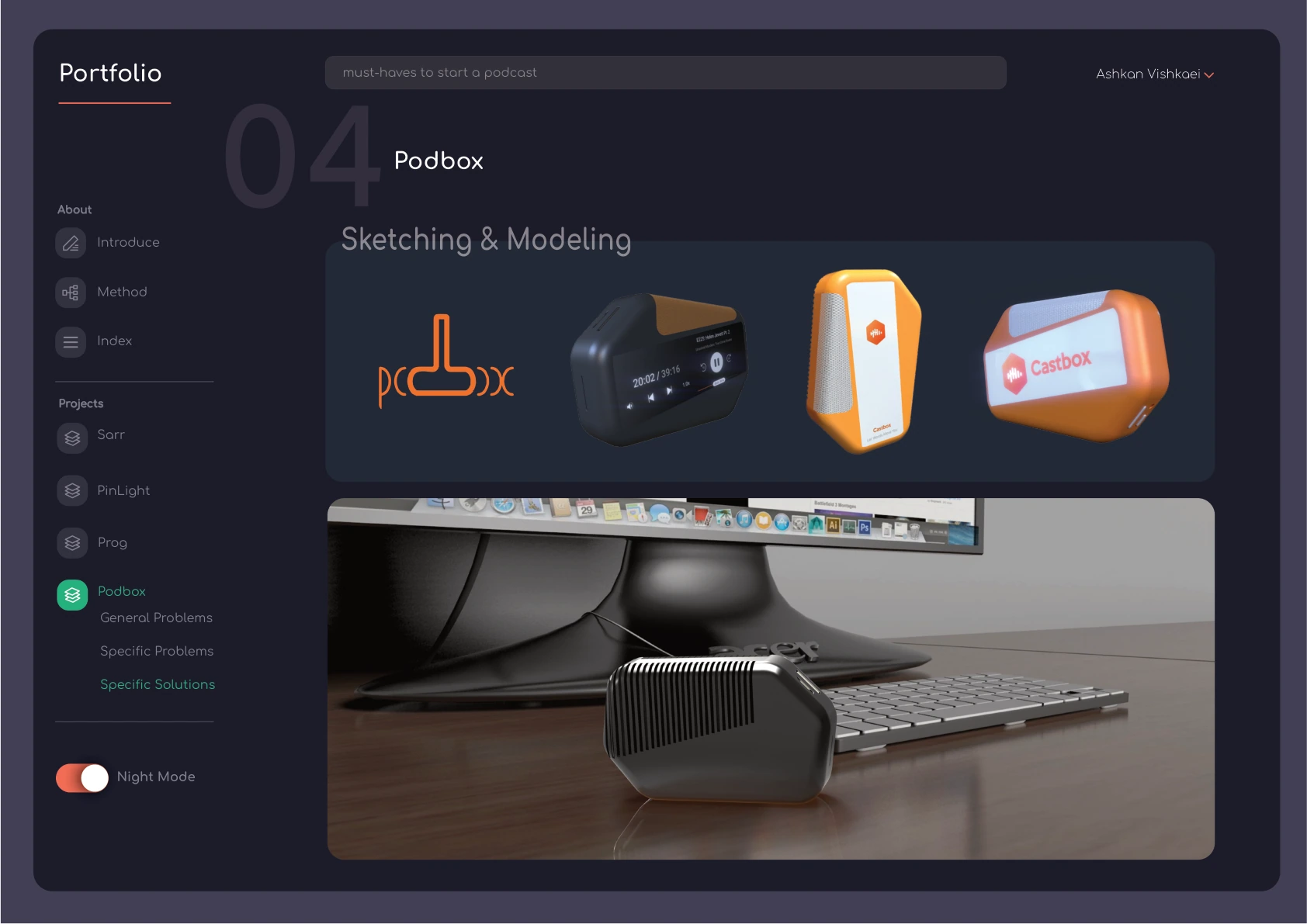
Product concept variants and desktop-use visualization, BA portfolio p. 26.
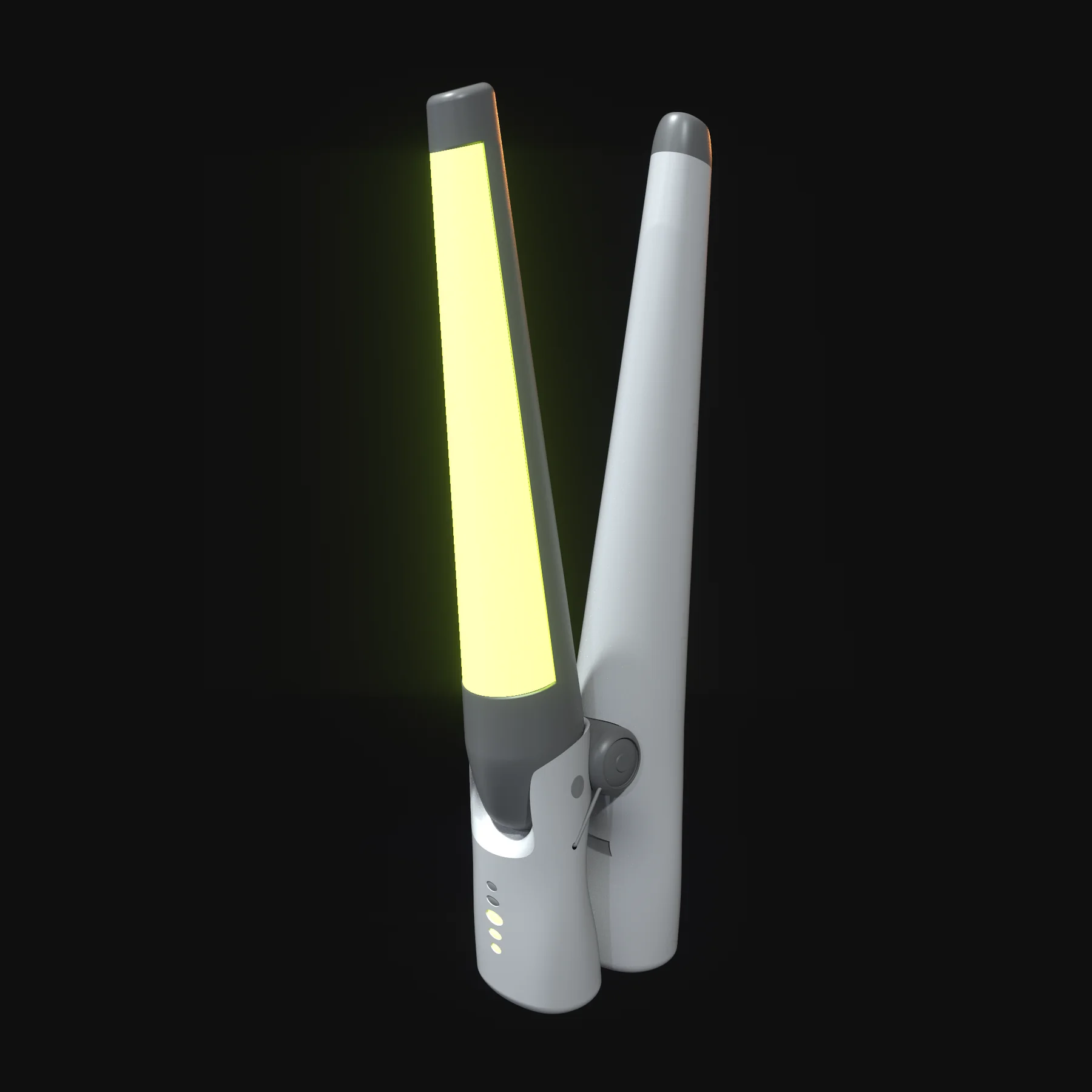
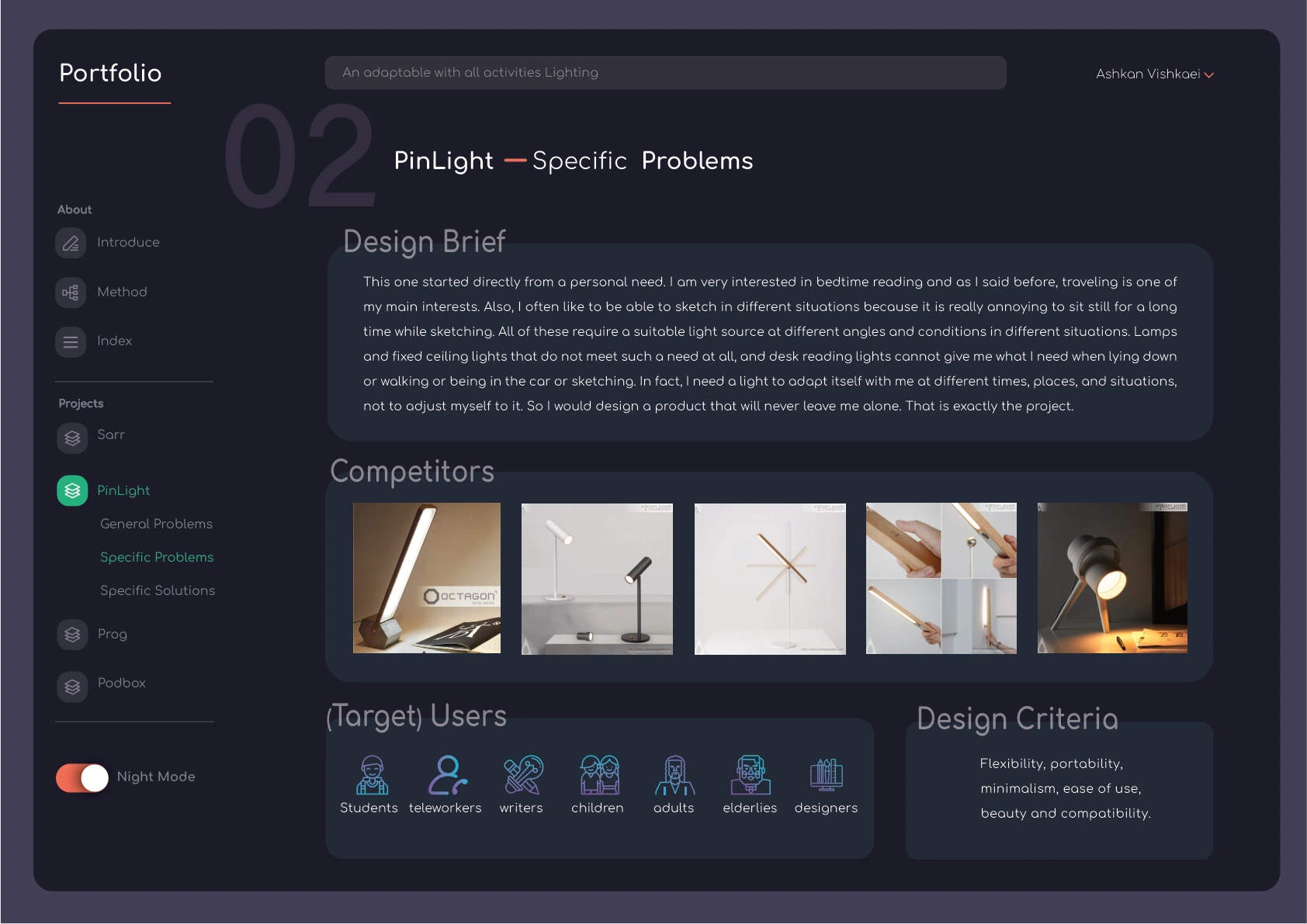
A personal lighting concept driven by a recurring ergonomic mismatch: fixed luminaires cannot adequately follow changes in body position, task and environment.
Light must remain useful across different postures, including reclining.
The task shifts between locations and angles; the lighting relationship must adapt.
Portability and flexibility matter more than a single fixed desk arrangement.
Original working files / independent images
Selected design assets supplied separately from the printed BA portfolio. Browse the original sketches and product views without the page layout surrounding them.
ORIGINAL WORK / Click a source image to inspect the complete page at high resolution. Previews are faithful crops from the original uploaded PDFs; page numbers are preserved.
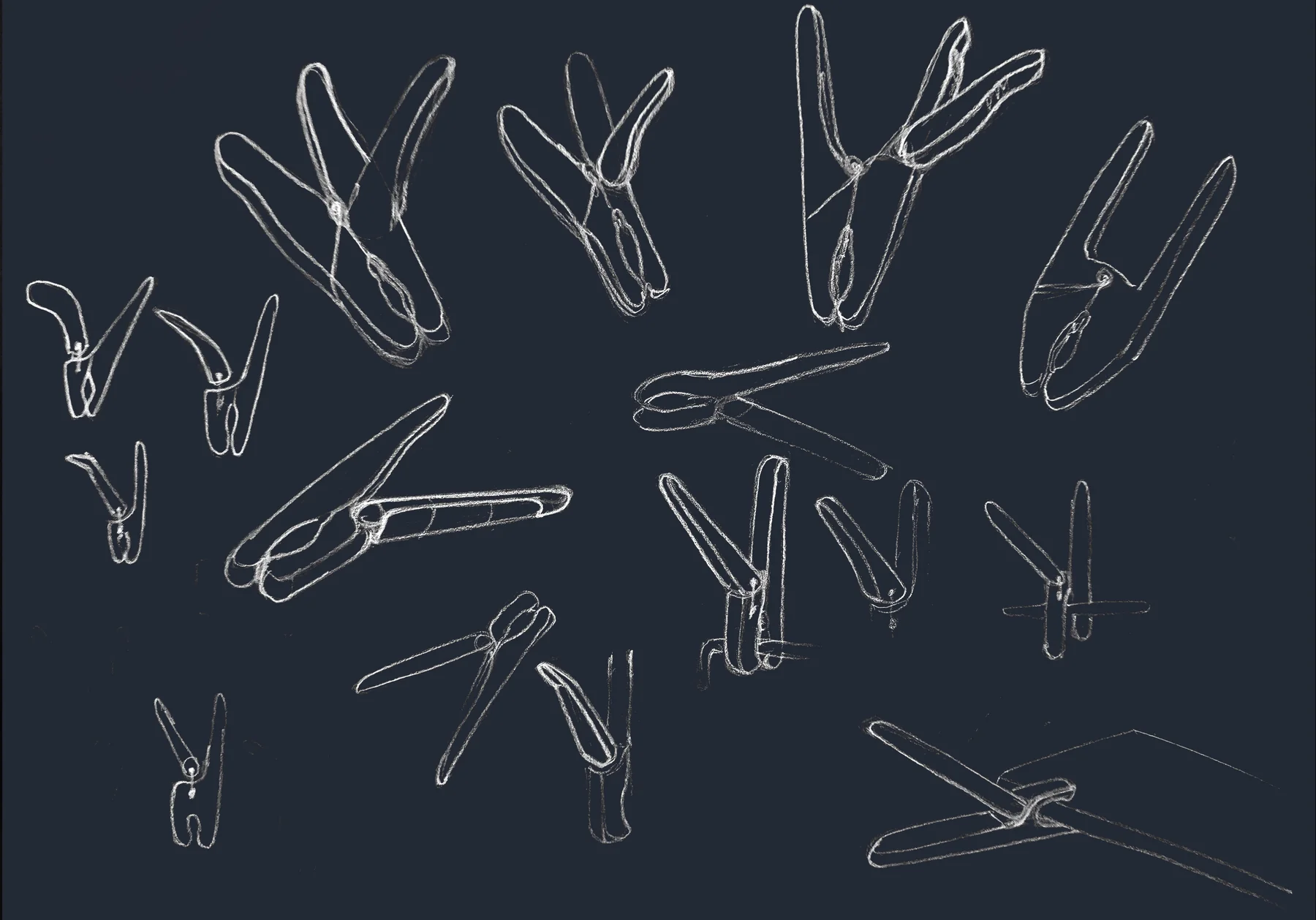
Portable, adaptable task lighting across changing positions and settings, BA portfolio p. 14.
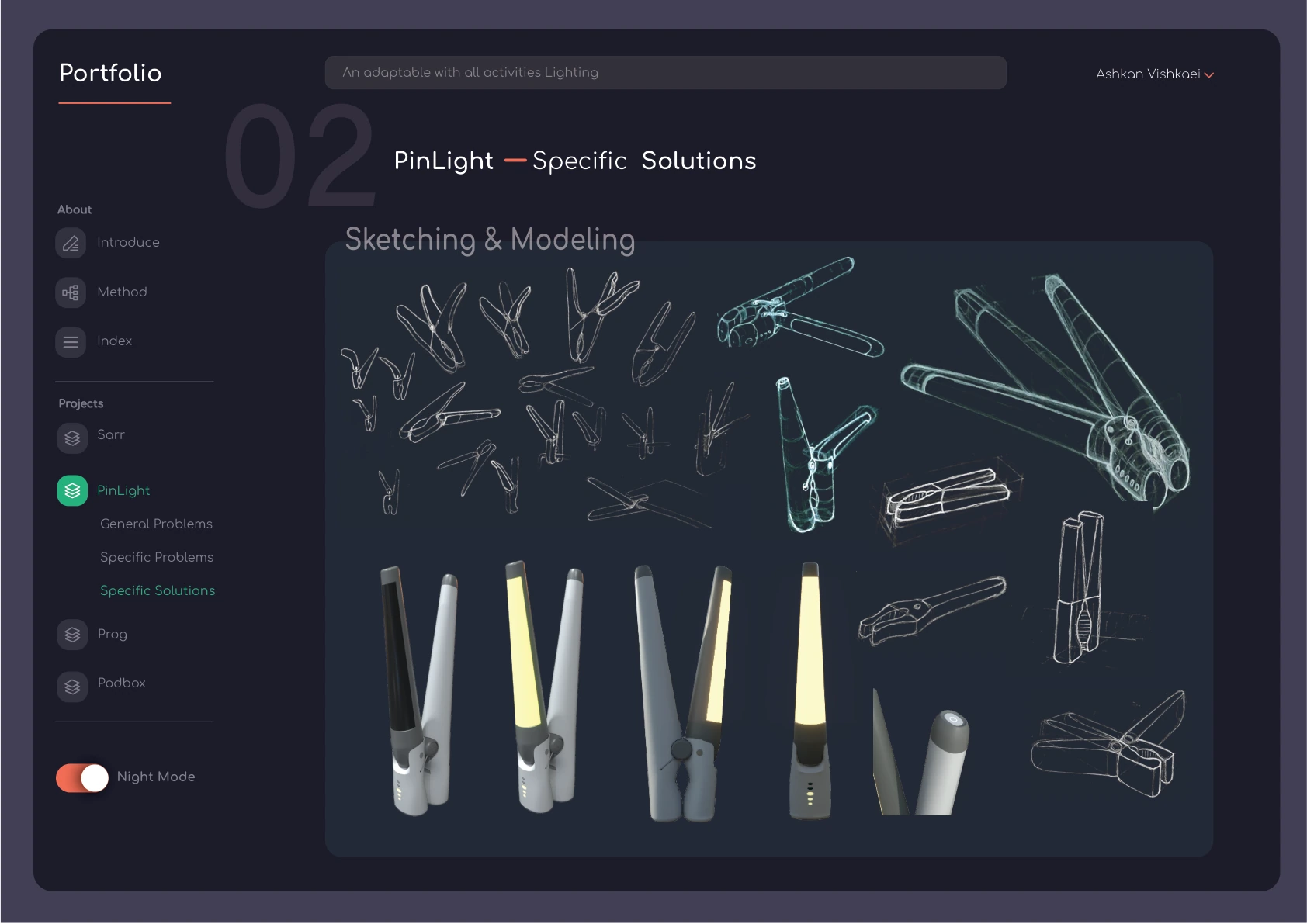
Mechanism and product form variations, BA portfolio p. 15.
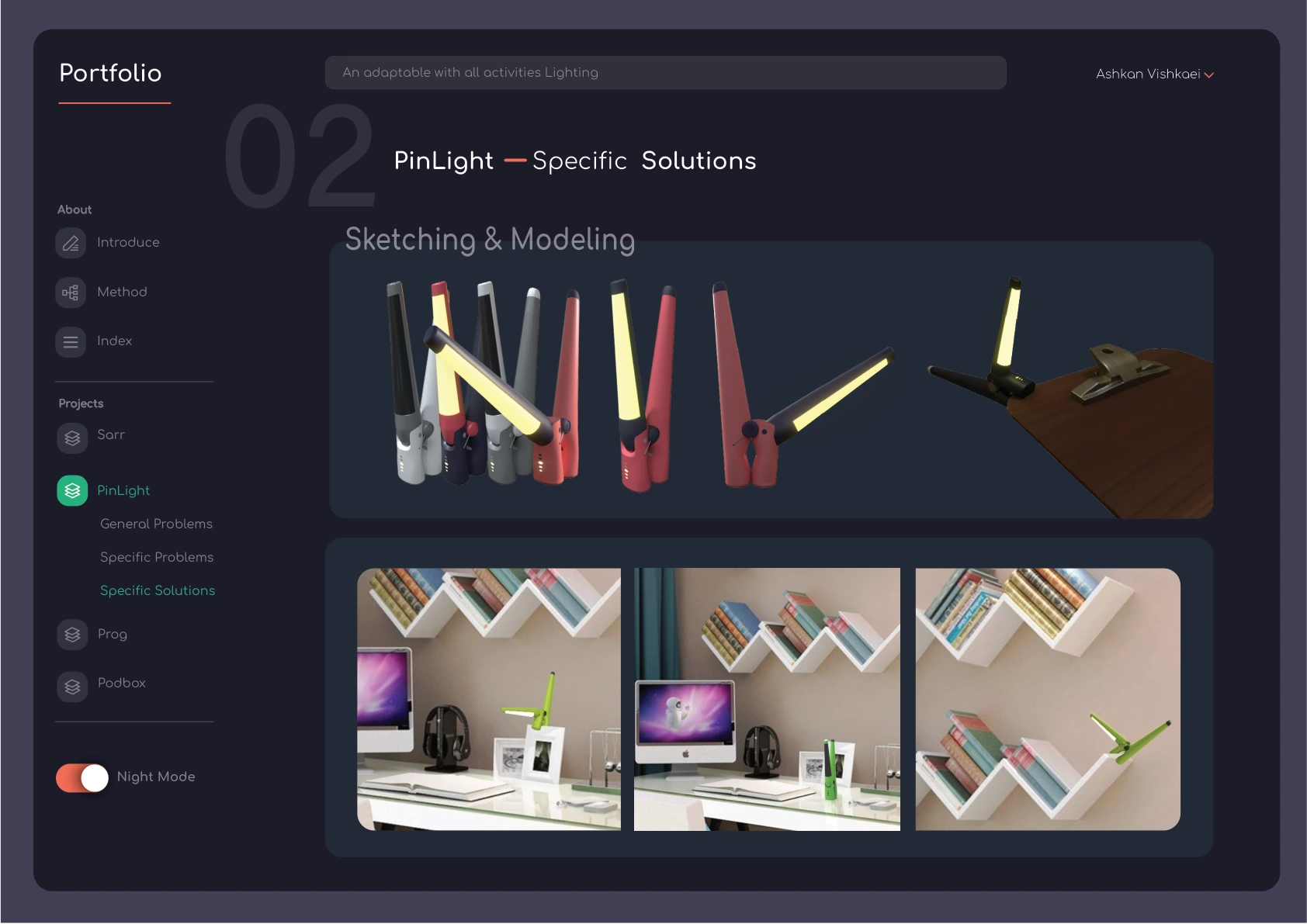
Sketches and models visualized in settings, BA portfolio p. 16.
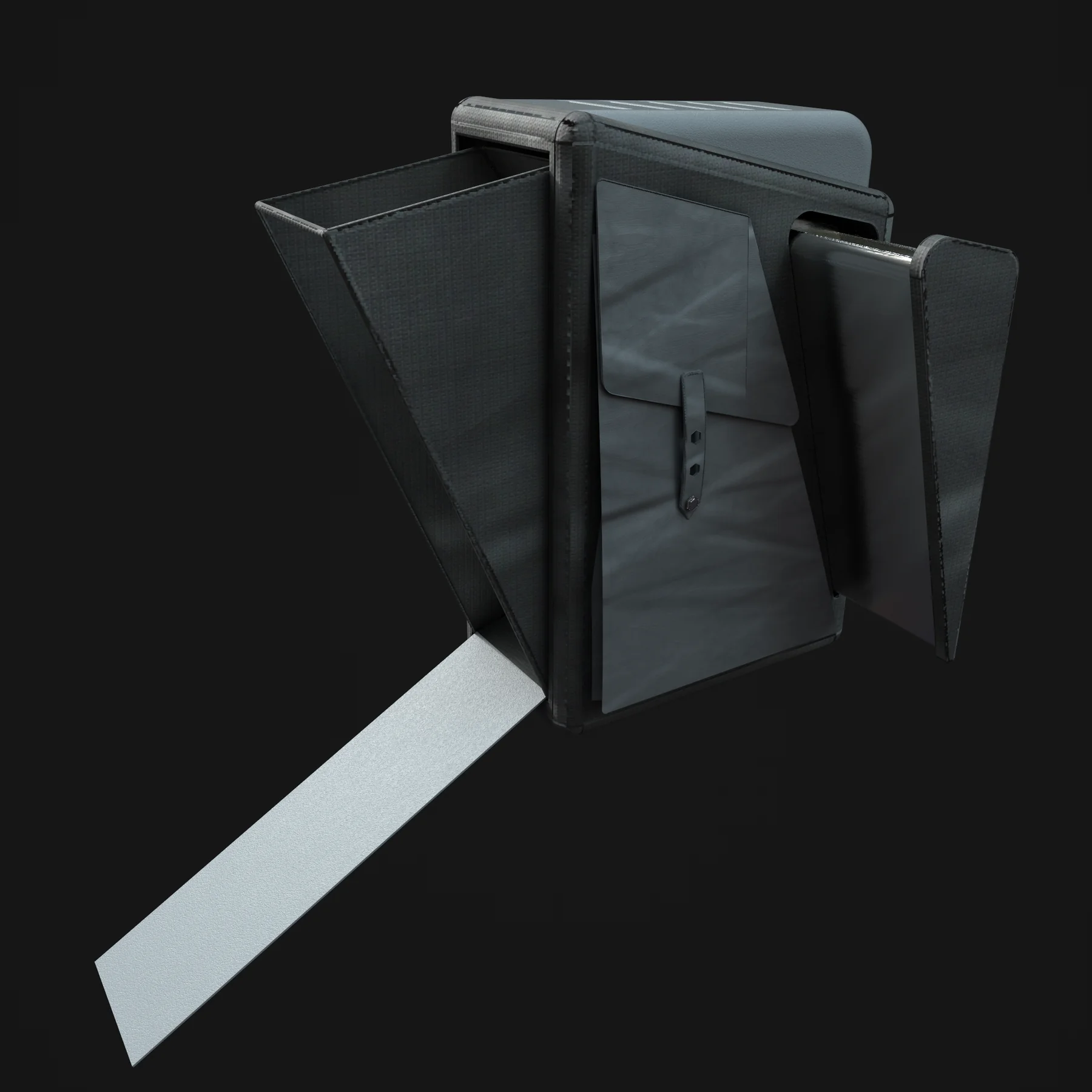
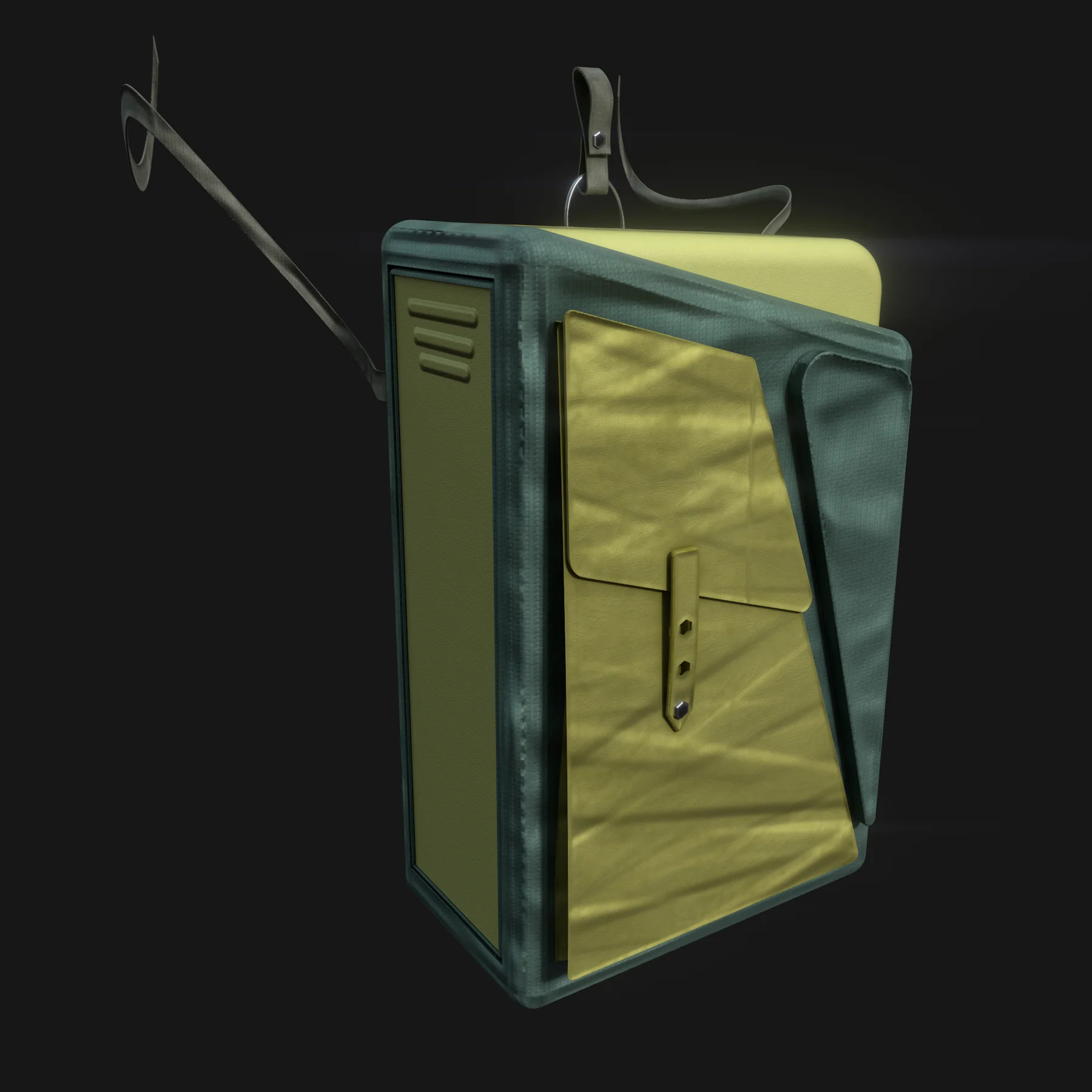
A portable receptacle for small waste, developed by examining where disposal decisions happen and why a person may be unwilling or unable to carry waste to the next bin.
Walking, transit, outdoor leisure, work, reading and daily movement.
Portability, space, convenience, ease of use and product appearance.
User-context work, persona, criteria and multiple physical configurations.
Original working files / independent images
Selected design assets supplied separately from the printed BA portfolio. Browse the original sketches and product views without the page layout surrounding them.
ORIGINAL WORK / Click a source image to inspect the complete page at high resolution. Previews are faithful crops from the original uploaded PDFs; page numbers are preserved.
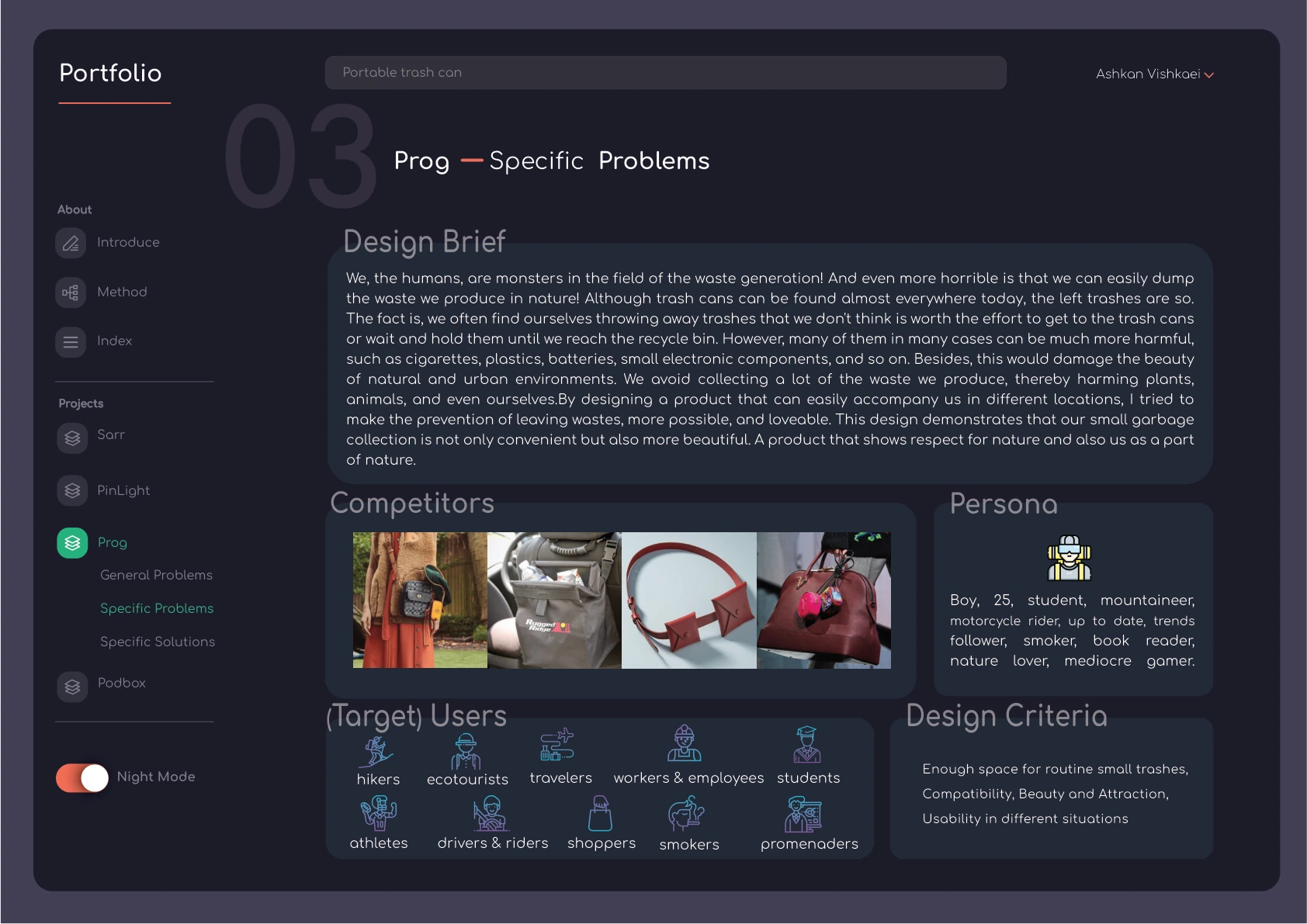
Small-waste disposal context, target use and criteria, BA portfolio p. 19.
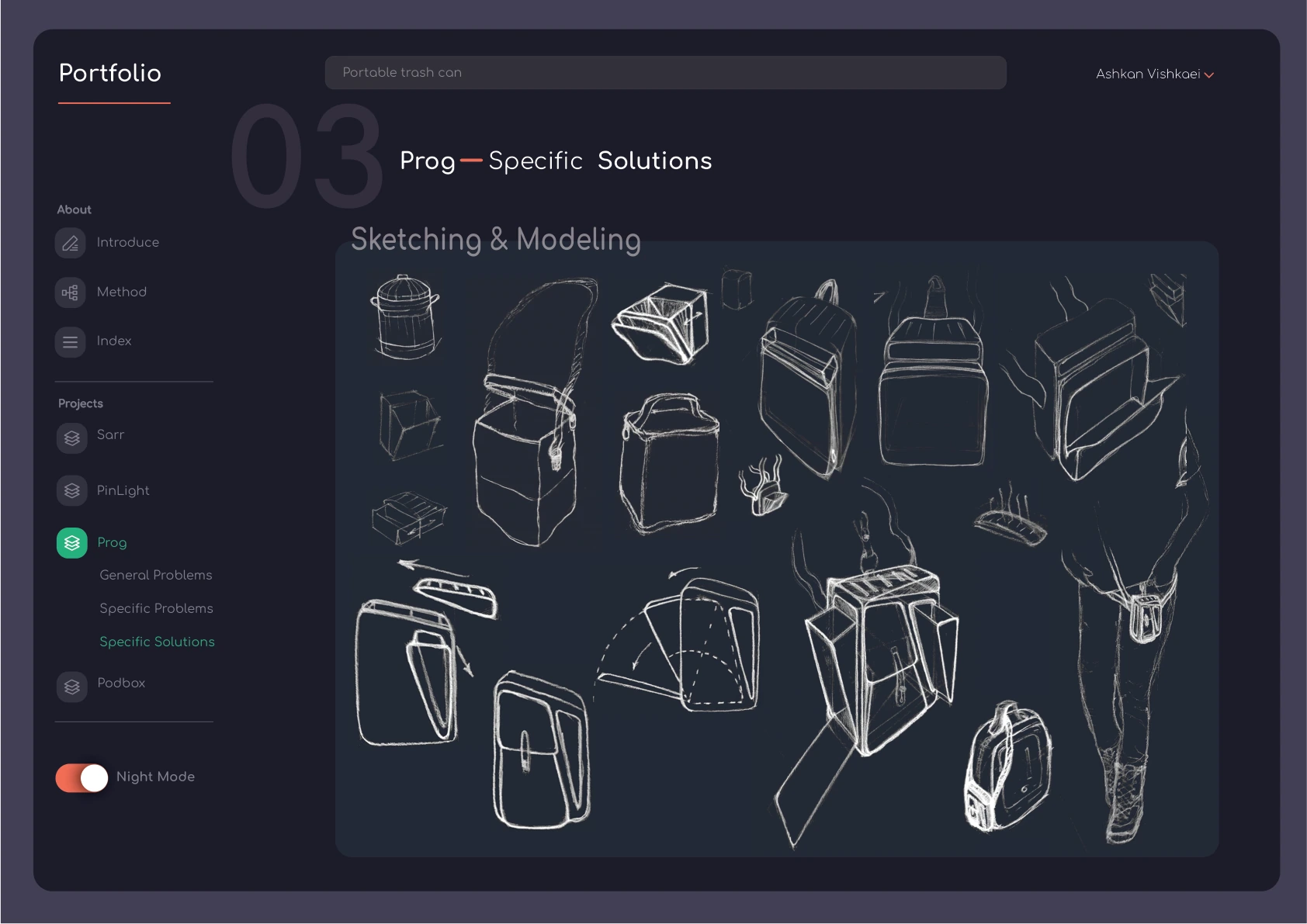
Multiple bag/container sketches, BA portfolio p. 20.
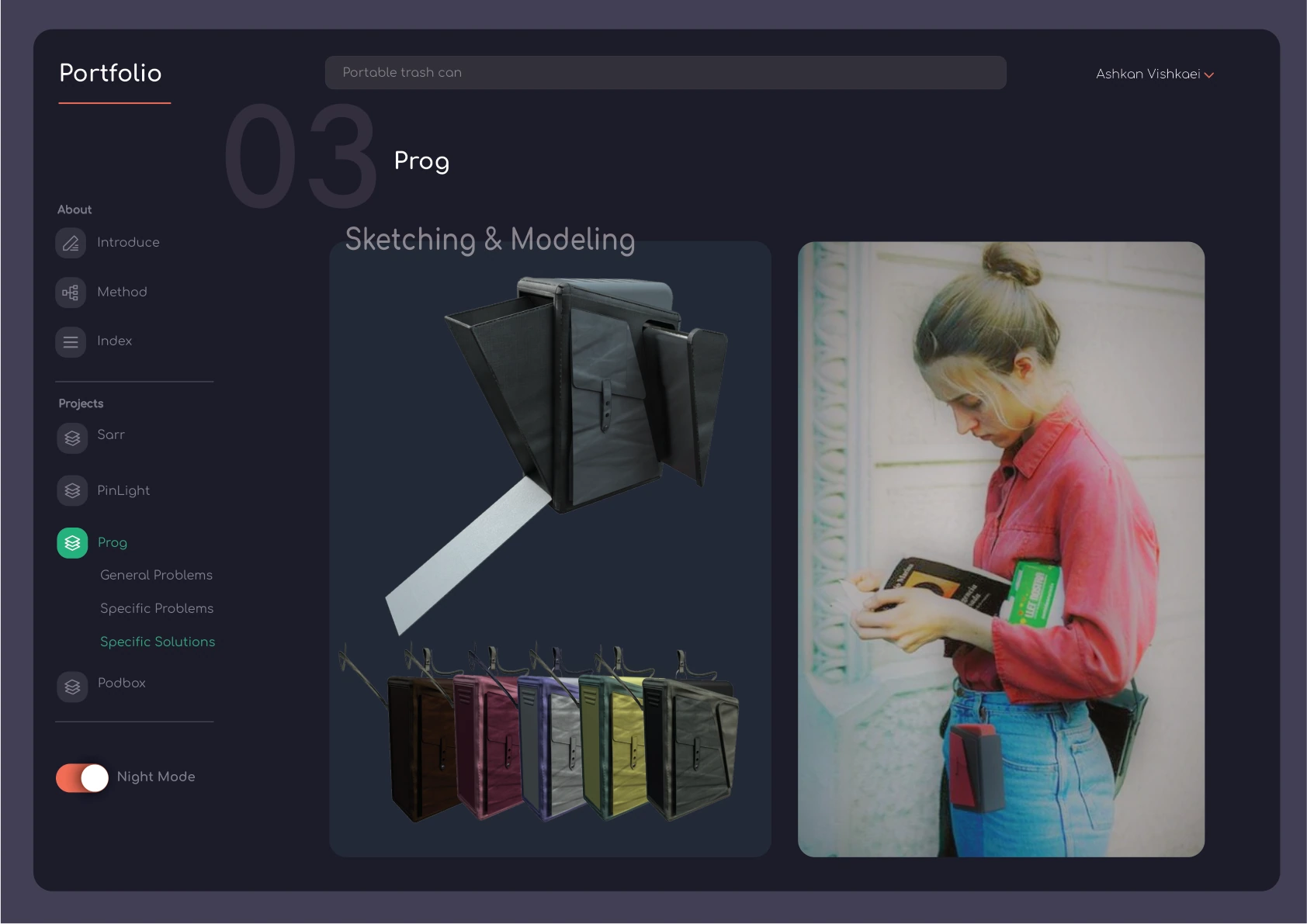
Physical form/color iterations and positioning in use, BA portfolio p. 21.
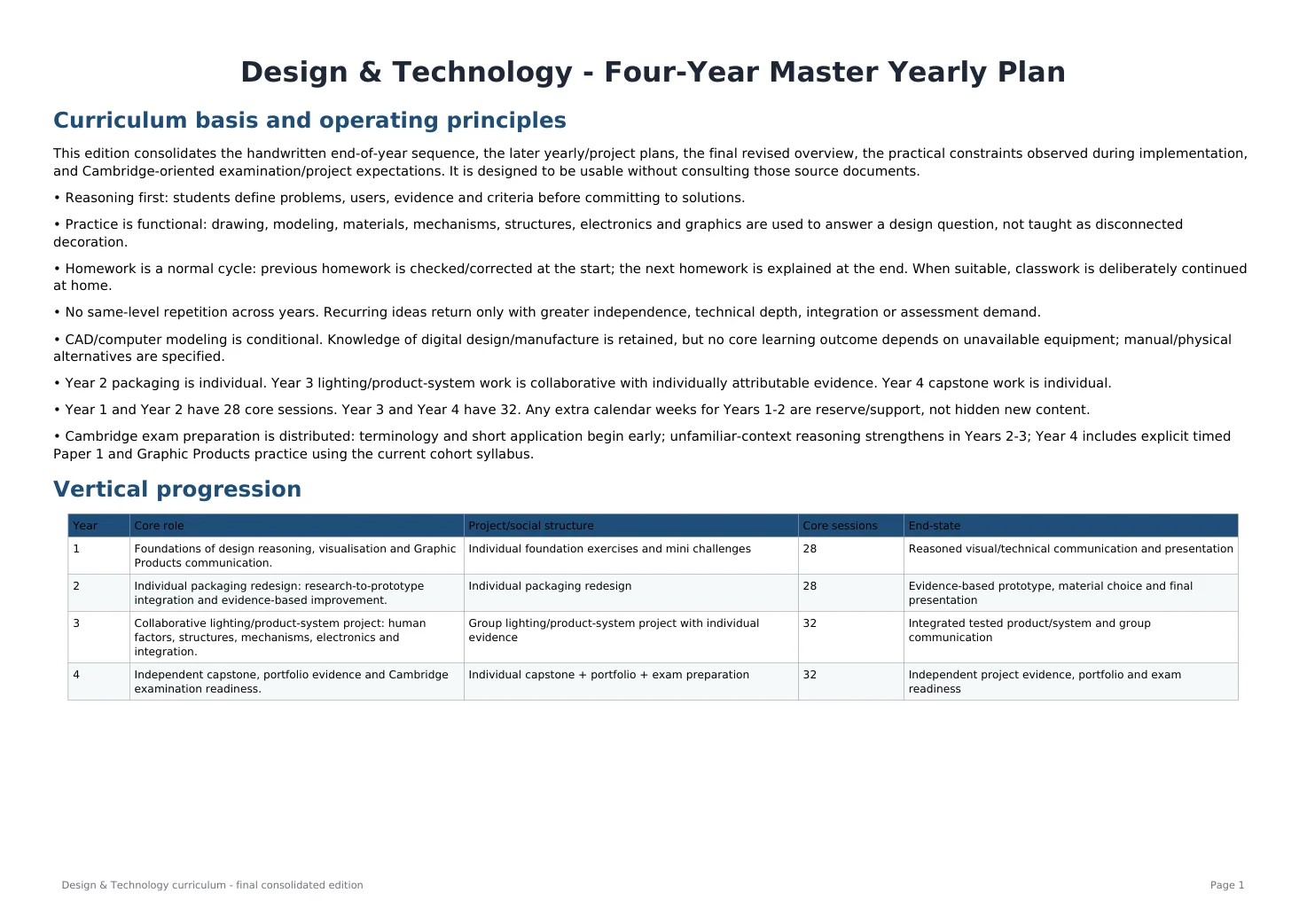
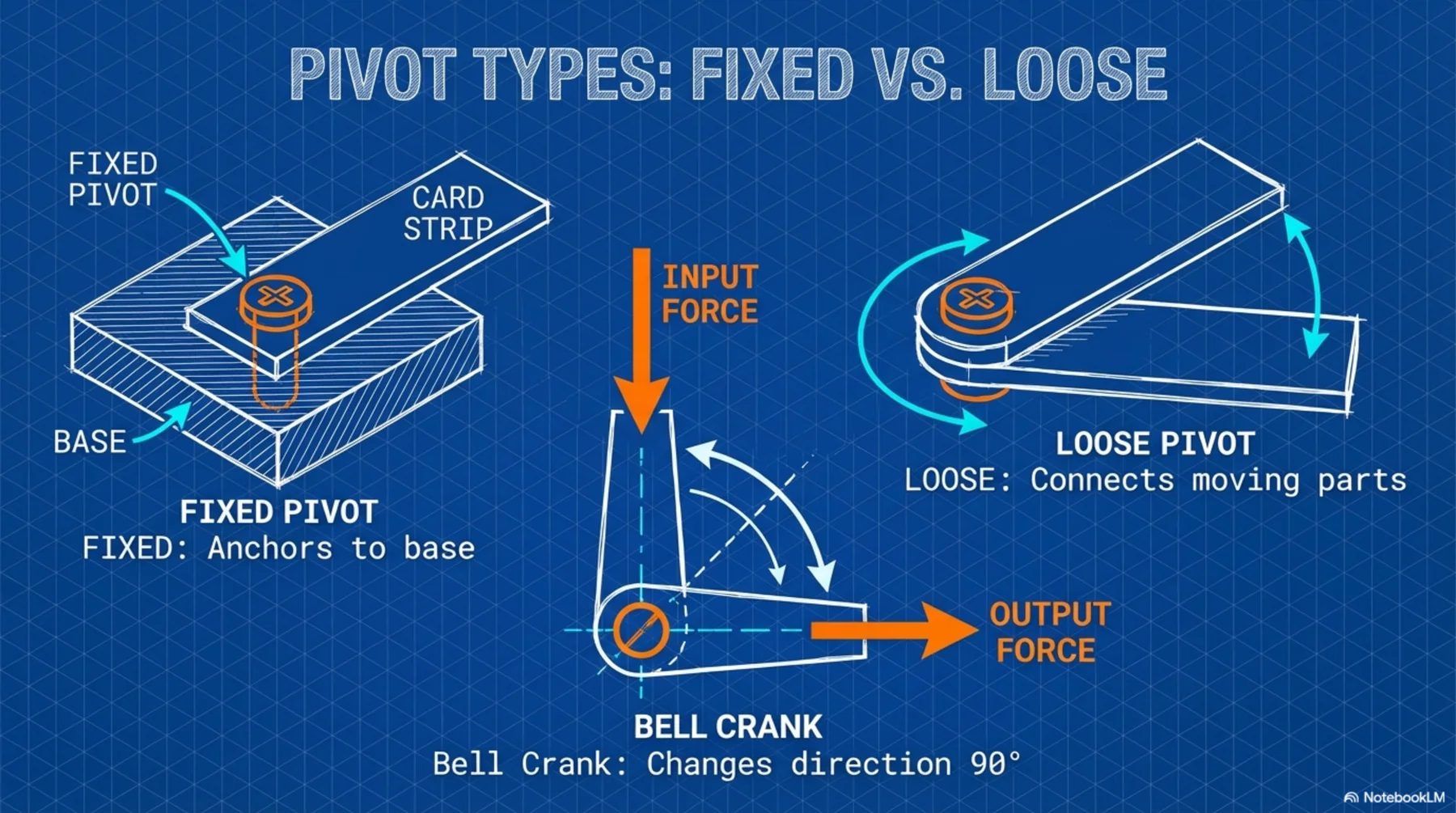
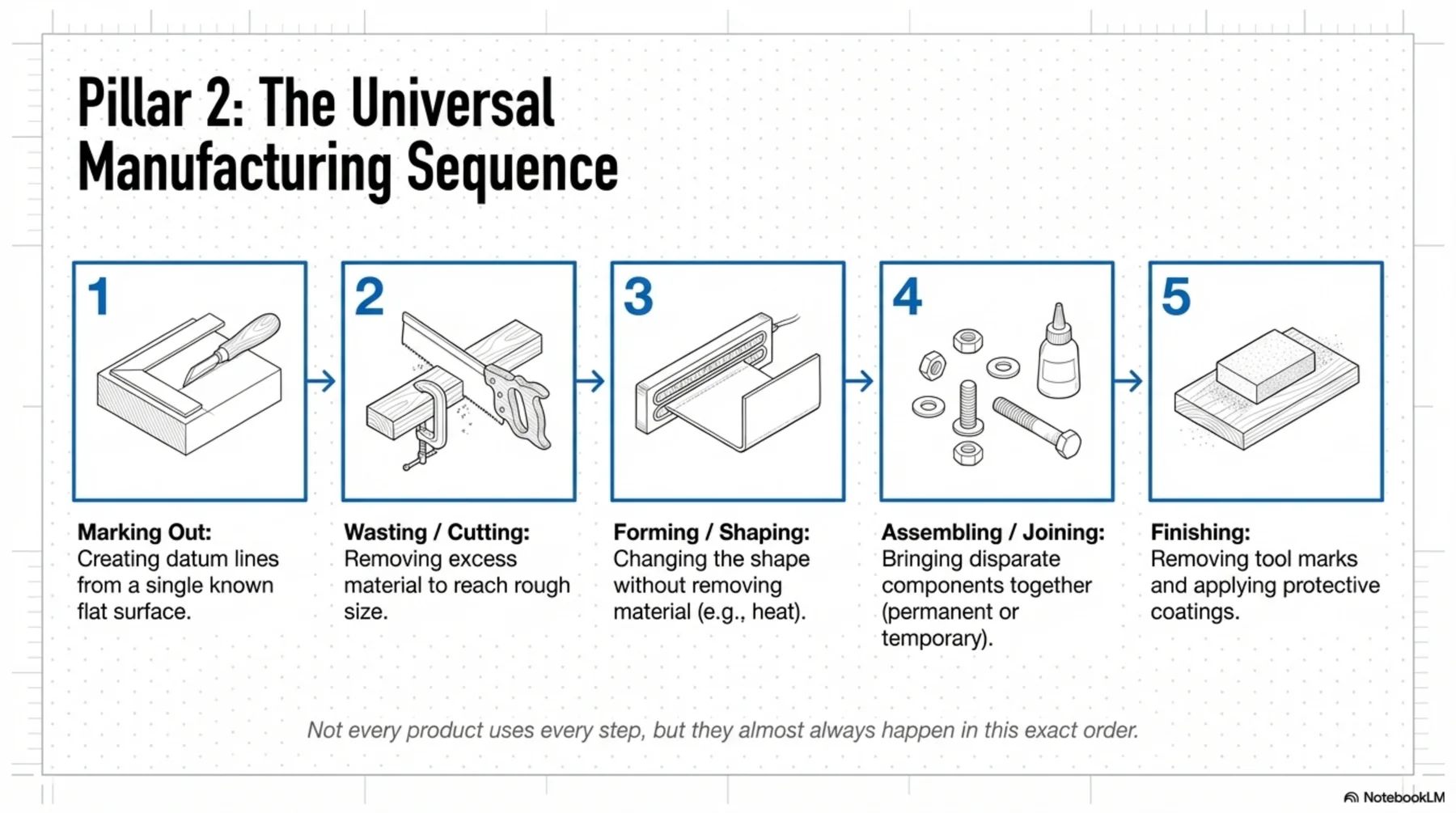
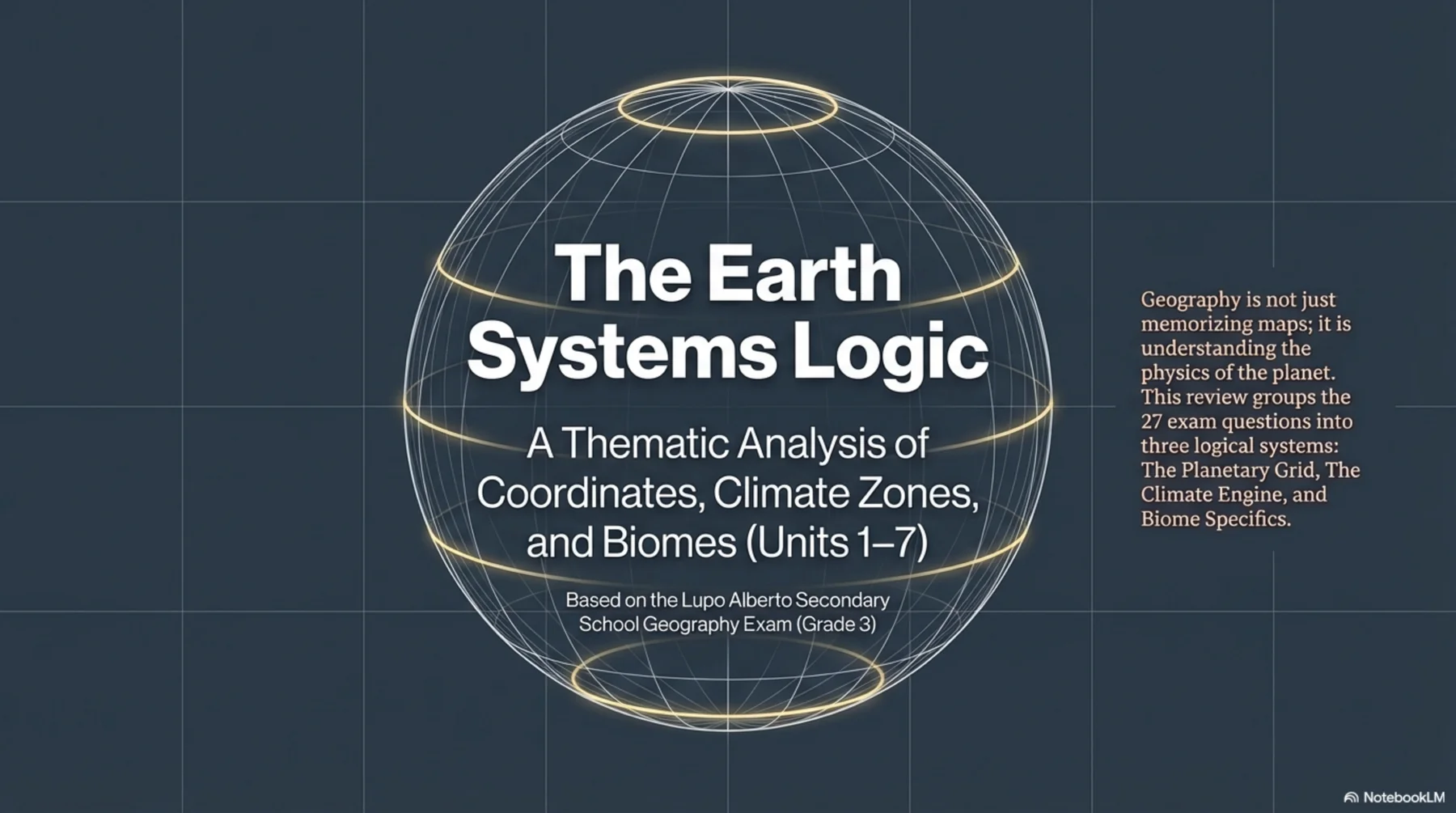
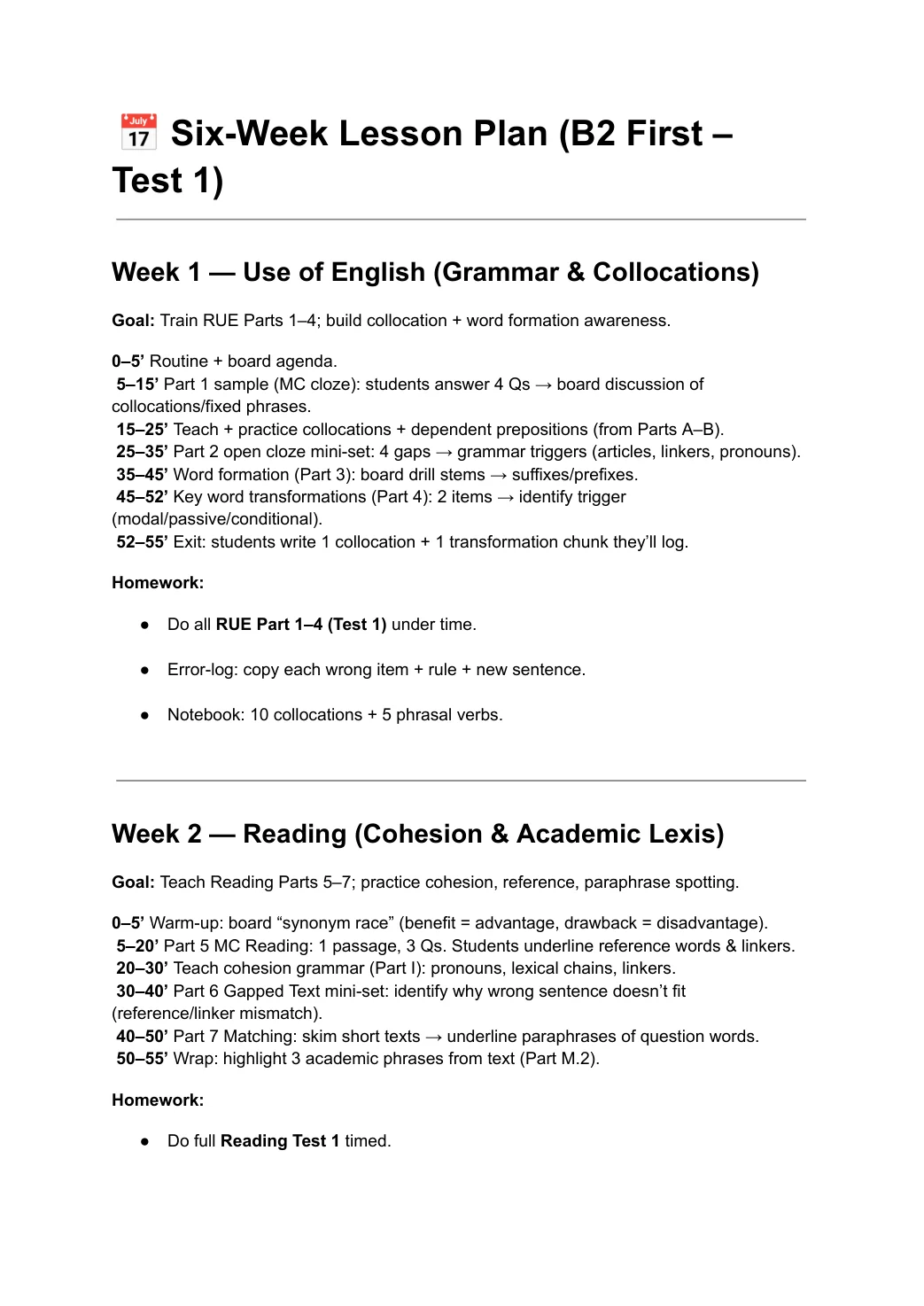
From July 2024 I redesigned a four-year-group Design & Technology curriculum for Istituto Massimo, under a teaching contract with New English Teaching (NET). I taught it in English from September 2024 to June 2026, designing assignments, lesson-by-lesson resources, evaluation criteria, grading and updates informed by classroom practice. The four year groups represent the curriculum’s progression—not four years of employment.
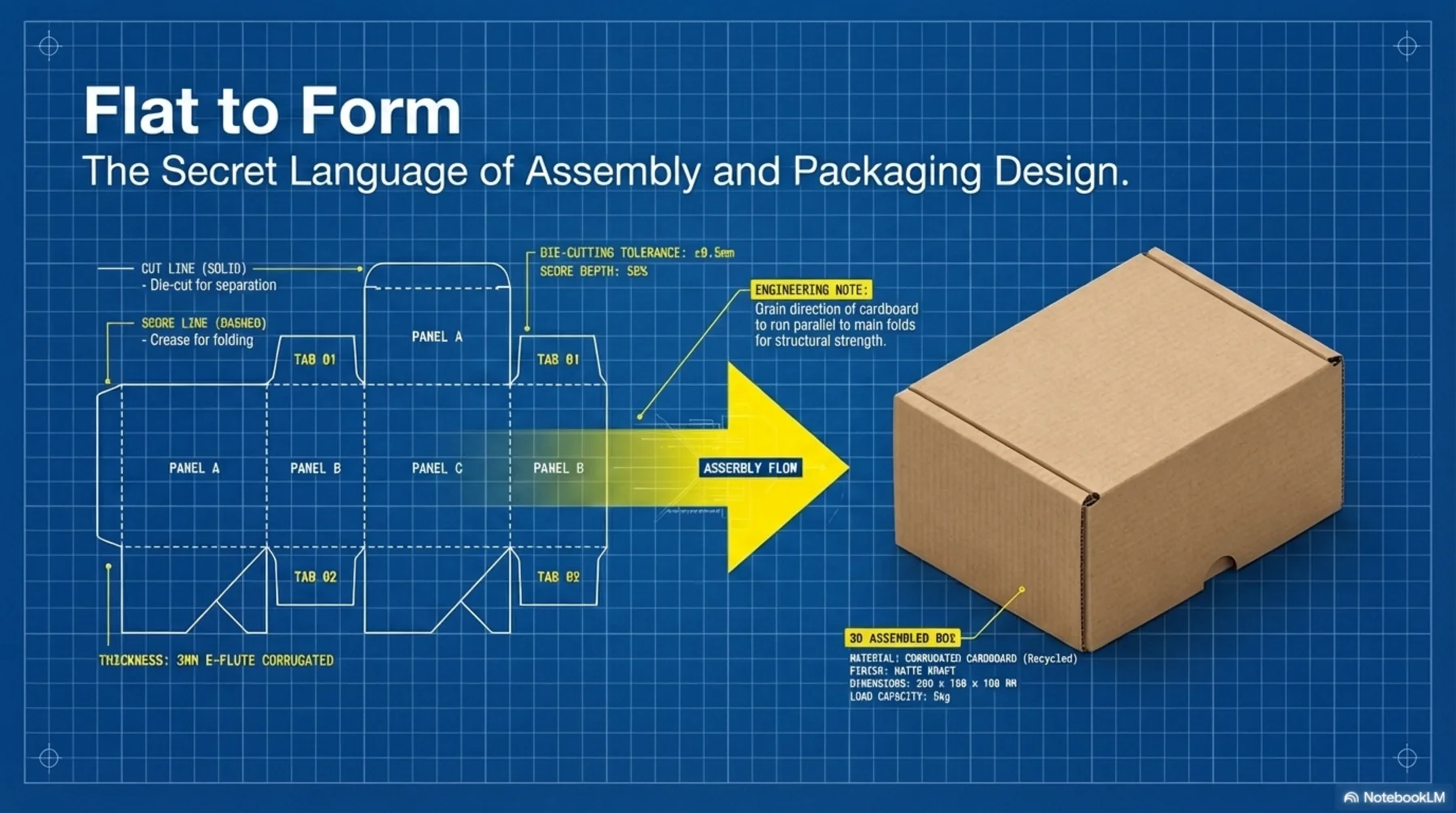
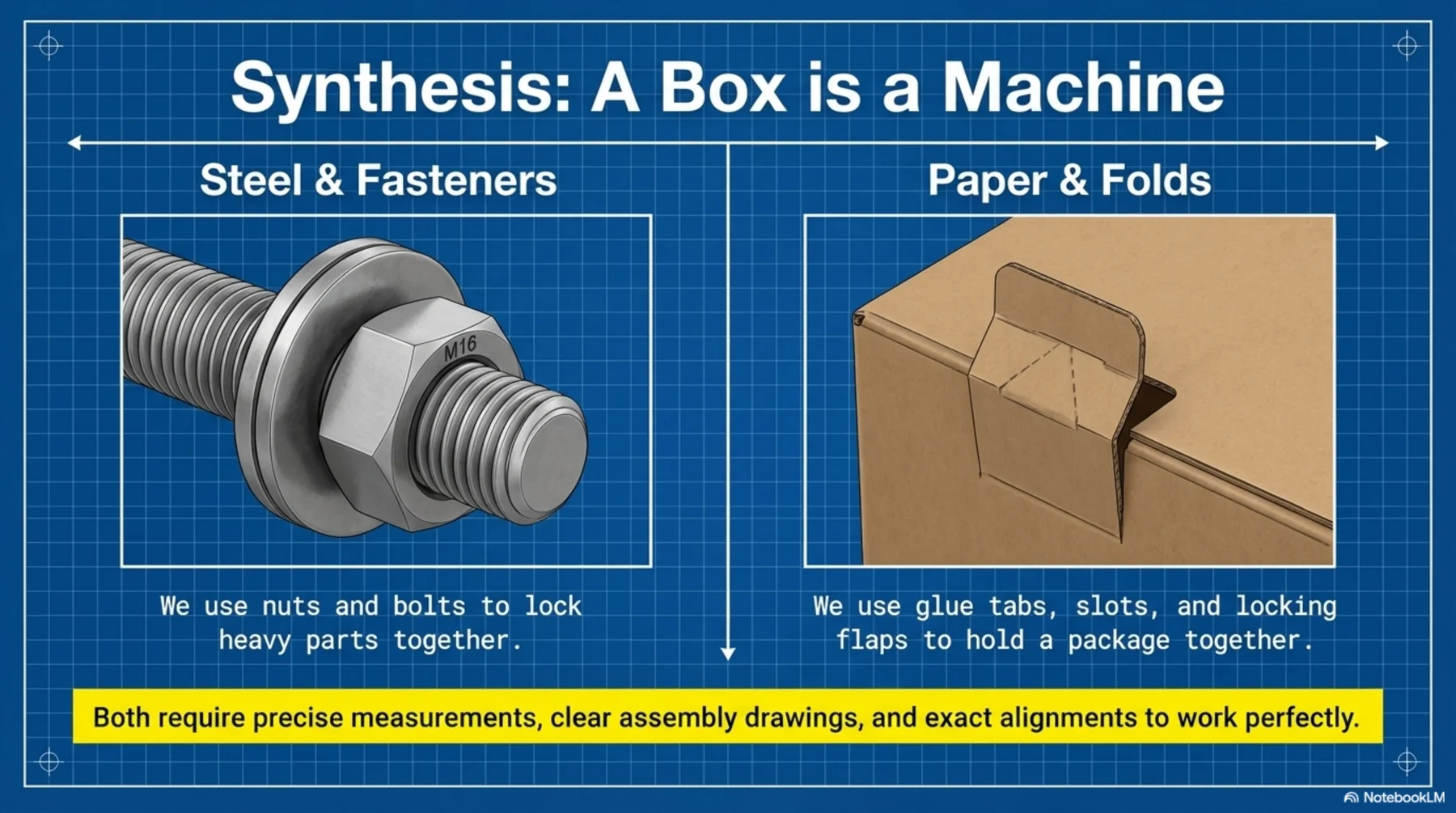
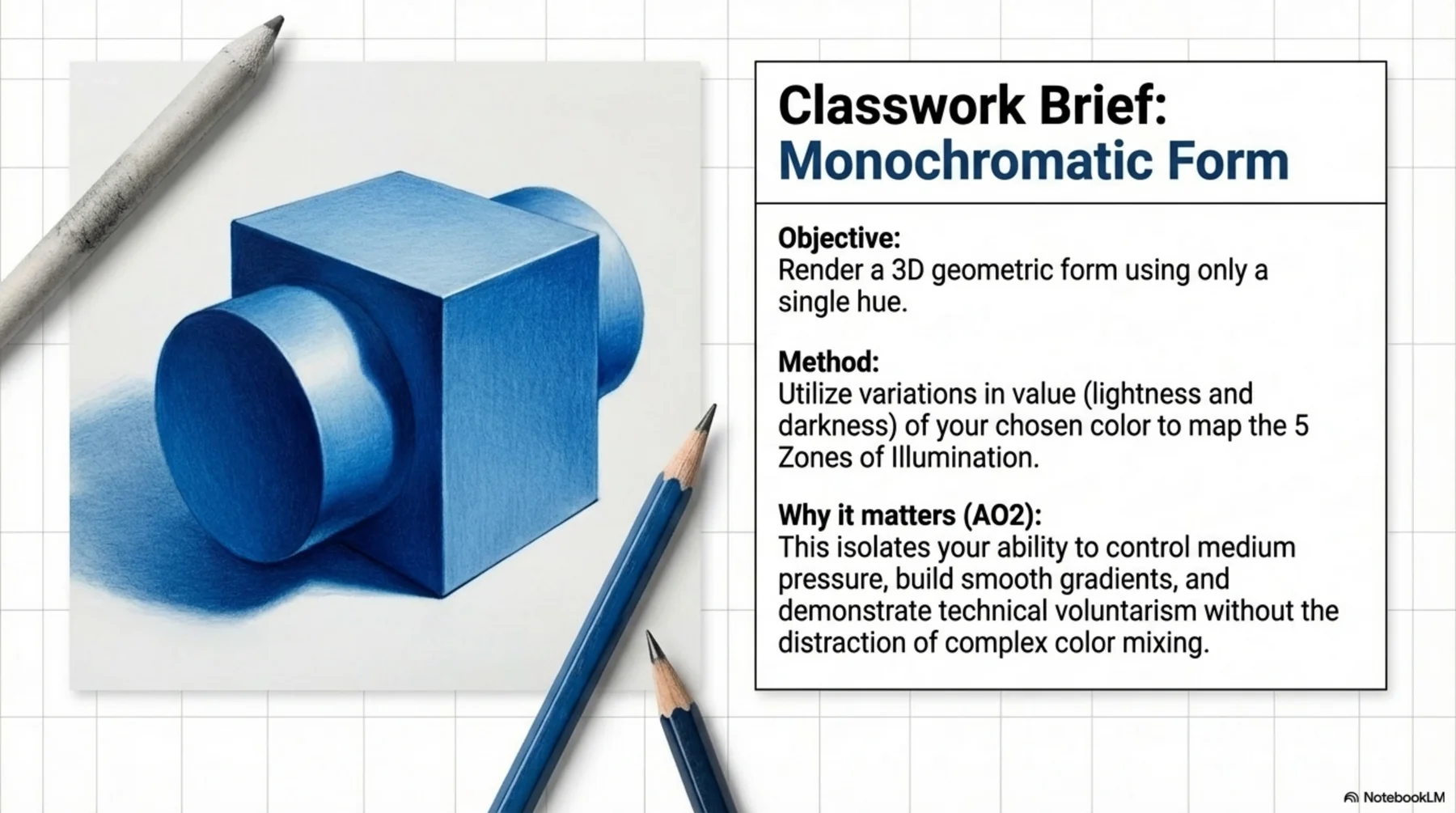
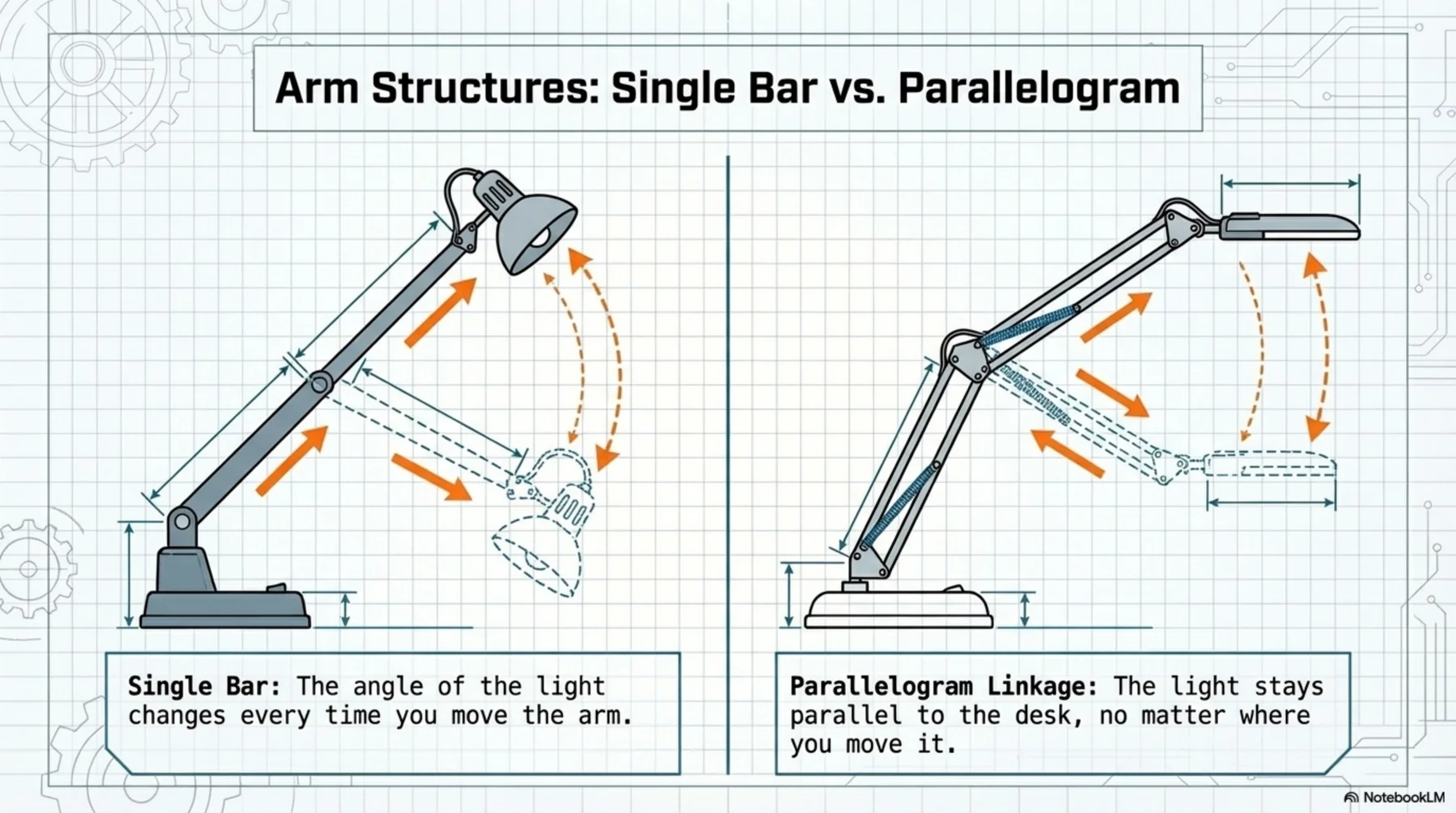
Project briefs, presentations, visual resources, assessment and feedback make design work learnable and assessable across different levels.
Jump to TEACHING EXAMPLES ↗Selected instructional resources / differing origins
The selected planning documents and slides come from a much larger body of materials created and used across four year groups. The programme moved from fundamentals and visualising abstract ideas (Year 1), to individual packaging redesign (Year 2), group luminaire design (Year 3), and independent product work, portfolio development and examination preparation (Year 4). I personally reviewed materials before class, refined the curriculum after the first term and updated it again for the following school year.
Built as lightweight, static HTML. No accounts, cookies, third-party scripts, tracking, or network services are required. Return to top ↑
Preview edition · Not an application submission.